Species · genus Asparagus · Asparagaceae
Asparagus Fern
Asparagus densiflorus (Kunth) Jessop
Also known as: Foxtail Asparagus · Foxtail Asparagus-fern · Foxtail Fern · Plume Asparagus-fern · Sprenger's Asparagus
Cultivars of A. densiflorus
The named forms growers keep — each with its own page, each honest about how much we know.
No named cultivars catalogued under A. densiflorus yet. When growers document a stable, named form, it earns its own page here.
Guide
The species-level account. Cultivar pages build on this and say where they differ.
Foxtail Asparagus Fern
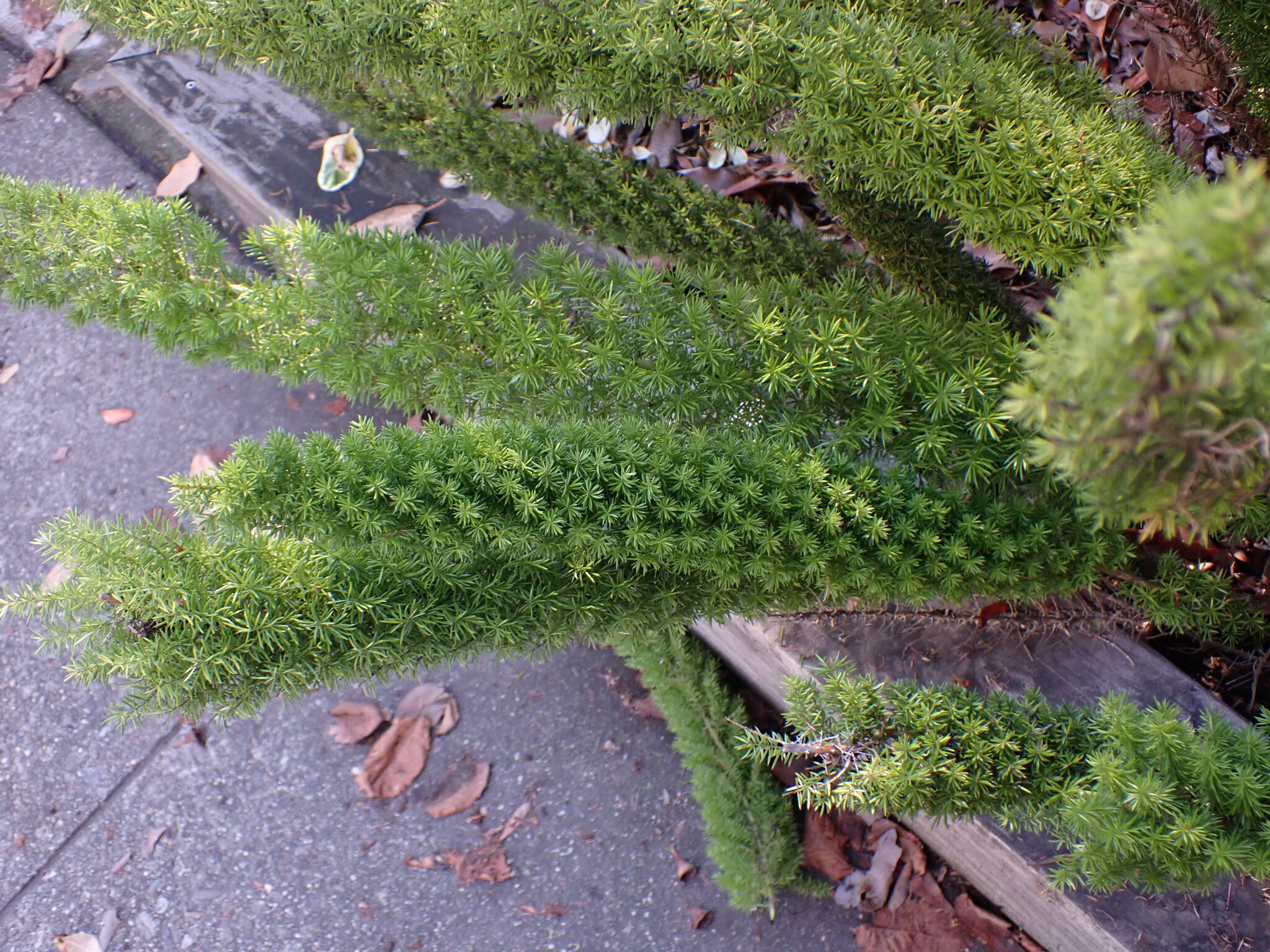
Asparagus densiflorus 'Myersii' is a herbaceous perennial grown for its dense, plume-like foliage rather than any true fern nature, since it actually belongs to the asparagus family. Its common names, foxtail asparagus or cat's tail asparagus, come from the erect, bushy stems that resemble a fox's brush.
Source: Missouri Botanical Garden
South African Roots
The species Asparagus densiflorus originates from rocky open woods, savanna thickets, and coastal areas of southeastern South Africa. It has since been carried around the world as an ornamental, and in some regions, including Australia and parts of Florida, Hawaii, and southern California, it has become invasive. The cultivar name 'Myersii' is thought to honor the plant explorer Frank Nicholas Meyer, also remembered for the Meyer lemon.
Source: Missouri Botanical Garden
Light, Water, Rest
This plant does best in organically rich, consistently moist, well-drained soil and part shade, meaning bright indirect or filtered light; hot direct afternoon sun can yellow the foliage, while full shade just pales it. Indoors it tolerates a wide range of temperatures and does not demand high humidity, making it an easy houseplant. Water regularly through spring and autumn, then ease off over winter, since it does not need true dormancy but appreciates the rest, and it is happiest with summer warmth and winter minimums around 50°F.
Source: Missouri Botanical Garden
Seed or Division
New plants can be started from seed or by division, separating the tuberous roots. In the wild the red berries are spread by birds, whose passage through the gut helps the seed sprout readily wherever it lands.
Source: Missouri Botanical Garden
Erect Foxtail Plumes
Unlike the sprawling species form, 'Myersii' grows more upright and compact, sending up erect, spear-like stems clothed in bright pale green cladodes that only resemble needle-like leaves. Each plume-shaped stem reaches about two and a half inches wide, and the whole plant tops out around two feet tall with a spread of three to four feet. In late spring to early summer it carries tiny, fragrant white flowers, followed by red berries by fall, though this cultivar sets far fewer berries than the species.
Source: Missouri Botanical Garden
Sap Feeders to Watch
Keep an eye out for slugs, mites, mealybug, and aphids, the usual visitors to this plant.
Source: Missouri Botanical Garden
Rot and Leaf Drop
Leaf spot and root or crown rot can occur, particularly where soil stays too wet. Indoor plants may also drop leaves as a nuisance, especially over winter. Direct hot afternoon sun is a common cause of yellowing foliage.
Source: Missouri Botanical Garden
Pinching and Cutting Back
Pinch back stem tips as needed to keep the plant's form tidy and to encourage denser growth. If it loses its shape altogether, the stems can be cut back close to soil level and the plant will regenerate. Container plants are often moved outdoors for the growing season and brought back in as fall approaches.
Source: Missouri Botanical Garden
Care recipe
The species record — the baseline every cultivar inherits unless it says otherwise.
Care notes are early — not yet verified
- Light
- ai:claude-opus-4-8
- Water
- ai:claude-opus-4-8 (range 7-14d)
- Humidity
- ai:claude-opus-4-8
- Soil
- ai:claude-fable-5
- Care
- ai:claude-fable-5
Bright, indirect
≈ every 14 days
Medium
13–24 °C
Loose, well-draining potting mix with perlite
Division of the tuberous crown
Balanced liquid feed monthly in the growing season
Fast
Small white flowers followed by red berries, occasionally indoors
Toxic to cats & dogs
Asparagus fern — sapogenins; vomiting, abdominal pain (berries worst). This is where toxicity lives: every cultivar of this species inherits it and none can override it.
Reference images
Every image credited. Licenses link to their deeds.
PrimarySources: ai:claude-opus-4-8 · ai:claude-opus-4-8 (range 7-14d) · ai:claude-fable-5 · ASPCA
Kept true by its growers
Every fact here carries its source. Grow Asparagus Fern yourself? What you’ve observed — how it drinks, how it holds its color, a name that’s off — and a clear photo of your plant are exactly what keep this page honest. Contributions are reviewed before anything changes.
Sign in to add what you know →