Species · genus Asparagus · Asparagaceae
Asparagus Fern
Asparagus aethiopicus L.
Also known as: Sprenger's Asparagus Fern · Emerald-feather · Emerald-fern · Sprenger's-fern · Sprengeris-fern
Cultivars of A. aethiopicus
The named forms growers keep — each with its own page, each honest about how much we know.
No named cultivars catalogued under A. aethiopicus yet. When growers document a stable, named form, it earns its own page here.
Guide
The species-level account. Cultivar pages build on this and say where they differ.
A Climbing Asparagus Relative
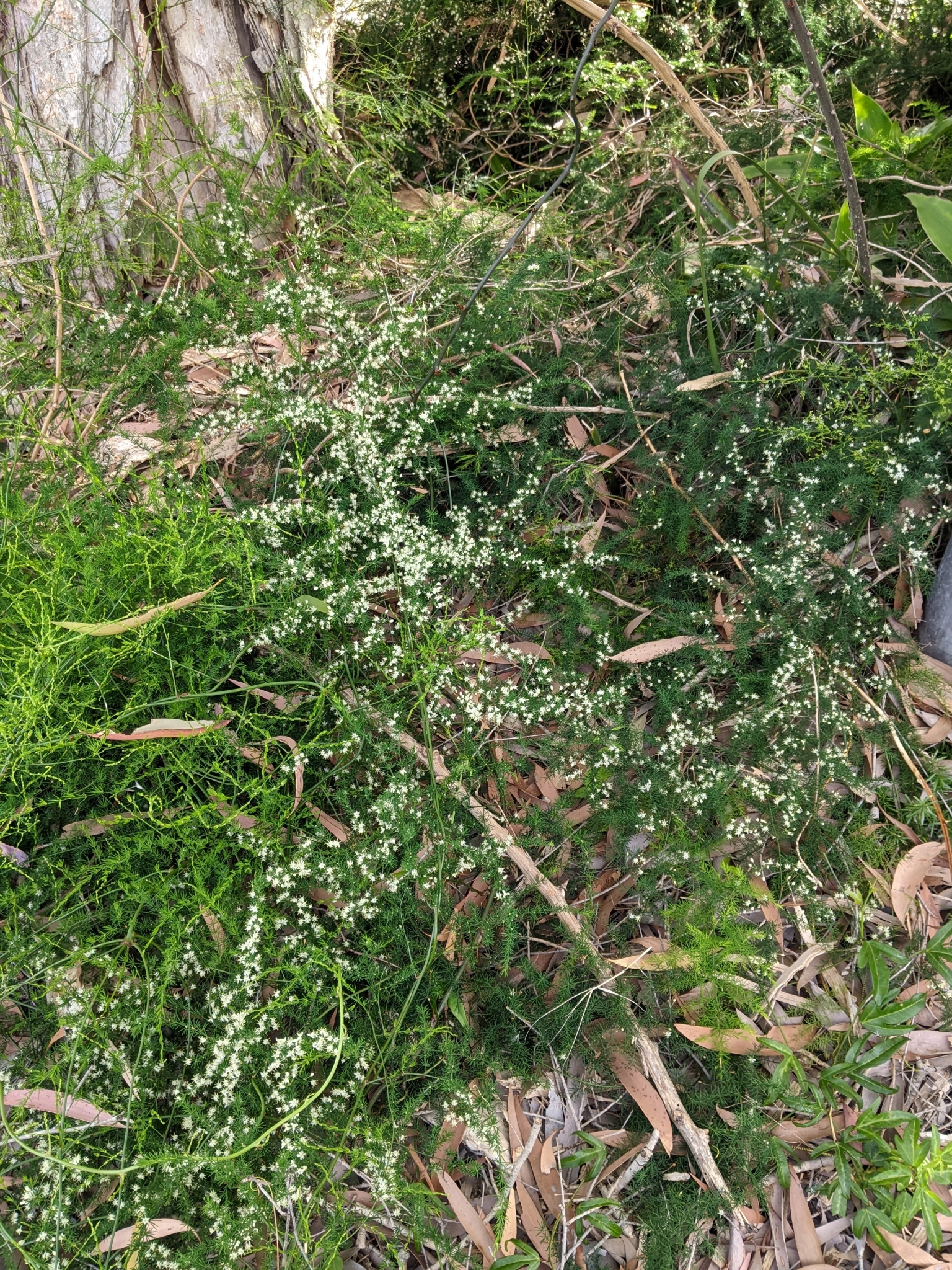
Asparagus aethiopicus is a climbing perennial in the asparagus family, though most growers know it not for spears but for its arching, fern-like sprays of foliage. It is often sold as Sprenger's asparagus or, confusingly, as a kind of foxtail fern, but it is not a true fern at all.
Source: Kew
Native to Southern Africa
This species is native to South Africa, ranging from the Cape Provinces up into the Northern Provinces, where it grows as a climbing perennial in subtropical vegetation. People there have long put it to use as both food and medicine. It has since been introduced widely around the world, from the Mediterranean and Macaronesian islands to Florida, Mexico, Brazil, and parts of the Pacific.
Source: Kew
Bright Shade and Modest Water
This plant does best in partial sun to full shade, tolerating gentle morning light but scorching under harsh afternoon sun; indoors, bright indirect light suits it, and too little light will show as yellowing. Its tuberous roots store water, so it is watered more like a mild succulent, letting the top few inches of soil dry before the next drink, roughly once a week depending on climate. It prefers well-draining, slightly acidic soil, an ideal temperature range of about 65-70°F, extra humidity when grown indoors, and a feed of balanced fertilizer through the growing season, withheld once the plant goes dormant in late fall and winter.
Source: Epic Gardening
Propagation by Division
This plant is propagated by division rather than from cuttings. The whole plant is lifted, its loose soil brushed away, and the root mass sliced apart with a clean knife so that each division keeps several leaves and enough roots intact. Divisions go straight into fresh potting soil in their own containers and are then left undisturbed for a while to settle in.
Source: Epic Gardening
Trailing Habit, Not Upright
Unlike its relative Asparagus densiflorus, whose stems stand upright and are usually the plant people mean by 'foxtail fern', Asparagus aethiopicus sends its stems drooping downward. That habit makes it a natural fit for hanging baskets. It still carries the small white flowers and red berries typical of the genus.
Source: Epic Gardening
Scale, Mealybugs, and Aphids
Pest trouble is uncommon on this plant, but when it appears it tends to be scale insects, mealybugs, or aphids. Scale shows up as small hard lumps on stems and leaves, while mealybugs sap the plant's strength and are often first noticed through discoloring or a general droopiness. Neem oil handles most infestations, with a cotton swab of rubbing alcohol useful for isolated scale or mealybugs, and a strong hose spray enough to dislodge aphids.
Source: Epic Gardening
Yellowing, Browning, and Rot
Yellowing foliage usually points to too much direct light or, indoors, not enough of it. Browning or leaf drop tends to trace back to the same two culprits in reverse: excess sun or insufficient water, and it is normal for a portion of old stems to brown off as they age. Because the tuberous roots hold water, overwatering is the main risk and can lead to fungal root rot, which calls for lifting the plant and cutting away the affected tubers before it spreads.
Source: Epic Gardening
Repotting and Light Pruning
As this plant grows large, it may need repotting into a slightly bigger container over time, and a rootbound plant will show roots pushing up out of the soil, signaling it is time to size up or divide. Pruning is not strictly necessary if the plant has enough room, but a yearly tidy-up removing dead or unappealing growth helps keep it healthy, and older stems can be cut back so new growth can take their place.
Source: Epic Gardening
Care recipe
The species record — the baseline every cultivar inherits unless it says otherwise.
Care notes are early — not yet verified
- Light
- ai:claude-opus-4-8
- Water
- ai:claude-opus-4-8 (range 7-14d)
- Humidity
- ai:claude-opus-4-8
- Soil
- ai:claude-fable-5
- Care
- ai:claude-fable-5
Bright, indirect
≈ every 14 days
Medium
13–24 °C
Loose, well-draining potting mix with added perlite
Division of the tuberous crown, or seed
Balanced liquid feed monthly in spring and summer
Fast
Small white flowers occasionally, followed by red berries
Toxic to cats & dogs & humans
Asparagaceae; the berries contain sapogenins/steroidal saponins that can cause gastrointestinal upset, and sap may irritate skin. This is where toxicity lives: every cultivar of this species inherits it and none can override it.
Reference images
Every image credited. Licenses link to their deeds.
PrimarySources: ai:claude-opus-4-8 · ai:claude-opus-4-8 (range 7-14d) · ai:claude-fable-5 · ai:claude-opus-4-8 (family inference)
Kept true by its growers
Every fact here carries its source. Grow Asparagus Fern yourself? What you’ve observed — how it drinks, how it holds its color, a name that’s off — and a clear photo of your plant are exactly what keep this page honest. Contributions are reviewed before anything changes.
Sign in to add what you know →