Species · genus Araucaria · Araucariaceae
Norfolk Island Pine
Araucaria heterophylla (Salisb.) Franco
Also known as: Star Pine · Norfolk Island Araucaria
Cultivars of A. heterophylla
The named forms growers keep — each with its own page, each honest about how much we know.
No named cultivars catalogued under A. heterophylla yet. When growers document a stable, named form, it earns its own page here.
Guide
The species-level account. Cultivar pages build on this and say where they differ.
A Tropical Pine Indoors
The Norfolk Island pine is grown indoors as a young houseplant even though it eventually becomes a towering conifer outdoors in warm climates. Despite its pine-like needles and conical shape, it is actually a tropical species, not a true pine, and it is the most widely grown member of its genus in North American homes.
Source: Missouri Botanical Garden
Discovered on Cook's Voyage
This tree comes from Norfolk Island, a small landmass off the coast of Australia, where it grows on basalt sea cliffs and in interior rainforest, sometimes reaching 200 feet with trunks 6 feet or more across. It was found during Captain Cook's second voyage between 1772 and 1775 and brought into cultivation by 1793. Its genus name honors the Araucanian people of central Chile, home to related species, while the species name refers to its variously shaped leaves.
Source: Missouri Botanical Garden
Bright Light, Steady Moisture
Give this plant bright, indirect light near a window, shielded from strong afternoon sun that can yellow or brown the needles; deep shade instead invites legginess and bare lower branches. Water when the top inch of soil feels dry, roughly every 5 to 7 days in spring and summer and every 7 to 10 days in fall and winter, and always let excess water drain away rather than let the pot sit wet. It prefers moderate to high humidity and stable indoor temperatures between 60 and 75°F, away from heaters, fireplaces, and cold drafts. Feed with a time-release houseplant fertilizer through spring and summer only, holding off entirely in fall and winter.
Source: Costa Farms
Seed or Tip Cuttings
In cultivation this tree is propagated from seed sown fresh in a seedbed, or from cuttings taken of vertical shoot tips in midsummer and rooted in a cold frame. Cuttings taken from horizontal side branches will not grow into an upright tree, so shoot tips are the reliable choice for a proper form.
Source: RHS
Whorled, Two-Stage Foliage
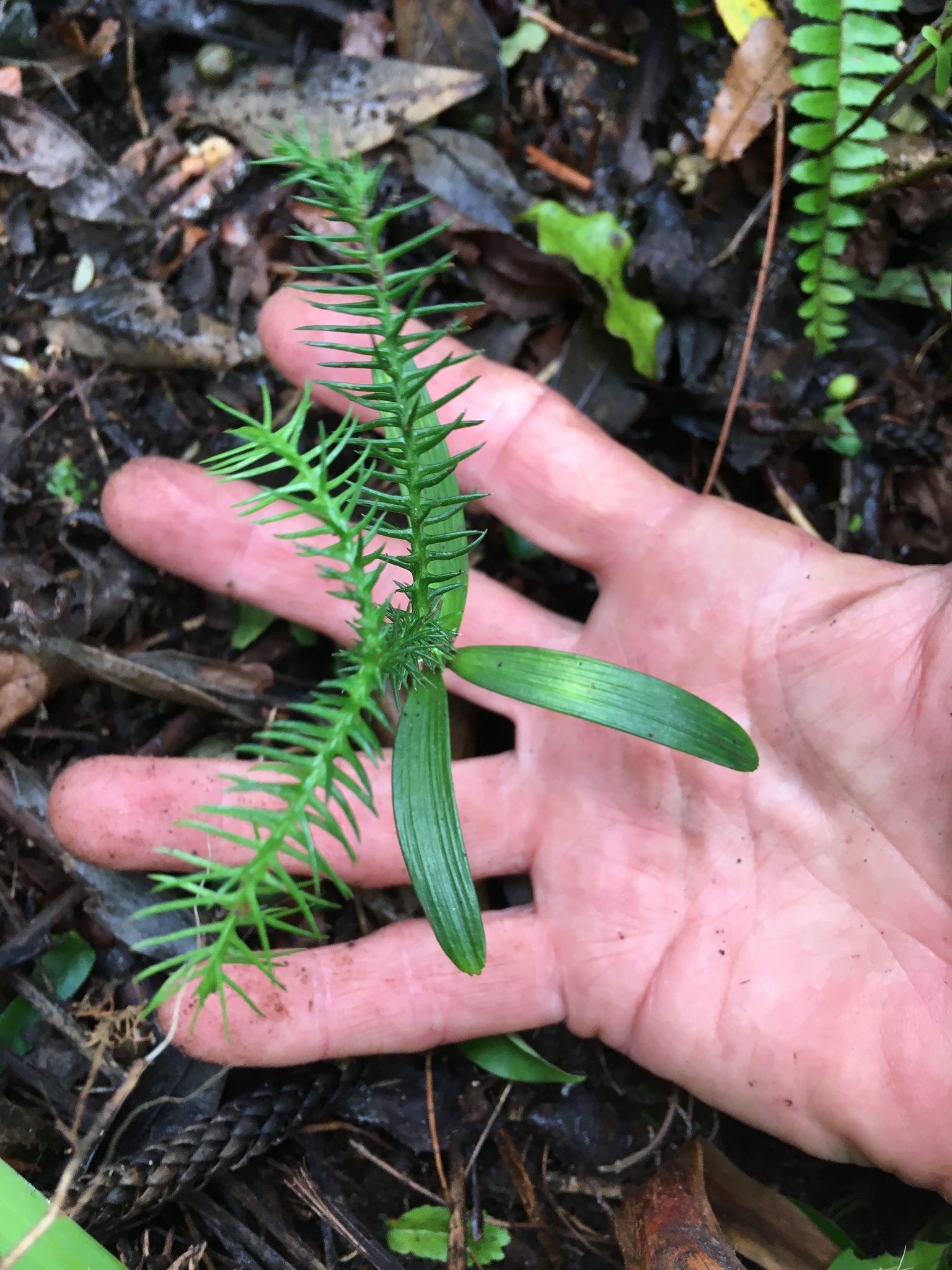
The RHS notes an elegant, conical form built from whorled branches, with juvenile growth showing fan-like foliage that gives way to spiralled, scale-like foliage as the plant matures. Missouri Botanical Garden adds that mature trees carry tiers of roughly five branches per whorl radiating from a single strong trunk, with secondary branches spreading horizontally or drooping slightly. Cones are separate by sex, with cylindrical male cones and larger, nearly globular, spiny female cones.
Source: RHS
Spider Mites and Scale
Missouri Botanical Garden lists spider mites and scale as the pests to watch for on this tree. The RHS, by contrast, considers it generally pest-free in its own growing conditions, though it can be susceptible to honey fungus disease.
Source: Missouri Botanical Garden
Reading the Needles
Dry or browning leaf tips, lower branches browning or dropping, and drooping or stiff upper branches all point to insufficient moisture or air that is too dry. Overwatering brings the opposite risk, root rot from soil that stays soggy. Missouri Botanical Garden also flags mushroom root rot as an occasional problem to watch for.
Source: Costa Farms
Light Hand with Pruning
The RHS places this tree in its lightest pruning category, recommending little or no cutting back since pruning can permanently spoil its natural tiered shape. Outdoors in frost-prone areas it is best grown as a containerised tree kept under glass, moved outside to a sheltered, sunny spot for summer and returned under cover in autumn, with fertiliser applied every two weeks through the growing season and withheld over winter.
Source: RHS
Care recipe
The species record — the baseline every cultivar inherits unless it says otherwise.
Care notes are early — not yet verified
- Light
- ai:claude-opus-4-8
- Water
- ai:claude-opus-4-8 (range 7-14d)
- Humidity
- ai:claude-opus-4-8
- Soil
- ai:claude-fable-5
- Care
- ai:claude-fable-5
Bright, indirect
≈ every 14 days
Medium
10–24 °C
Peat-based mix with sand or perlite for drainage
Seed; semi-hardwood cuttings from upright leaders
Balanced liquid feed monthly in spring and summer
Slow
Does not flower indoors; the classic Norfolk Island Pine
Not yet documented
This is where toxicity lives — every cultivar of this species inherits it and none can override it.
Reference images
Every image credited. Licenses link to their deeds.
PrimarySources: ai:claude-opus-4-8 · ai:claude-opus-4-8 (range 7-14d) · ai:claude-fable-5
Kept true by its growers
Every fact here carries its source. Grow Norfolk Island Pine yourself? What you’ve observed — how it drinks, how it holds its color, a name that’s off — and a clear photo of your plant are exactly what keep this page honest. Contributions are reviewed before anything changes.
Sign in to add what you know →