Species · genus Araucaria · Araucariaceae
Bunya Bunya
Araucaria bidwillii Hook.
Also known as: Bunya Pine · Queensland-pine · Bunya · Bunya-Bunya Pine · Moreton-bay-pine
Cultivars of A. bidwillii
The named forms growers keep — each with its own page, each honest about how much we know.
No named cultivars catalogued under A. bidwillii yet. When growers document a stable, named form, it earns its own page here.
Guide
The species-level account. Cultivar pages build on this and say where they differ.
A Towering Southern Conifer
Araucaria bidwillii, known as the bunya-bunya pine, is a large evergreen conifer in the family Araucariaceae. It is grown as an architectural specimen, whether outdoors in mild climates or containerised under glass elsewhere.
Source: RHS
Queensland Native
This species is native to Queensland, Australia, where it grows within the subtropical biome. It has also been introduced to Réunion. The name was first published by Hooker in 1843.
Source: Kew
Bright, Sheltered, and Fed
In areas where temperatures drop below 5°C, grow it as a containerised tree under glass, moving it outside to a sheltered, sunny spot for summer. Use a well-drained, loam-based compost with added grit, water freely through spring to early autumn, and let the compost stay just moist over winter. Feed with a balanced fertiliser every two weeks during the growing season.
Source: RHS
Seed or Vertical Cuttings
Propagate by sowing seed as soon as it is ripe. Semi-ripe cuttings can also be taken from vertical shoot tips in midsummer and rooted in a cold frame, but cuttings taken from horizontal side branches will not grow into an upright tree.
Source: RHS
Scale and Striking Cones
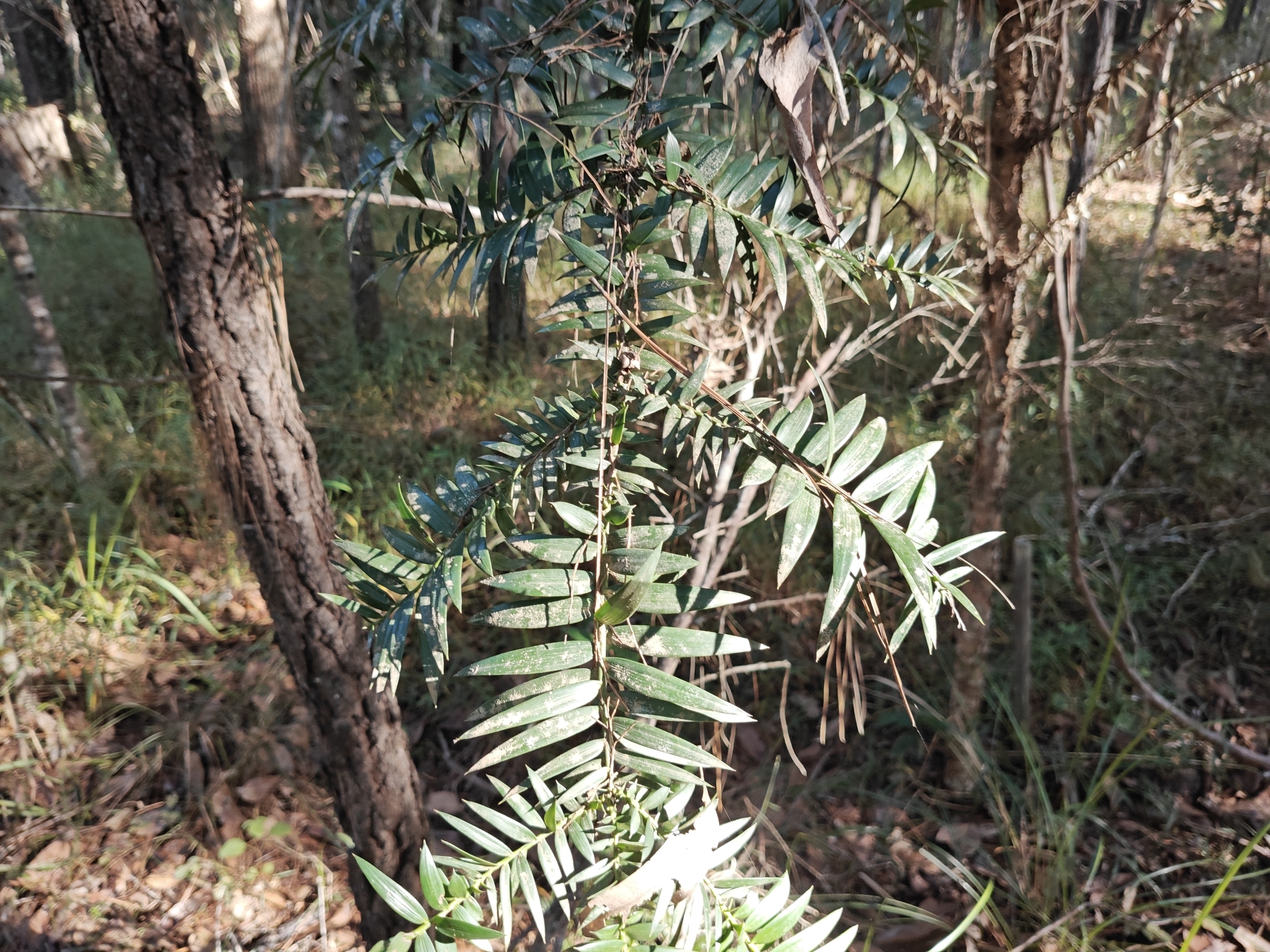
Left to its own devices this is a very large tree, capable of reaching 45 metres, with branches arranged in distinct whorls. Young plants carry a conical shape with spirally arranged, flattened, glossy leaves tipped with a spine, and as the tree ages it loses its lower branches and rounds out at the crown. It bears massive cones, up to 30cm long, ripening from green to brown and containing edible nuts.
Source: RHS
Largely Trouble-Free
This conifer is generally pest-free, though it may be susceptible to honey fungus.
Source: RHS
Leave the Shape Alone
Little or no pruning is needed, since cutting into this tree can permanently spoil its natural shape.
Source: RHS
Care recipe
The species record — the baseline every cultivar inherits unless it says otherwise.
Care notes are early — not yet verified
- Light
- ai:claude-opus-4-8
- Water
- ai:claude-opus-4-8 (range 7-14d)
- Humidity
- ai:claude-opus-4-8
- Soil
- ai:claude-fable-5
- Care
- ai:claude-fable-5
Bright, indirect
≈ every 14 days
Medium
10–26 °C
Well-draining loamy mix with grit
Fresh seed
Light balanced feed monthly in the growing season
Slow
Does not flower indoors; a slow, sculptural conifer
Not yet documented
This is where toxicity lives — every cultivar of this species inherits it and none can override it.
Reference images
Every image credited. Licenses link to their deeds.
PrimarySources: ai:claude-opus-4-8 · ai:claude-opus-4-8 (range 7-14d) · ai:claude-fable-5
Kept true by its growers
Every fact here carries its source. Grow Bunya Bunya yourself? What you’ve observed — how it drinks, how it holds its color, a name that’s off — and a clear photo of your plant are exactly what keep this page honest. Contributions are reviewed before anything changes.
Sign in to add what you know →