Species · genus Aphelandra · Acanthaceae
Saffron Spike
Aphelandra squarrosa Nees
Also known as: Zebraplant · Zebra-plant
Cultivars of A. squarrosa
The named forms growers keep — each with its own page, each honest about how much we know.
No named cultivars catalogued under A. squarrosa yet. When growers document a stable, named form, it earns its own page here.
Guide
The species-level account. Cultivar pages build on this and say where they differ.
A Striped Jungle Native
The zebra plant, Aphelandra squarrosa, is a tropical evergreen perennial grown for its glossy dark leaves marked with bold white veins. Alongside its foliage it can produce spikes of yellow flowers wrapped in colorful bracts, though coaxing it to bloom takes some patience.
Source: Epic Gardening
Out of Brazilian Jungle
This plant hails from southern Brazil, where it grows as part of the jungle understory and can behave almost like a climber, reaching up to six feet in the wild. In cultivation it stays far more modest, usually under two feet indoors.
Source: Epic Gardening
A Demanding Rhythm
Zebra plant wants bright, indirect light and a peat-free, perlite-enriched houseplant compost that stays moist but well drained. Water freely through the growing season and ease off in winter, feeding with a general liquid fertilizer every two weeks in summer and monthly through the colder months. It also craves humidity well above what most rooms offer on their own, so misting, pebble trays, or a humidifier become part of its upkeep.
Source: RHS
Cuttings After Flowering
Once flowering finishes, cut the main stem back to a strong pair of leaves to prompt side shoots. When those shoots reach 8 to 10 centimeters, detach and root them as cuttings.
Source: RHS
Veined Leaves, Golden Spikes
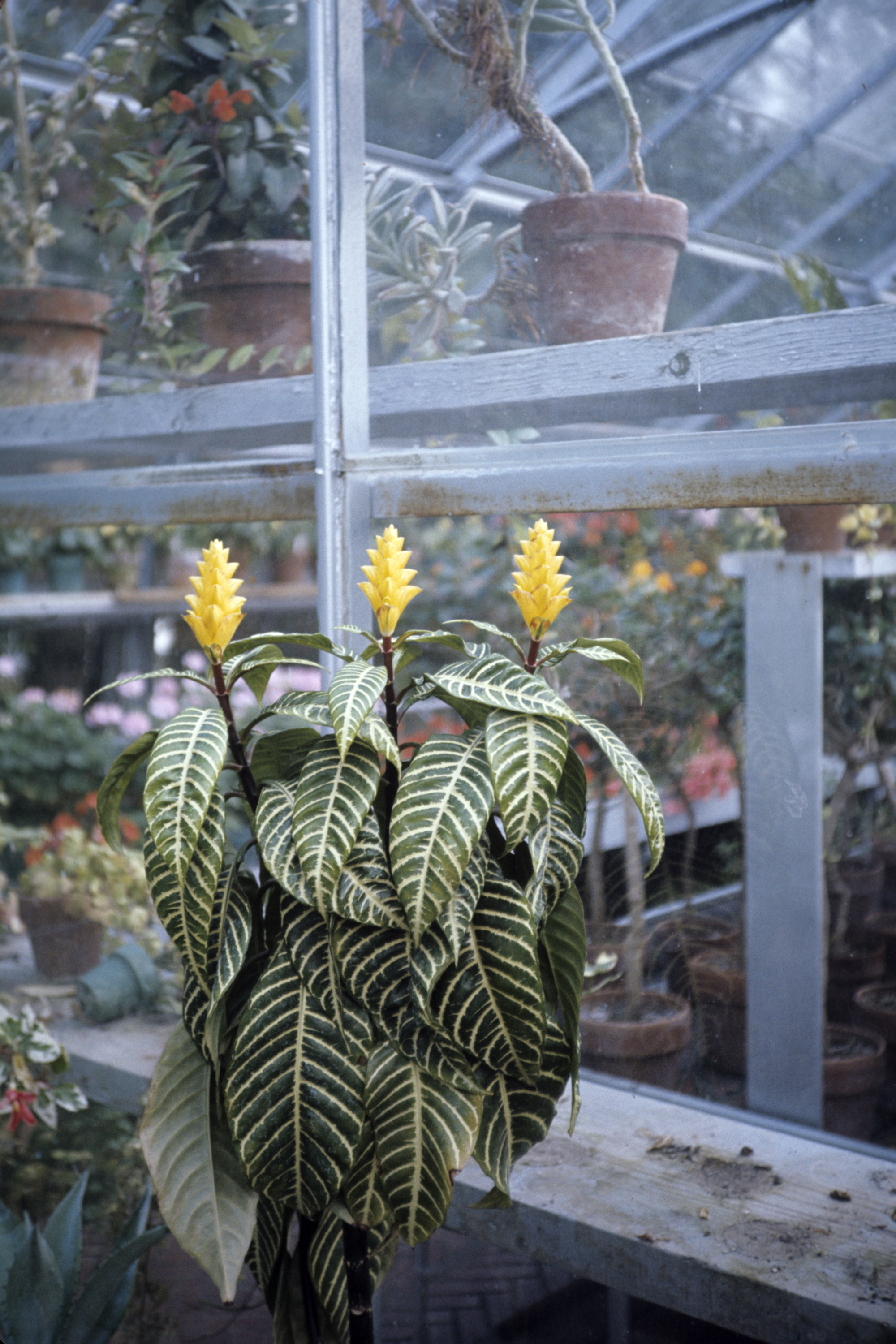
Its dark green leaves, up to about 30 centimeters long, carry white, silver, or yellow veins running through them, giving rise to the zebra name. Terminal spikes to 20 centimeters bear waxy yellow flowers set against maroon-tinted yellow bracts, appearing sporadically through the year. It grows as a compact, bushy shrub with stout stems, reaching roughly a meter to a meter and a half in height and spread when mature.
Source: RHS
Sap-Suckers to Watch
Aphids, scale insects, and mealybugs are the pests most likely to trouble this plant. Whiteflies and fungus gnats can also turn up, with whiteflies leaving yellow speckling on the leaves and fungus gnats favoring moist, peaty soil.
Source: Epic Gardening
Reading the Leaves
Curling or crinkled leaves usually point to too much light, while wilting or dropping lower leaves can come from soil that is too wet, too dry, or from over-fertilizing. Brown, burned-looking leaf edges are most often the result of excess sun or heavy feeding. Overwatering shows up first as yellowing, translucent leaves, which can progress to a mushy stem and root rot if left unchecked.
Source: Epic Gardening
Don't Rush the Repot
This plant tolerates being a bit rootbound and doesn't need yearly repotting, flowering contentedly in a pot as small as five or six inches. When repotting is due, do it in spring before the plant leaves winter dormancy, moving up only about an inch in pot size. Dead flower bracts should be removed promptly, since leaving them in place can cause lower leaves to droop and fall.
Source: Epic Gardening
Care recipe
The species record — the baseline every cultivar inherits unless it says otherwise.
Care notes are early — not yet verified
- Light
- ai:claude-opus-4-8
- Water
- ai:claude-opus-4-8 (range 5-10d)
- Humidity
- ai:claude-opus-4-8
- Soil
- ai:claude-fable-5
- Care
- ai:claude-fable-5
Bright, indirect
≈ every 10 days
High
18–27 °C
Peat-based mix with perlite for drainage
Tip cuttings rooted in warm, humid conditions
Balanced liquid feed every two weeks while growing
Moderate
Bright yellow bracts appear readily in good light indoors
Not yet documented
This is where toxicity lives — every cultivar of this species inherits it and none can override it.
Reference images
Every image credited. Licenses link to their deeds.
PrimarySources: ai:claude-opus-4-8 · ai:claude-opus-4-8 (range 5-10d) · ai:claude-fable-5
Kept true by its growers
Every fact here carries its source. Grow Saffron Spike yourself? What you’ve observed — how it drinks, how it holds its color, a name that’s off — and a clear photo of your plant are exactly what keep this page honest. Contributions are reviewed before anything changes.
Sign in to add what you know →