Species · genus Anthurium · Araceae
Queen Anthurium
Anthurium warocqueanum T.Moore
Also known as: Queen Anthurium of Colombia
Cultivars of A. warocqueanum
The named forms growers keep — each with its own page, each honest about how much we know.
No named cultivars catalogued under A. warocqueanum yet. When growers document a stable, named form, it earns its own page here.
Guide
The species-level account. Cultivar pages build on this and say where they differ.
The Queen Flamingo Flower
Anthurium warocqueanum, known as the queen flamingo flower, is an aroid grown chiefly for its dramatic foliage rather than its blooms. Its flowers are modest, but the leaves are the reason this plant holds a place among collectors.
Source: RHS
Colombian Forest Epiphyte
This species comes from the wet tropical forests of Colombia, where it lives as an epiphyte, perched on tree branches and creeping along them. It clings to bark with fleshy roots rather than growing rooted in soil.
Source: RHS
Warmth, Humidity, Careful Watering
This plant wants a light, open, well-drained medium such as orchid compost, warmth, bright indirect light, and high atmospheric humidity to do well. Water with rainwater or filtered water at room temperature, since it can react to the dissolved chemicals in hard tap water, and let the compost dry before watering thoroughly again, never leaving it sitting wet. Feed with an orchid fertiliser through the growing season from April to September.
Source: RHS
Stem-Tip and Leaf Cuttings
Propagation is by stem-tip cuttings or leaf bud cuttings.
Source: RHS
Velvet Leaves, Pale Veins
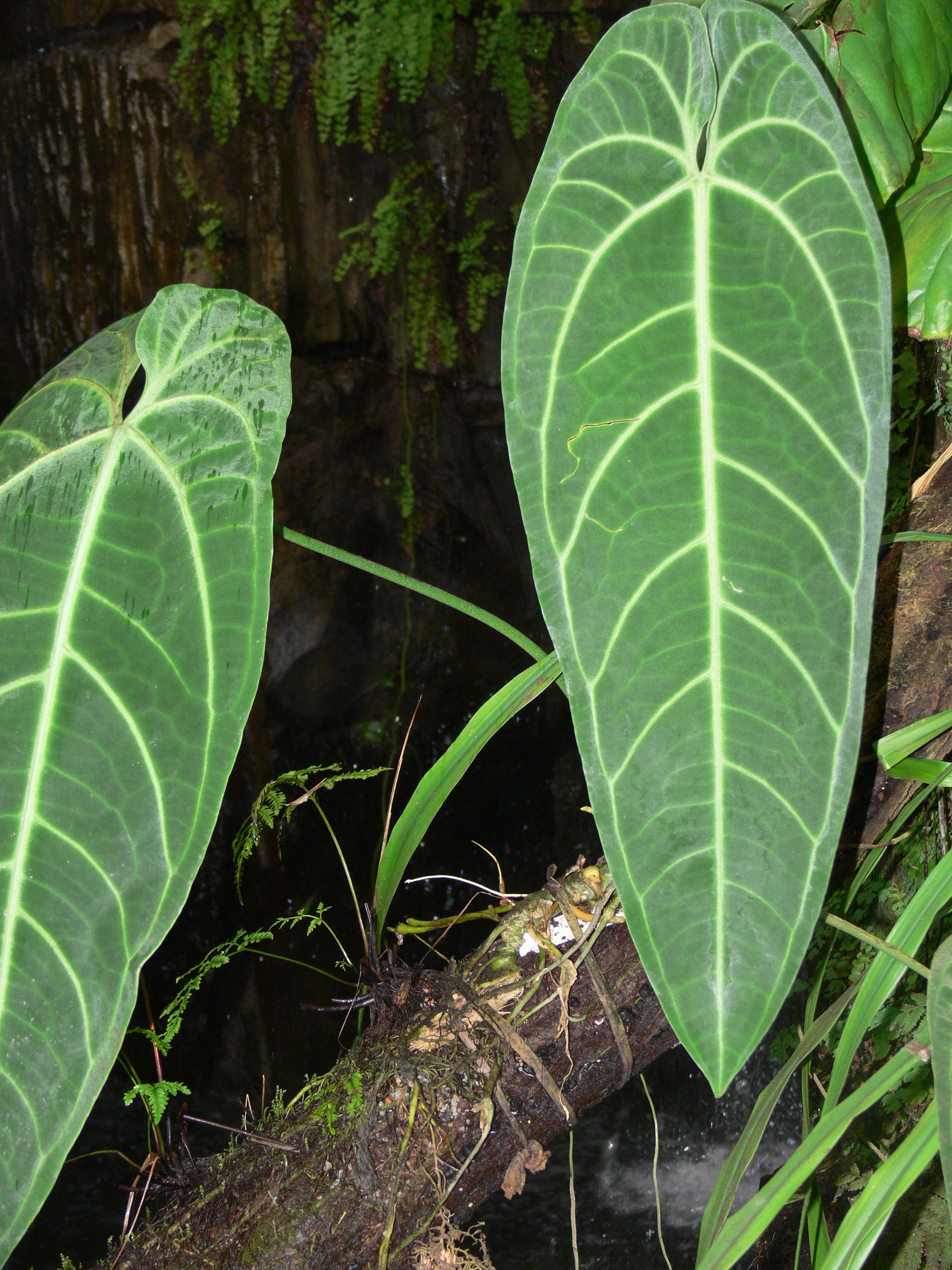
The leaf blade hangs vertically and takes an elongated heart shape, reaching up to 1.2 metres long and 37 centimetres wide on mature plants. Its surface is a velvety dark green traced with prominent pale green veins, while the flower itself is a plain pale green spathe wrapped around a light green spadix. Habit is climbing, and the foliage is evergreen.
Source: RHS
Watch for Sap Feeders
Red spider mite, mealybugs, and scale insects are the pests most likely to trouble this plant, though it is otherwise generally free of disease.
Source: RHS
Little Pruning Needed
No pruning is required for this species. It is a slow one to mature, generally taking five to ten years to reach full size.
Source: RHS
Care recipe
The species record — the baseline every cultivar inherits unless it says otherwise.
Care notes are early — not yet verified
- Light
- ai:claude-opus-4-8
- Water
- ai:claude-opus-4-8 (range 5-10d)
- Humidity
- ai:claude-opus-4-8
- Soil
- ai:claude-fable-5
- Care
- ai:claude-fable-5
Bright, indirect
≈ every 10 days
High
18–27 °C
Chunky, fast-draining aroid mix — bark, perlite, and sphagnum
Stem division or basal offsets
Dilute balanced feed every two weeks in the growing season
Slow
Rarely flowers indoors; grown for its velvet cascading foliage
Toxic to cats & dogs & humans
Araceae contain insoluble calcium oxalate crystals, which irritate mouth and digestive tract on ingestion. This is where toxicity lives: every cultivar of this species inherits it and none can override it.
Reference images
Every image credited. Licenses link to their deeds.
PrimarySources: ai:claude-opus-4-8 · ai:claude-opus-4-8 (range 5-10d) · ai:claude-fable-5 · ai:claude-opus-4-8 (family inference)
Kept true by its growers
Every fact here carries its source. Grow Queen Anthurium yourself? What you’ve observed — how it drinks, how it holds its color, a name that’s off — and a clear photo of your plant are exactly what keep this page honest. Contributions are reviewed before anything changes.
Sign in to add what you know →