Species · genus Anthurium · Araceae
King Anthurium
Anthurium veitchii Mast.
Cultivars of A. veitchii
The named forms growers keep — each with its own page, each honest about how much we know.
No named cultivars catalogued under A. veitchii yet. When growers document a stable, named form, it earns its own page here.
Guide
The species-level account. Cultivar pages build on this and say where they differ.
The King Anthurium
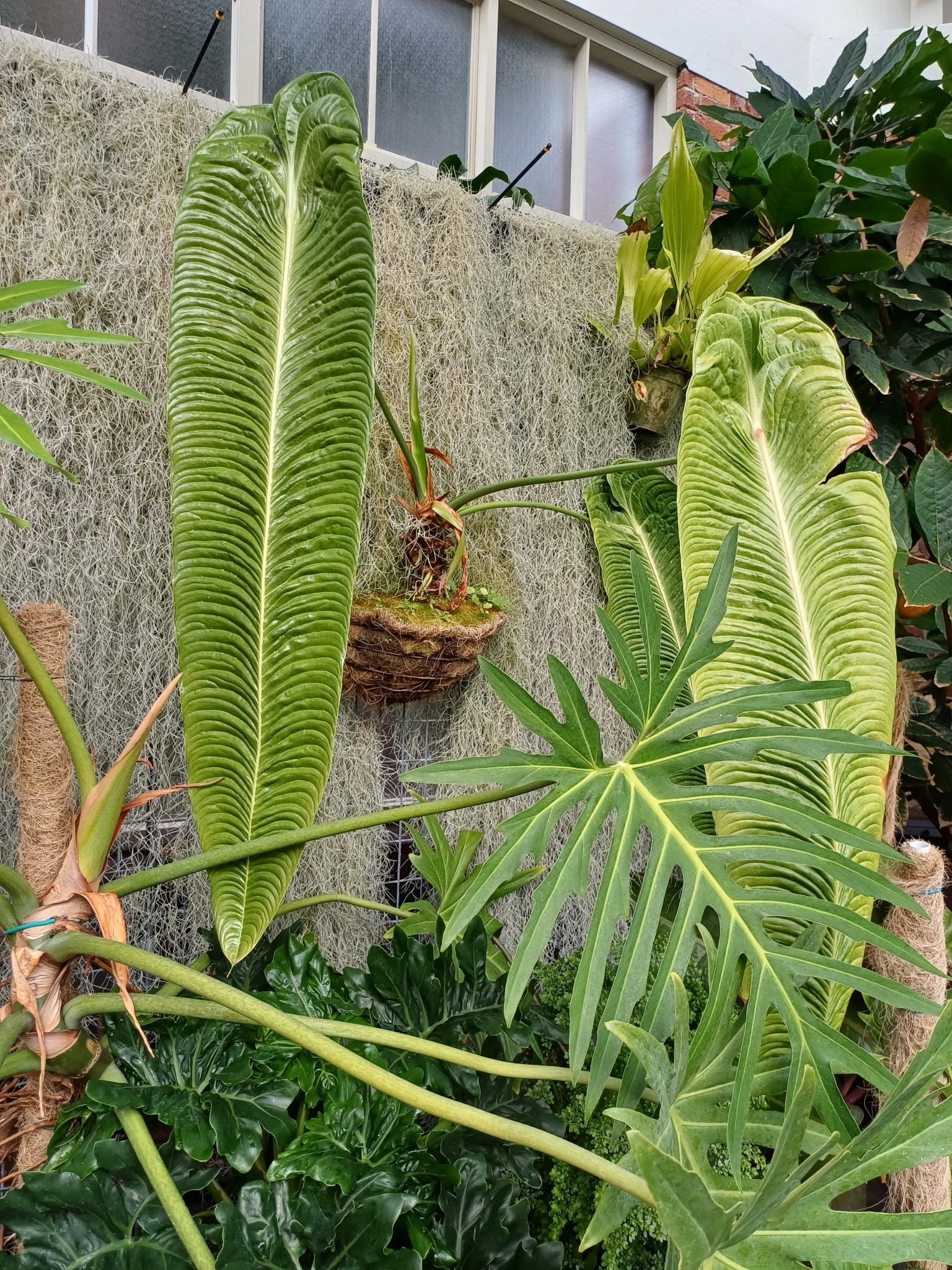
Anthurium veitchii, known as king anthurium, is a tropical epiphytic houseplant grown for its dramatic, jungle-like presence. It can reach up to around two metres indoors, with thick, deeply veined, leathery dark green leaves doing most of the talking.
Source: RHS
Colombian Rainforest Native
This species is native to Colombia, found in the Choco and Antioquia regions. It grows there as an epiphytic subshrub within the wet tropical forest biome, which explains its taste for humidity and filtered light.
Source: Kew
Light, Moisture, and Warmth
Give it bright, indirect light and a partial-shade spot, in an acidic, well-drained mix such as two parts peat-free ericaceous compost to one part perlite and one part orchid bark. Water freely through spring and autumn with an orchid fertiliser every two weeks, cutting back to sparing winter watering, and keep it above 18°C. High humidity matters, which a tray of moist gravel or pebbles under the pot can help provide.
Source: RHS
Division, Cuttings, or Seed
Propagate by division, or by stem or rhizome cuttings and offsets, in spring or summer. Seed is also an option, sown as soon as ripe at 24 to 27°C.
Source: RHS
Leaves Take the Lead
The defining trait here is foliage: thick, glossy, leathery leaves with deep pleated veining, held in a columnar upright habit. In summer a pale green spathe may appear, paired with a cream to pale pink spadix, though the leaves remain the main event.
Source: RHS
Mealy Bugs and Scale
Keep an eye out for mealy bugs and scale insects, the two pests most likely to trouble this plant.
Source: RHS
Overwatering Is the Risk
Leaf spot can occur, and root rot is the main threat when the plant is kept too wet. Careful attention to the sparing winter watering regime helps avoid this.
Source: RHS
Little Pruning Needed
This plant asks for no routine pruning; simply remove dead leaves or spent flower stems at the base as they appear.
Source: RHS
Care recipe
The species record — the baseline every cultivar inherits unless it says otherwise.
Care notes are early — not yet verified
- Light
- ai:claude-opus-4-8
- Water
- ai:claude-opus-4-8 (range 5-10d)
- Humidity
- ai:claude-opus-4-8
- Soil
- ai:claude-fable-5
- Care
- ai:claude-fable-5
Bright, indirect
≈ every 10 days
High
18–29 °C
Loose, very airy aroid mix — bark, sphagnum, and perlite
Stem cuttings or division of offshoots
Weak balanced feed every two to four weeks while growing
Slow
Rarely flowers indoors; prized for its long pendant leaves
Toxic to cats & dogs & humans
Araceae family contains insoluble calcium oxalate crystals, which can irritate the mouth and digestive tract if chewed. This is where toxicity lives: every cultivar of this species inherits it and none can override it.
Reference images
Every image credited. Licenses link to their deeds.
PrimarySources: ai:claude-opus-4-8 · ai:claude-opus-4-8 (range 5-10d) · ai:claude-fable-5 · ai:claude-opus-4-8 (family inference)
Kept true by its growers
Every fact here carries its source. Grow King Anthurium yourself? What you’ve observed — how it drinks, how it holds its color, a name that’s off — and a clear photo of your plant are exactly what keep this page honest. Contributions are reviewed before anything changes.
Sign in to add what you know →