Species · genus Anthurium · Araceae
Bird's Nest Anthurium
Anthurium schlechtendalii Kunth
Also known as: Laceleaf · Pheasants Tail
Cultivars of A. schlechtendalii
The named forms growers keep — each with its own page, each honest about how much we know.
No named cultivars catalogued under A. schlechtendalii yet. When growers document a stable, named form, it earns its own page here.
Guide
The species-level account. Cultivar pages build on this and say where they differ.
A Sturdy Tropical Anthurium
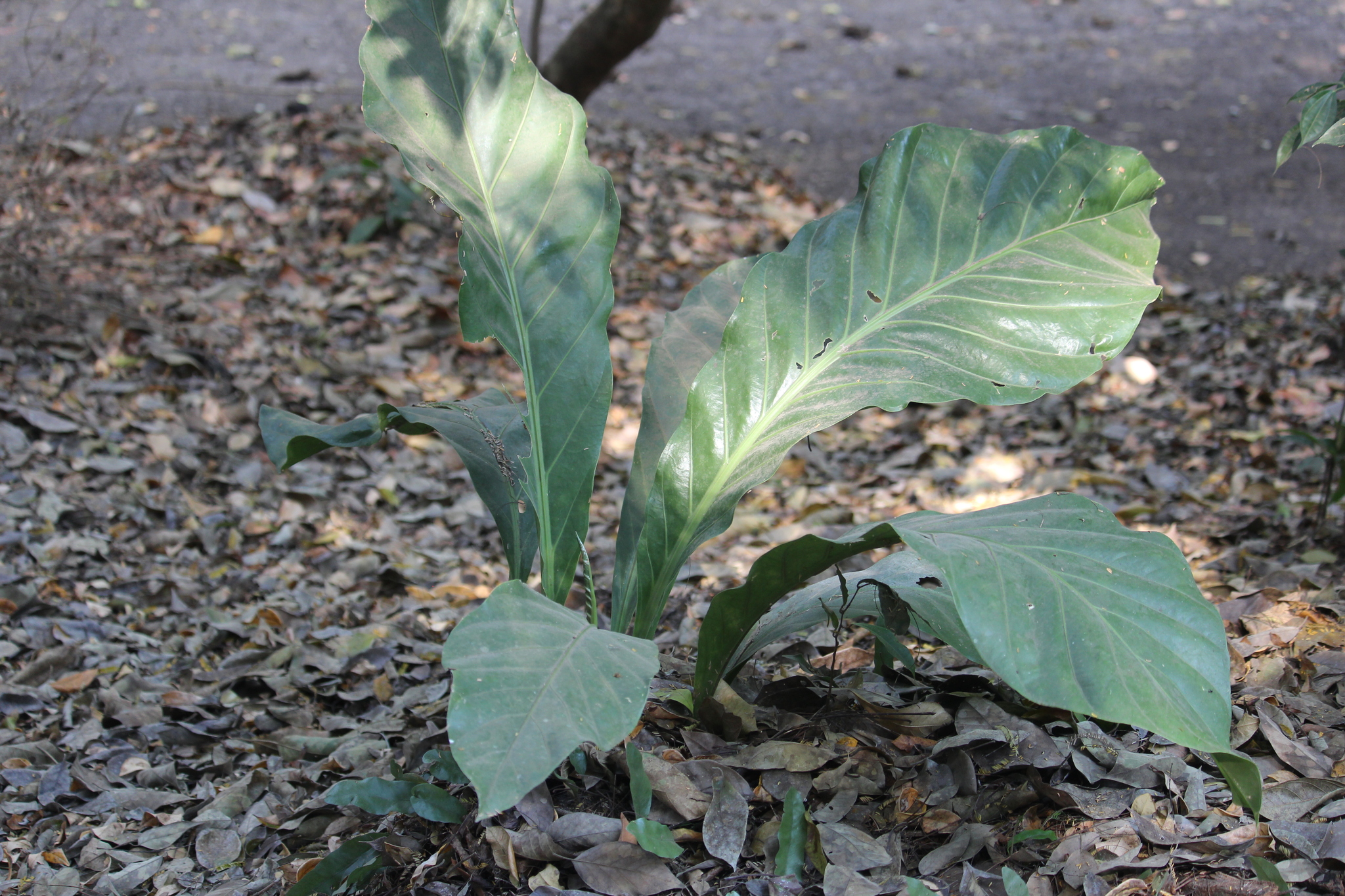
Anthurium schlechtendalii is a clump-forming, tender evergreen aroid grown as a houseplant, conservatory or greenhouse subject. It carries erect, oval to elliptic leaves that can reach a metre in length, and in time forms a substantial architectural clump.
Source: RHS
Roots in Mexico and Central America
This species is native to Mexico and Central America, occurring naturally in Belize, Guatemala, Honduras, and Nicaragua, and it has also become established in Florida. In the wild it grows as an epiphytic subshrub within the wet tropical biome, tucked into trees rather than rooted in open ground.
Source: Kew
Warmth, Moisture, Steady Feeding
Indoors this plant wants bright, indirect light and an acidic, free-draining mix of ericaceous compost, perlite and orchid bark. Water freely through spring and autumn with an orchid fertiliser every couple of weeks, then ease off to sparing winter watering, and keep it above 18°C with humidity supported by a tray of moist gravel.
Source: RHS
Division, Cuttings, or Seed
New plants can be started by division, or from stem or rhizome cuttings and offsets, best done in spring or summer. Seed is also an option, sown as soon as it is ripe at a warm 24 to 27°C.
Source: RHS
Bold Leaves, Odd Bloom
The leaves are large, wavy-margined, and marked with prominent veins, giving the plant a strong, sculptural presence. Its flowers are unusual rather than showy: a greenish spathe tinged with purple wraps around a brown, spike-like spadix roughly 60cm long, which can go on to bear red, berry-like fruit.
Source: RHS
Watch for Mealybugs and Scale
This anthurium may be troubled by mealy bugs and scale insects, both worth checking for along stems and leaf undersides.
Source: RHS
Leaf Spot and Root Rot
The main troubles noted are leaf spot and root rot, the latter arising from overwatering rather than the plant's own habits.
Source: RHS
Minimal Pruning Needed
No routine pruning is required; simply remove dead leaves or spent flower stems at the base as they occur.
Source: RHS
Care recipe
The species record — the baseline every cultivar inherits unless it says otherwise.
Care notes are early — not yet verified
- Light
- ai:claude-opus-4-8
- Water
- ai:claude-opus-4-8 (range 7-12d)
- Humidity
- ai:claude-opus-4-8
- Soil
- ai:claude-fable-5
- Care
- ai:claude-fable-5
Bright, indirect
≈ every 12 days
High
16–29 °C
Coarse, airy aroid mix — bark, perlite, and charcoal
Division of offsets or basal shoots
Dilute balanced feed monthly through spring and summer
Moderate
Rarely flowers indoors; grown for bold foliage
Toxic to cats & dogs & humans
Araceae contain insoluble calcium oxalate crystals, which irritate the mouth and digestive tract if chewed. This is where toxicity lives: every cultivar of this species inherits it and none can override it.
Reference images
Every image credited. Licenses link to their deeds.
Sources: ai:claude-opus-4-8 · ai:claude-opus-4-8 (range 7-12d) · ai:claude-fable-5 · ai:claude-opus-4-8 (family inference)
Kept true by its growers
Every fact here carries its source. Grow Bird's Nest Anthurium yourself? What you’ve observed — how it drinks, how it holds its color, a name that’s off — and a clear photo of your plant are exactly what keep this page honest. Contributions are reviewed before anything changes.
Sign in to add what you know →