Species · genus Anthurium · Araceae
Flamingo Flower
Anthurium scherzerianum Schott
Also known as: Flamingo Lily · Pigtail Anthurium · Pigtail Plant · Pigtail Flower
Cultivars of A. scherzerianum
The named forms growers keep — each with its own page, each honest about how much we know.
No named cultivars catalogued under A. scherzerianum yet. When growers document a stable, named form, it earns its own page here.
Guide
The species-level account. Cultivar pages build on this and say where they differ.
The Flamingo Flower
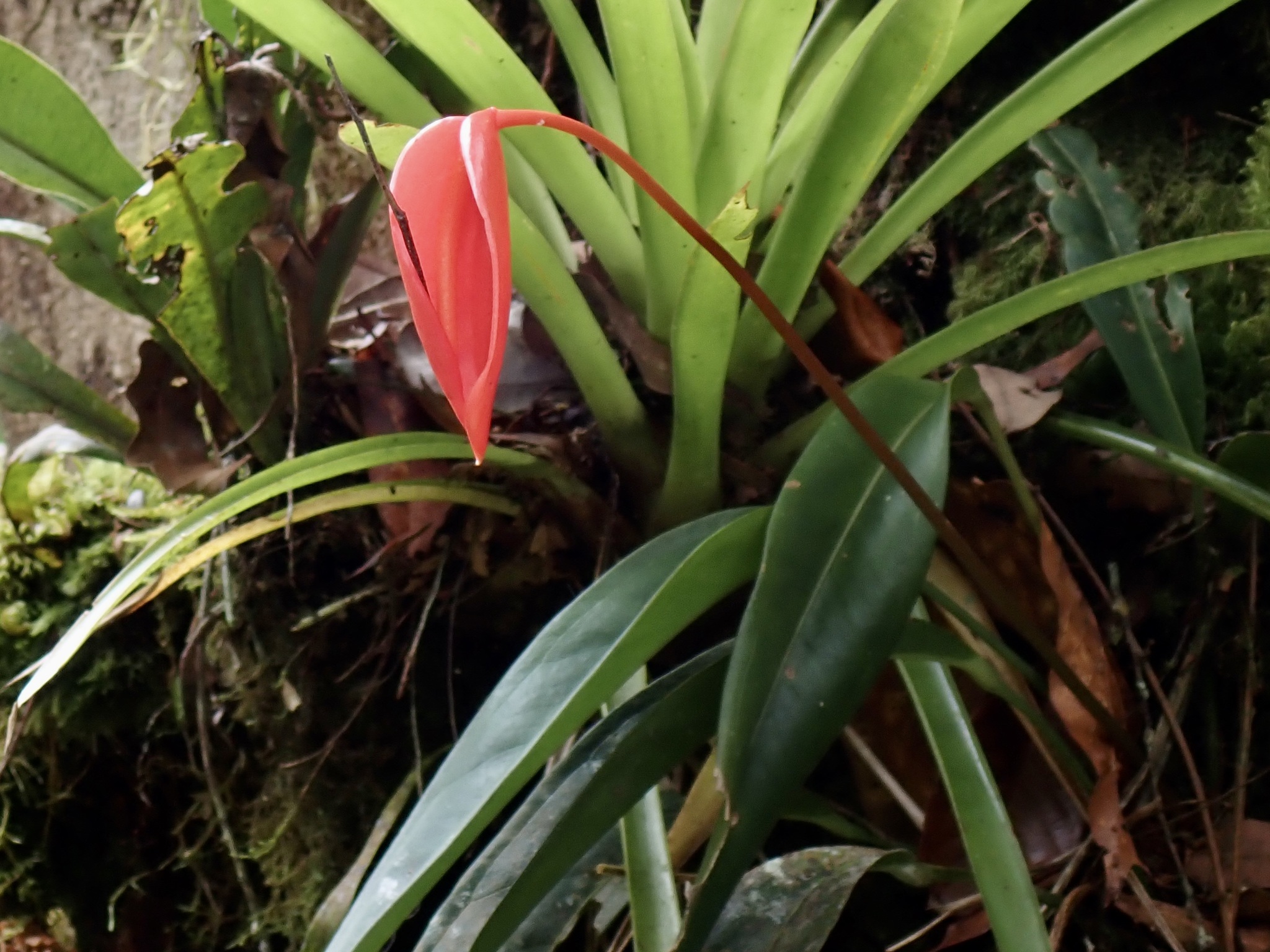
Anthurium scherzerianum, known as the flamingo flower or pigtail plant, is a houseplant grown for its glossy foliage and bright, waxy spathes that appear on and off through the year. It belongs to the Araceae family, and its curling spadix sets it apart from its close relatives.
Source: Epic Gardening
A Costa Rican Understory Plant
This species comes from Costa Rica, one of roughly 1,300 species Heinrich Wilhelm Schott catalogued across the genus Anthurium back in 1860. The genus as a whole hails from Central and South America and the Caribbean, where most anthuriums grow as epiphytes or forest understory plants beneath the tree canopy.
Source: Epic Gardening
A Rhythm of Light and Moisture
Give this plant bright, indirect light indoors, in an acidic, well-draining mix of peat-free ericaceous compost, perlite, and orchid bark. Water freely from spring through autumn and feed with an orchid fertiliser every two weeks in that same stretch, then water sparingly through winter and keep the plant above 18°C. High humidity matters here, so a tray of moist gravel or pebbles beneath the pot helps it along.
Source: RHS
Division, Offsets, or Seed
Propagate in spring or summer by division, by stem or rhizome cuttings, or by detaching offsets. Seed is also an option, sown as soon as it is ripe at a warm 24 to 27°C.
Source: RHS
Tails, Spathes, and Symbolism
What looks like the flower is really the spathe, a colorful bract that flares from the base of the stem, with the true flowers clustered along the curious tail-like spadix at its center. The RHS describes it as an evergreen, clump-forming perennial with long-stalked, lance-shaped dark green leaves and broadly ovate red spathes paired with orange-red spadices. Every part of the plant carries calcium oxalate crystals, so it is harmful if eaten and can irritate skin on contact with the sap.
Source: RHS
Mealybugs and Scale
Mealybugs and scale insects are the pests most likely to trouble this plant.
Source: RHS
Leaf Spot and Wet Feet
Leaf spot can appear on the foliage, and root rot from overwatering is the other common ailment to watch for.
Source: RHS
Little Pruning Needed
This plant asks for no routine pruning beyond removing dead leaves or spent flower stems at the base.
Source: RHS
Care recipe
The species record — the baseline every cultivar inherits unless it says otherwise.
Care notes are early — not yet verified
- Light
- ai:claude-opus-4-8
- Water
- ai:claude-opus-4-8 (range 5-10d)
- Humidity
- ai:claude-opus-4-8
- Soil
- ai:claude-fable-5
- Care
- ai:claude-fable-5
Bright, indirect
≈ every 10 days
High
18–27 °C
Chunky, well-draining aroid mix with bark and perlite
Division of offshoots at repotting
Dilute balanced feed every 4-6 weeks while growing
Moderate
Curled orange-red spathes in bright indirect light
Toxic to cats & dogs & humans
Araceae contain insoluble calcium oxalate crystals, which irritate the mouth and digestive tract if chewed. This is where toxicity lives: every cultivar of this species inherits it and none can override it.
Reference images
Every image credited. Licenses link to their deeds.
Sources: ai:claude-opus-4-8 · ai:claude-opus-4-8 (range 5-10d) · ai:claude-fable-5 · ai:claude-opus-4-8 (family inference)
Kept true by its growers
Every fact here carries its source. Grow Flamingo Flower yourself? What you’ve observed — how it drinks, how it holds its color, a name that’s off — and a clear photo of your plant are exactly what keep this page honest. Contributions are reviewed before anything changes.
Sign in to add what you know →