Species · genus Anthurium · Araceae
Velvet Cardboard Anthurium
Anthurium clarinervium Matuda
Also known as: Velvet Anthurium · Queen Anthurium
Cultivars of A. clarinervium
The named forms growers keep — each with its own page, each honest about how much we know.
No named cultivars catalogued under A. clarinervium yet. When growers document a stable, named form, it earns its own page here.
Guide
The species-level account. Cultivar pages build on this and say where they differ.
The Velvet Cardboard Anthurium
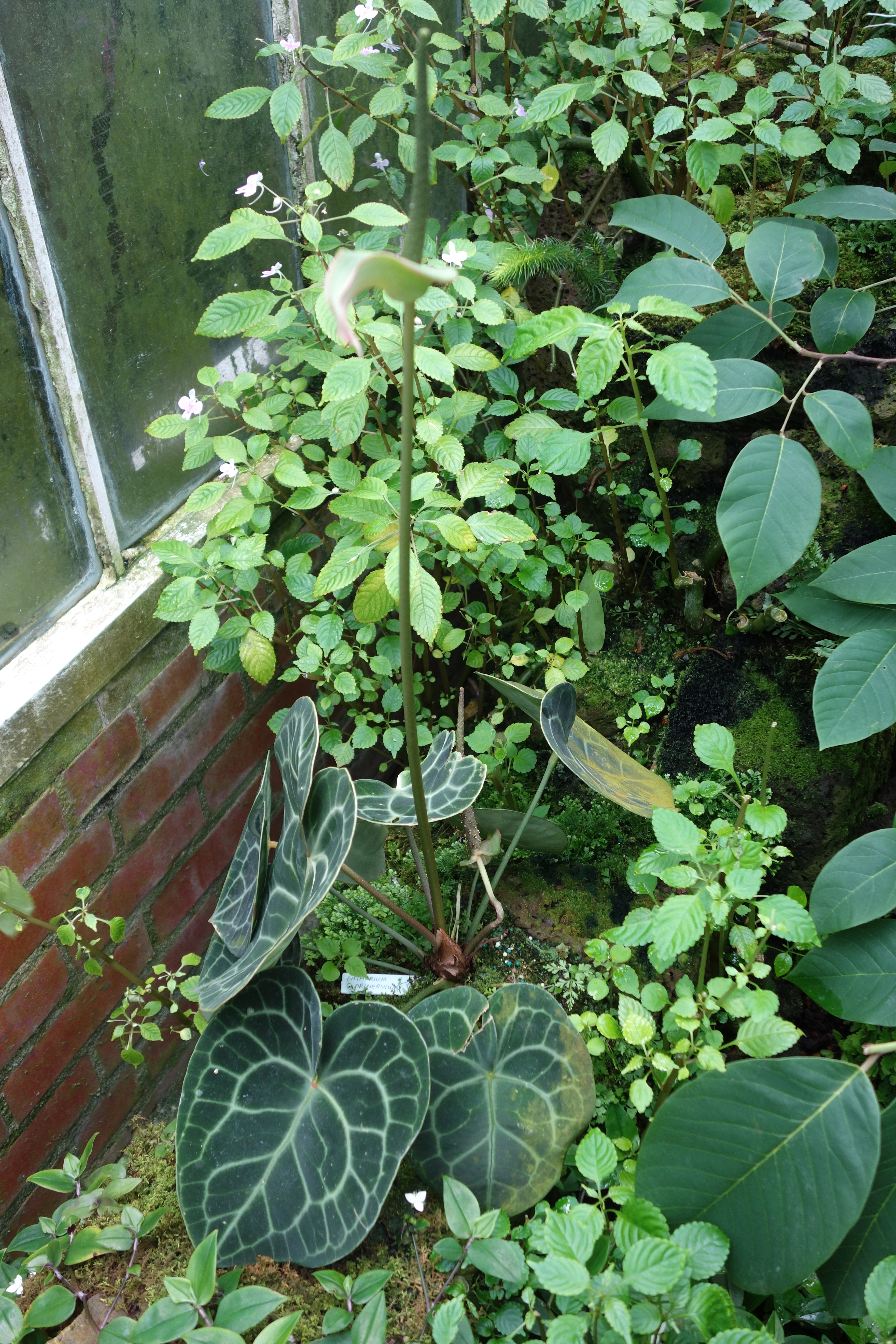
Anthurium clarinervium is a tender, evergreen perennial grown chiefly for its foliage rather than its flowers. It forms a compact clump of deeply lobed, velvety leaves, and it produces long-lasting pale green spathes with purple-flushed spadices throughout the year.
Source: RHS
A Mexican Epiphyte
This species comes from Mexico, where it grows as an epiphyte rather than rooting in the ground. It belongs to the wider Anthurium genus, itself part of a group most heavily cultivated in the twentieth century in Trinidad, before interest spread on to Holland, Hawaii, and Jamaica.
Source: RHS
Bright Light, Careful Moisture
Grow it indoors in bright, indirect light, potted in an acidic mix of ericaceous compost, perlite, and orchid bark, or mounted epiphytically. Water freely from spring to autumn with an orchid fertiliser applied every two weeks, then cut back to sparing water in winter and keep the plant above 18°C. High humidity matters too, and can be helped along by standing the pot on a tray of moist gravel.
Source: RHS
Division and Offsets
Propagate by division, or by taking stem or rhizome cuttings and offsets, working in spring or summer.
Source: RHS
Cardboard-Textured, Silver-Veined Leaves
The plant is known for its large, heart-shaped, velvety leaves, deep green and marked with striking pale, almost silver veining and a thick, cardboard-like texture. It stays entirely epiphytic and never touches the ground in habitat. Flowering does occur, though the purple blooms are smaller and less showy than the foliage, and are uncommon on plants kept indoors.
Source: Epic Gardening
Mealybugs and Scale
Watch for mealybugs and scale insects, the two pests most likely to trouble this plant.
Source: RHS
Root Rot from Overwatering
The main disease risk is root rot, which follows from overwatering rather than any pest or pathogen introduced from outside.
Source: RHS
Tidy as Needed
Maintenance amounts to removing dead leaves or spent flower stems at the base as they appear.
Source: RHS
Care recipe
The species record — the baseline every cultivar inherits unless it says otherwise.
Care notes are early — not yet verified
- Light
- ai:claude-opus-4-8
- Water
- ai:claude-opus-4-8 (range 7-12d)
- Humidity
- ai:claude-opus-4-8
- Soil
- ai:claude-fable-5
- Care
- ai:claude-fable-5
Bright, indirect
≈ every 12 days
High
18–27 °C
Chunky, airy aroid mix with bark, perlite and sphagnum
Division of the clump or basal offsets
Dilute balanced feed every 4-6 weeks in the growing season
Slow
Grown for velvety veined foliage; inconspicuous flowers
Toxic to cats & dogs & humans
Araceae contain insoluble calcium oxalate crystals that irritate the mouth and digestive tract This is where toxicity lives: every cultivar of this species inherits it and none can override it.
Reference images
Every image credited. Licenses link to their deeds.
PrimarySources: ai:claude-opus-4-8 · ai:claude-opus-4-8 (range 7-12d) · ai:claude-fable-5 · ai:claude-opus-4-8 (family inference)
Kept true by its growers
Every fact here carries its source. Grow Velvet Cardboard Anthurium yourself? What you’ve observed — how it drinks, how it holds its color, a name that’s off — and a clear photo of your plant are exactly what keep this page honest. Contributions are reviewed before anything changes.
Sign in to add what you know →