Species · genus Ananas · Bromeliaceae
Pineapple
Ananas comosus (L.) Merr.
Cultivars of A. comosus
The named forms growers keep — each with its own page, each honest about how much we know.
No named cultivars catalogued under A. comosus yet. When growers document a stable, named form, it earns its own page here.
Guide
The species-level account. Cultivar pages build on this and say where they differ.
The Pineapple Plant
Ananas comosus is a terrestrial bromeliad grown for its striking rosette of foliage and, in time, its own edible fruit. It forms a bushy, evergreen clump that can eventually flower and fruit even as a container plant.
Source: RHS
A Tropical American Native
This bromeliad's natural range lies in Central and South America. Under UK conditions it needs glasshouse warmth year-round, rated H1A, meaning it will not tolerate anything below about 15°C.
Source: RHS
Light, Water, and Feed
Give it full sun in a sheltered, south- or west-facing spot, and grow it in well-drained, acid loam or a terrestrial bromeliad compost. Keep humidity low to moderate, avoid draughts, and water freely while it is growing and flowering, adding a weekly balanced liquid feed once fruit is forming. At other times of year, let the compost run barely moist.
Source: RHS
Offsets and Rosette Tops
New plants can be raised by rooting basal offsets in early summer, or by severing the leafy rosette from the top of a fruit. Let the cut rosette callus over for a day or two, then root it in a barely-moist mix of peat substitute and sand, kept in indirect light around 21°C.
Source: RHS
Rosette, Spines, and Fruit
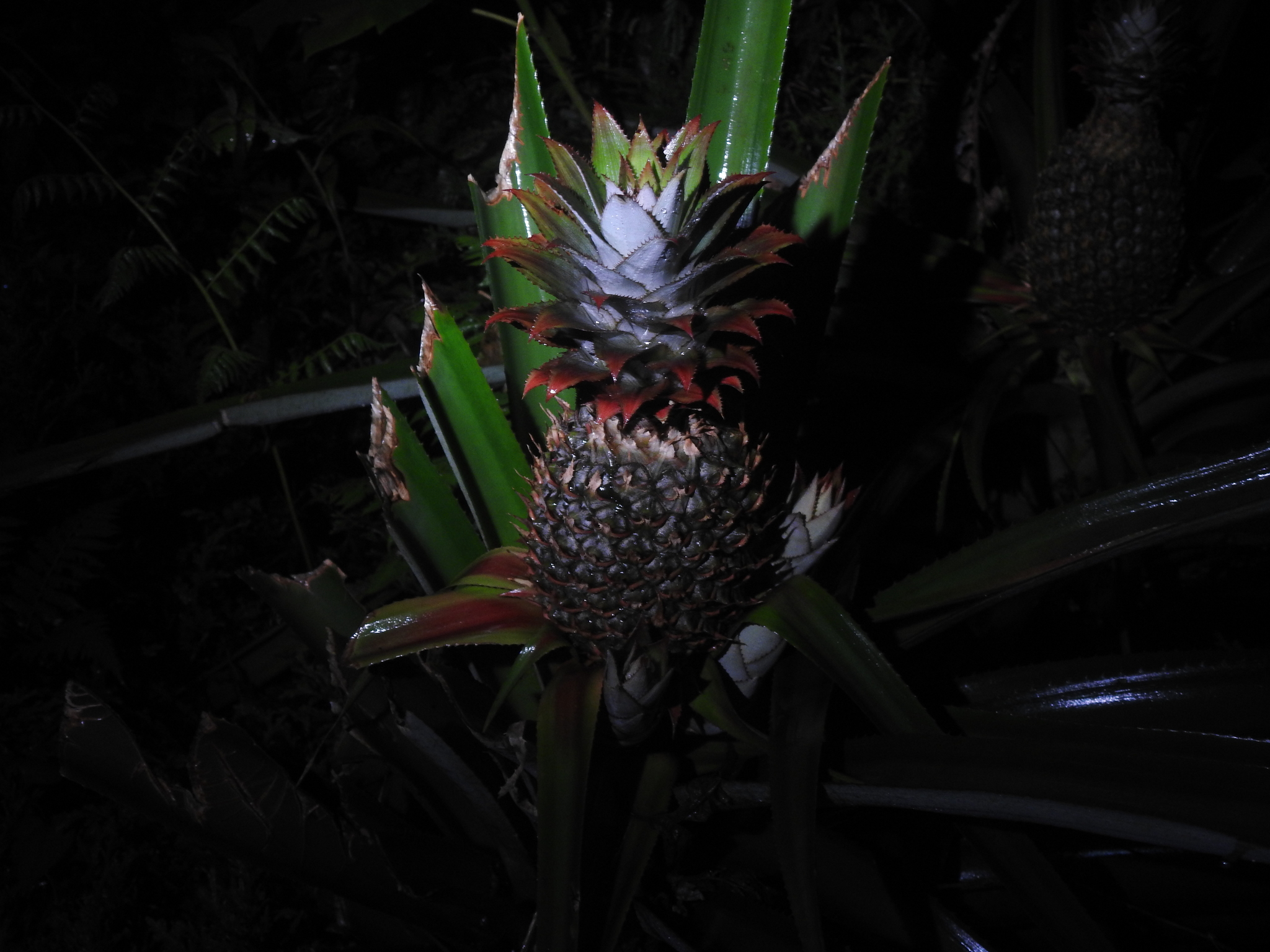
The plant builds a dense basal rosette of dark green, lance-shaped leaves reaching up to a metre long, their edges lined with spines. In summer it sends up a cone-like cluster of purple flowers set against reddish-yellow bracts, which in turn gives way to a bright red, edible pineapple up to 30cm long.
Source: RHS
Watch for Scale
Scale insects are the main pest concern to watch for on this plant. Beyond that, it is generally free of disease.
Source: RHS
Little Pruning Needed
This bromeliad asks for no pruning. Left in a container in full light with the right feeding rhythm, it can take two to five years to reach maturity and fruiting size.
Source: RHS
Care recipe
The species record — the baseline every cultivar inherits unless it says otherwise.
Care notes are early — not yet verified
- Light
- ai:claude-opus-4-8
- Water
- ai:claude-opus-4-8 (range 7-14d)
- Humidity
- ai:claude-opus-4-8
- Soil
- ai:claude-fable-5
- Care
- ai:claude-fable-5
Bright, indirect
≈ every 14 days
Medium
16–30 °C
Well-draining, slightly acidic potting mix with added grit
Root the leafy crown or pot up basal suckers
Balanced liquid feed monthly through the growing season
Slow
Flowers only on mature plants, then sets a small edible fruit
Not yet documented
This is where toxicity lives — every cultivar of this species inherits it and none can override it.
Reference images
Every image credited. Licenses link to their deeds.
PrimarySources: ai:claude-opus-4-8 · ai:claude-opus-4-8 (range 7-14d) · ai:claude-fable-5
Kept true by its growers
Every fact here carries its source. Grow Pineapple yourself? What you’ve observed — how it drinks, how it holds its color, a name that’s off — and a clear photo of your plant are exactly what keep this page honest. Contributions are reviewed before anything changes.
Sign in to add what you know →