Species · genus Aloe · Asphodelaceae
Barbados Aloe
Aloe vera (L.) Burm.f.
Also known as: True Aloe · Aloe Vera · Curaçao Aloe · West Indian Aloe · Aloe
Cultivars of A. vera
The named forms growers keep — each with its own page, each honest about how much we know.
No named cultivars catalogued under A. vera yet. When growers document a stable, named form, it earns its own page here.
Guide
The species-level account. Cultivar pages build on this and say where they differ.
A Familiar Medicinal Succulent
Aloe vera is the succulent most of us have already met, whether smeared on a sunburn or spotted in a little grocery-store pot. It belongs to the Asphodelaceae family and sits among the many species of Aloe as one of the best-known, valued for the gel held inside its thick leaves as much as for its easy presence in a succulent collection.
Source: Epic Gardening
A Mediterranean Native, Widely Naturalized
This plant traces back to the warm Mediterranean region, though it now grows wild across Europe, Africa, Asia, and the Americas. It was named Aloe vera by Carl Linnaeus, and shortly after, botanist Philip Miller called the same plant Aloe barbadensis, a name still heard occasionally alongside the more common one. It is one of well over 500 species in the Aloe genus.
Source: Epic Gardening
Light, Water, and Patience
This plant wants as much bright light as possible but prefers it indirect, since direct sun can scorch the leaves. Water only sparingly, letting the mix dry out fully between waterings and cutting back further in winter, since overwatering is the fastest way to lose a succulent. It asks little in the way of feeding, tolerating poor soil well, though a light dose of phosphorus-heavy fertilizer during active growth or flowering won't go amiss. RHS notes aloes prefer full light, good ventilation, and compost amended with sharp sand or grit for drainage, and that they cannot tolerate freezing temperatures or humid, shaded conditions.
Source: Epic Gardening
Pups Do the Work
Once established, an aloe vera plant sends out small offshoots, often called pups, that grow attached to the parent until they form roots of their own. Propagation is simply a matter of separating healthy pups with several leaves already grown, planting them in well-draining soil, and giving them about a week to settle before watering as usual. Rooting hormone can be used to speed things along, though it isn't essential.
Source: Epic Gardening
Toothed Leaves, Occasional Blooms
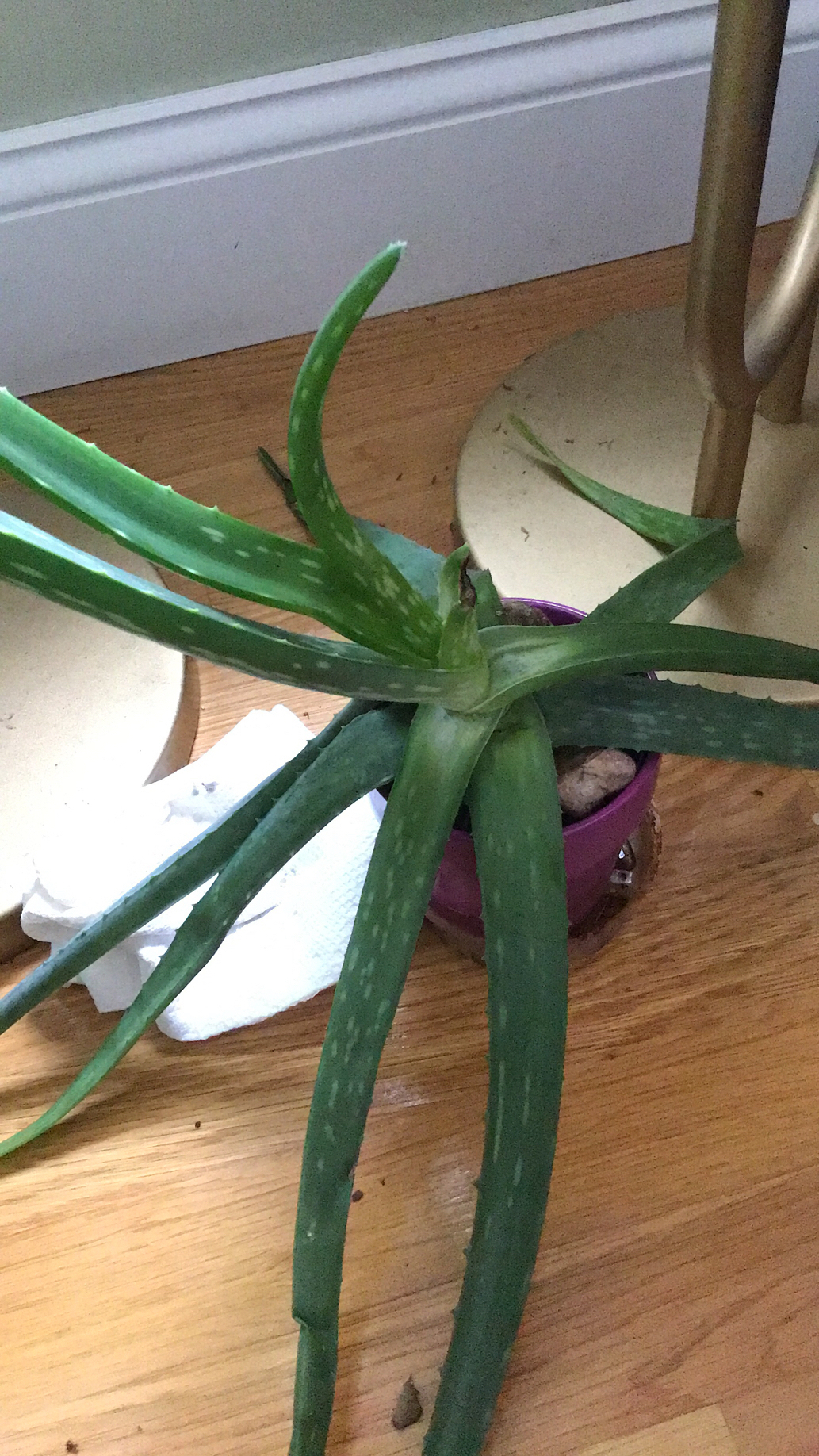
Aloe vera forms a rosette of long, pointed, blue-green-grey leaves with serrated edges, sometimes speckled white, each capable of reaching up to eighteen inches. Beneath the tough skin sits a thick, pale-tinted gel, separated from it by a thin layer of mildly toxic yellow latex. A mature plant may send up flower spikes to three feet, packed with tubular red, orange, or yellow blooms, though flowering isn't something to expect every season.
Source: Epic Gardening
Sap-Suckers to Watch
Mealybugs and scale are the pests most likely to trouble an aloe, tending to gather out of sight on leaf undersides and near nodes, sucking sap and leaving behind a sticky honeydew residue that signals their presence before you spot the insects themselves. Aphids can also move in quickly, especially on soft new growth, causing tissue to collapse and curl. Insecticidal soap, horticultural oil, or a simple dish-soap spray will generally see off both, and a cotton swab dipped in rubbing alcohol works well for hand-picking scale and mealybugs.
Source: Epic Gardening
Reading the Leaves
Aloe vera tends to speak plainly through its leaves: stretched, thin growth points to too little light, while wrinkled, dull leaves usually mean it's thirsty. The opposite extreme, puffy leaves that turn squishy and fall apart when touched, or a stem that goes soft and collapses, signals overwatering and calls for unpotting to trim away any dead brown roots before repotting in fresh mix. Brown leaf tips are often just underwatering catching up with the plant, while yellowing is frequently just old leaves finishing their natural cycle, though it can also flag watering extremes. Aloe also carries a summer dormancy, so flowering, when it comes at all, usually arrives afterward in late autumn or early winter.
Source: Epic Gardening
Care recipe
The species record — the baseline every cultivar inherits unless it says otherwise.
Care notes are early — not yet verified
- Light
- ai:claude-opus-4-8
- Water
- ai:claude-opus-4-8 (range 14-28d)
- Humidity
- ai:claude-opus-4-8
- Soil
- ai:claude-fable-5
- Care
- ai:claude-fable-5
Direct sun
≈ every 28 days
Low — average room
10–27 °C
Gritty, fast-draining cactus and succulent mix
Offsets (pups) separated and dried before potting
Dilute succulent feed once or twice in spring and summer
Moderate
Yellow spikes on mature plants, seldom flowers indoors
Toxic to cats & dogs
Saponins + anthraquinones (the latex) — vomiting, lethargy, diarrhoea. This is where toxicity lives: every cultivar of this species inherits it and none can override it.
Reference images
Every image credited. Licenses link to their deeds.
PrimarySources: ai:claude-opus-4-8 · ai:claude-opus-4-8 (range 14-28d) · ai:claude-fable-5 · ASPCA
Kept true by its growers
Every fact here carries its source. Grow Barbados Aloe yourself? What you’ve observed — how it drinks, how it holds its color, a name that’s off — and a clear photo of your plant are exactly what keep this page honest. Contributions are reviewed before anything changes.
Sign in to add what you know →