Species · genus Aloe · Asphodelaceae
Dune Aloe
Aloe thraskii Baker
Also known as: Strand Aloe · Coast Aloe
Cultivars of A. thraskii
The named forms growers keep — each with its own page, each honest about how much we know.
No named cultivars catalogued under A. thraskii yet. When growers document a stable, named form, it earns its own page here.
Guide
The species-level account. Cultivar pages build on this and say where they differ.
A Coastal Aloe
Aloe thraskii is a succulent that grows as a shrub or small tree, part of the vast Aloe lineage within the Asphodelaceae family. It is one of the many hundreds of accepted Aloe species recognized worldwide.
Source: Kew
Southern African Roots
This species comes from a narrow native range along the southeastern coast of South Africa, stretching from the southeastern Cape Province through to KwaZulu-Natal. It was first formally described by Baker in 1880. Fittingly for a plant of that stretch of coastline, it grows within the subtropical biome.
Source: Kew
Shrub or Tree Form
Aloe thraskii is described as a succulent shrub or tree, giving it a more substantial, woody presence than the many smaller rosette-forming aloes in its genus. Its genus as a whole is enormous, with well over five hundred accepted species spread from Africa to Arabia and beyond, so thraskii's tree-like habit sits at the larger end of that range.
Source: Kew
Care recipe
The species record — the baseline every cultivar inherits unless it says otherwise.
Care notes are early — not yet verified
- Light
- ai:claude-opus-4-8
- Water
- ai:claude-opus-4-8 (range 14-28d)
- Humidity
- ai:claude-opus-4-8
- Soil
- ai:claude-fable-5
- Care
- ai:claude-fable-5
Direct sun
≈ every 28 days
Low — average room
7–30 °C
Gritty, fast-draining cactus and succulent mix
Grown from seed; a single-stemmed tree aloe
Light succulent feed once or twice in the growing season
Slow
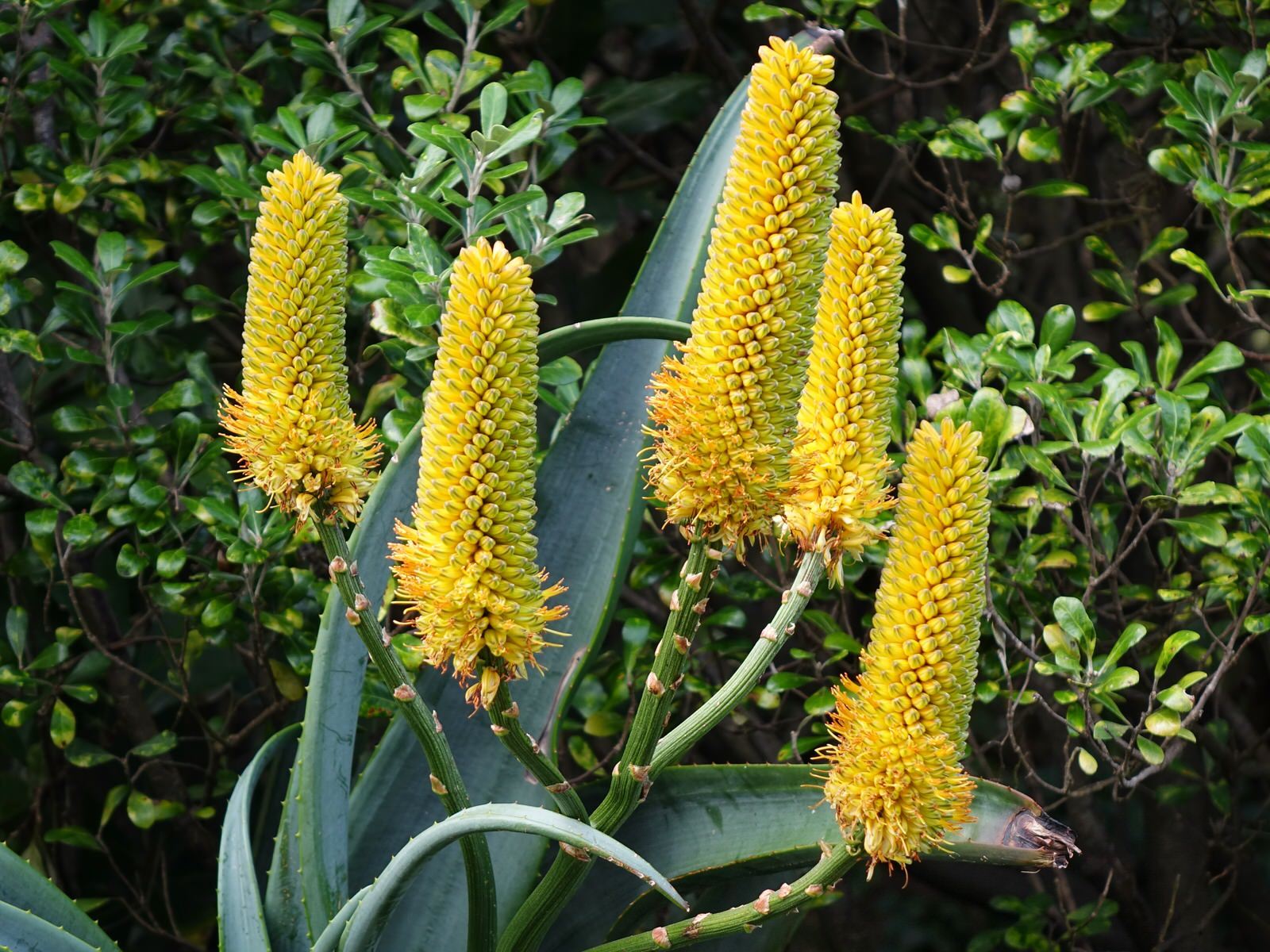
Yellow-orange winter spikes on mature plants, rare indoors
Toxic to cats & dogs
Saponins + anthraquinones (the latex) — vomiting, lethargy, diarrhoea. This is where toxicity lives: every cultivar of this species inherits it and none can override it.
Reference images
Every image credited. Licenses link to their deeds.
Sources: ai:claude-opus-4-8 · ai:claude-opus-4-8 (range 14-28d) · ai:claude-fable-5 · ASPCA
Kept true by its growers
Every fact here carries its source. Grow Dune Aloe yourself? What you’ve observed — how it drinks, how it holds its color, a name that’s off — and a clear photo of your plant are exactly what keep this page honest. Contributions are reviewed before anything changes.
Sign in to add what you know →