Species · genus Aloe · Asphodelaceae
Coral Aloe
Aloe striata Haw.
Cultivars of A. striata
The named forms growers keep — each with its own page, each honest about how much we know.
No named cultivars catalogued under A. striata yet. When growers document a stable, named form, it earns its own page here.
Guide
The species-level account. Cultivar pages build on this and say where they differ.
Coral aloe, in brief
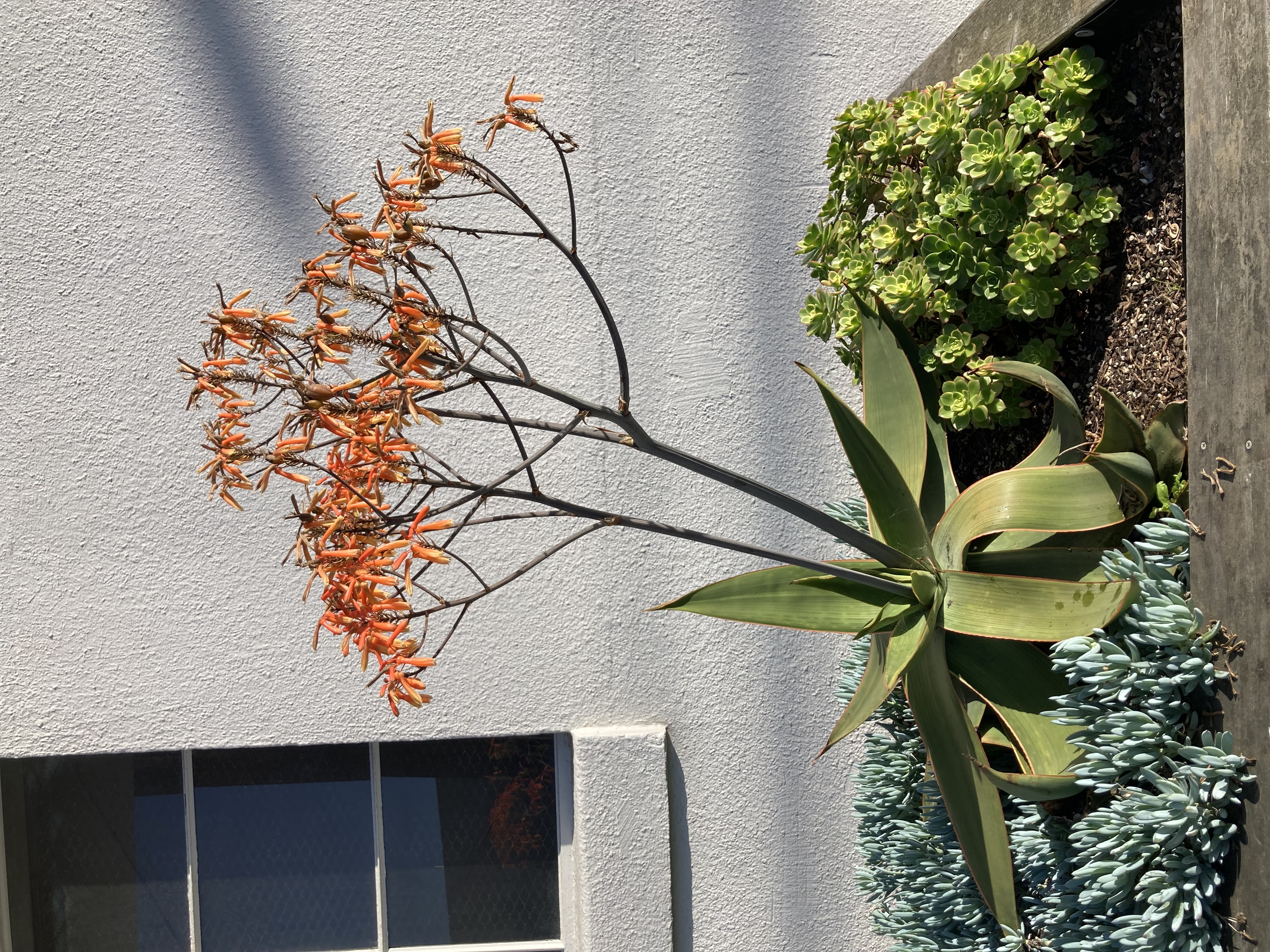
Aloe striata, commonly called coral aloe, is a stemless succulent that grows as a basal rosette, reaching up to a metre tall and wide. Its broad, blue-green leaves and coral-red spring flowers make it a familiar sight among ornamental aloes grown for pots and dry gardens.
Source: RHS
A Cape native
This species belongs to the family Asphodelaceae and comes from the Cape Provinces of South Africa, where it grows as a succulent perennial in a subtropical setting. It was first described by Haworth in 1804, and has since been introduced to places such as Algeria, Ascension, and Morocco. Along the way it has picked up several synonyms, including Aloe albocincta and Aloe hanburiana, reflecting a tangled history of naming before botanists settled on striata.
Source: Kew
Sun, sparing water, summer feed
Coral aloe wants full sun and a well-drained, loam-based or cacti compost, ideally with extra grit worked in. Water it moderately while it is actively growing, then cut right back to very sparing water once it goes dormant for winter. A general liquid fertiliser applied monthly from May to August covers its feeding needs, and it can spend summer outdoors before coming back under cover.
Source: RHS
Seed or separated offsets
Coral aloe can be raised from seed sown as soon as it is ripe, or increased by separating the offsets it produces around the base in spring or early summer. Offsets are rooted on in a cactus potting compost.
Source: RHS
Smooth-edged and striped
Unlike many of its spiny relatives, coral aloe carries smooth, pink margins on its leaves rather than teeth, and these can flush pinkish-red when grown in strong sun. The blue-green leaves are marked with faint, narrow, dark lines running lengthwise, giving the plant its striated name. In spring it sends up panicles of coral-red, tubular flowers above the rosette.
Source: RHS
Watch for scale and mealybug
This aloe can attract scale insects and mealybugs, so it is worth checking the leaf bases and undersides where these pests tend to settle in. Otherwise it is generally free of disease.
Source: RHS
Little upkeep needed
Coral aloe asks for no pruning and is considered a low-maintenance choice for patios and containers. It is drought resistant and reaches maturity slowly, typically over five to ten years.
Source: RHS
Care recipe
The species record — the baseline every cultivar inherits unless it says otherwise.
Care notes are early — not yet verified
- Light
- ai:claude-opus-4-8
- Water
- ai:claude-opus-4-8 (range 14-28d)
- Humidity
- ai:claude-opus-4-8
- Soil
- ai:claude-fable-5
- Care
- ai:claude-fable-5
Direct sun
≈ every 28 days
Low — average room
7–27 °C
Gritty, fast-draining cactus and succulent mix
Offsets (pups) separated and dried before potting
Light succulent feed once or twice in spring and summer
Slow
Coral-pink spikes possible in bright light, uncommon indoors
Toxic to cats & dogs
Saponins + anthraquinones (the latex) — vomiting, lethargy, diarrhoea. This is where toxicity lives: every cultivar of this species inherits it and none can override it.
Reference images
Every image credited. Licenses link to their deeds.
PrimarySources: ai:claude-opus-4-8 · ai:claude-opus-4-8 (range 14-28d) · ai:claude-fable-5 · ASPCA
Kept true by its growers
Every fact here carries its source. Grow Coral Aloe yourself? What you’ve observed — how it drinks, how it holds its color, a name that’s off — and a clear photo of your plant are exactly what keep this page honest. Contributions are reviewed before anything changes.
Sign in to add what you know →