Species · genus Aloe · Asphodelaceae
Short-leaved Aloe
Aloe brevifolia Mill.
Also known as: Crocodile Aloe · Blue Aloe
Cultivars of A. brevifolia
The named forms growers keep — each with its own page, each honest about how much we know.
No named cultivars catalogued under A. brevifolia yet. When growers document a stable, named form, it earns its own page here.
Guide
The species-level account. Cultivar pages build on this and say where they differ.
A Compact Aloe
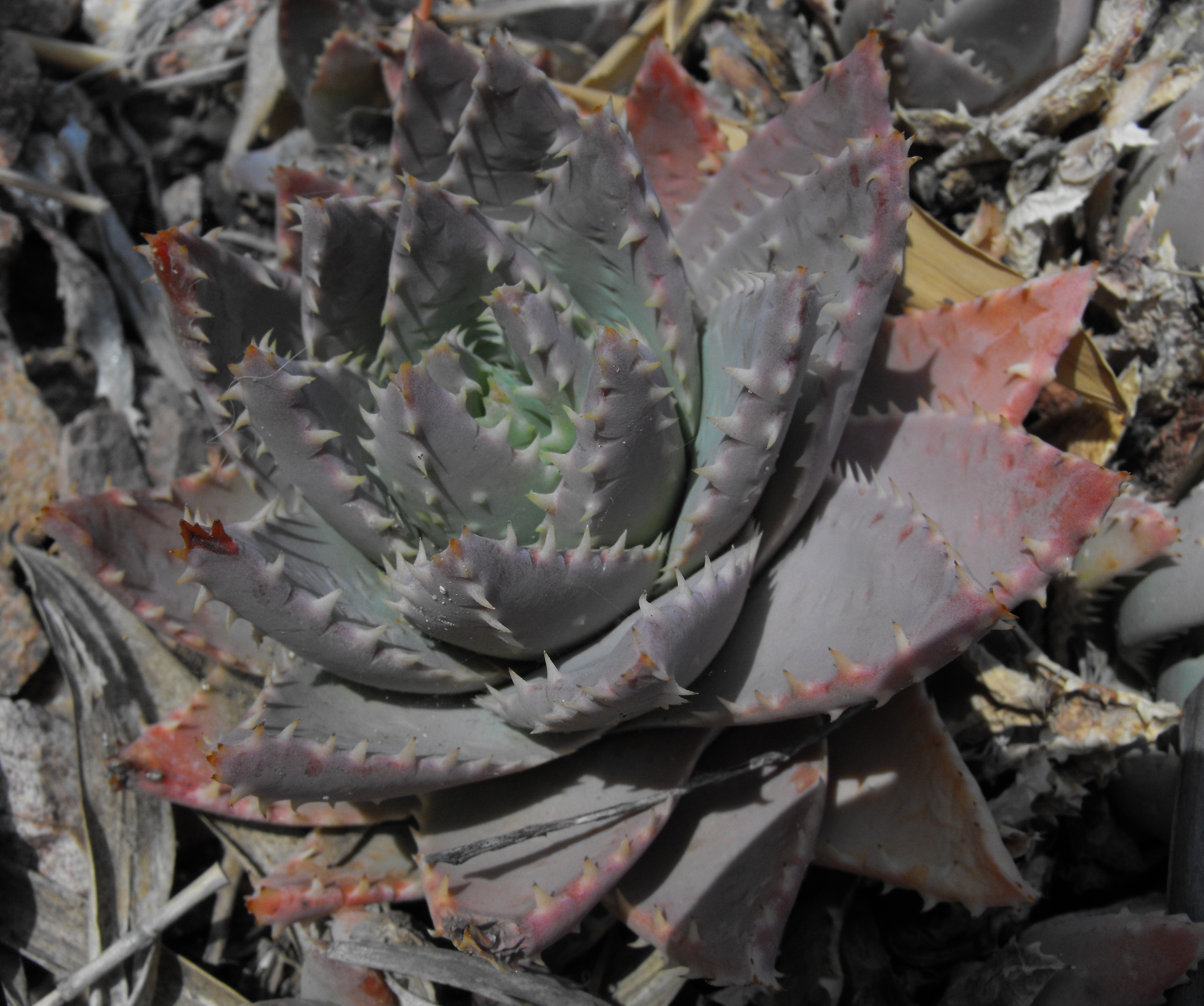
Aloe brevifolia, known as the short-leaved aloe, is a small succulent that rarely tops a foot tall, growing as a rosette of thick, triangular leaves in shades of green, blue, and red. Its compact habit makes it well suited to containers and small garden spaces where a full-sized aloe would not fit.
Source: Epic Gardening
South African Roots
This aloe is native to South Africa, where it experiences growth spurts in spring and fall and slows down through summer and winter. In cultivation it is hardy outdoors in USDA Zones 9 to 11, and mature plants send up tall red-orange flower spikes in late spring that draw birds, bees, and butterflies.
Source: Epic Gardening
Sun, Drought, and Patience
This aloe wants six to eight hours of bright light a day, ideally a south-facing window indoors, and will color up in response to strong sun. Water deeply, then let the soil dry out completely before watering again, easing off further in both summer and winter. It grows in sandy, fast-draining soil with at least a third mineral grit, tolerates dry air best, and only needs feeding once each in spring and fall at half-strength.
Source: Epic Gardening
Offsets Do the Work
Short-leaved aloe propagates readily through the offsets, or suckers, it sends out as it matures, which is also what lets it spread as groundcover. Division is straightforward: unearth a rosette, cut it free from the parent, and let the wound dry a few days before replanting and holding off on water. Leaf propagation is not reliable for this species, since cut leaves tend to go mushy rather than root.
Source: Epic Gardening
Crocodile Plant Traits
The common name crocodile plant comes from the soft spines lining each leaf's edge and running down its spine, which look fierce but aren't dangerous, though the plant itself is mildly toxic if eaten. Under bright light the leaf tips can flush red, yellow, and orange. Named forms exist too, including a variegated type with yellow and white stripes and a larger, more spread-out variety called depressa.
Source: Epic Gardening
Watch for Scale
Scale insects are the main pest to watch for, appearing as tiny white or brown specks that suck at the plant. Keeping the aloe dry and avoiding overfertilizing helps prevent them, and small numbers can simply be wiped off or dabbed with rubbing alcohol, while larger infestations respond to horticultural oil, neem oil, or insecticidal soap.
Source: Epic Gardening
Reading the Leaves
Yellow, mushy leaves signal overwatering and, left unchecked, can progress to root rot, which shows as brown or black, mushy tissue; the fix is a sandier soil and a return to letting it dry fully between waterings. Withered or wrinkled leaves point the other way, toward underwatering, and usually recover after a good drink. Rotted portions should be cut away with sterile clippers, and a badly affected plant is often better propagated from its healthy remnants than nursed as a whole.
Source: Epic Gardening
Slow and Steady
Because it grows slowly, this aloe rarely needs repotting until it has spread noticeably, at which point a slightly larger pot with fresh, dry succulent soil suits it, followed by a few dry days before watering resumes. The only regular pruning is snipping off spent flower stalks at the base once the blooms fade.
Source: Epic Gardening
Care recipe
The species record — the baseline every cultivar inherits unless it says otherwise.
Care notes are early — not yet verified
- Light
- ai:claude-opus-4-8
- Water
- ai:claude-opus-4-8 (range 14-28d)
- Humidity
- ai:claude-opus-4-8
- Soil
- ai:claude-fable-5
- Care
- ai:claude-fable-5
Direct sun
≈ every 28 days
Low — average room
7–27 °C
Gritty, fast-draining cactus and succulent mix
Offsets (pups) separated and dried before potting
Dilute succulent feed once or twice in spring and summer
Slow
Orange-red spikes possible in bright light, uncommon indoors
Toxic to cats & dogs
Saponins + anthraquinones (the latex) — vomiting, lethargy, diarrhoea. This is where toxicity lives: every cultivar of this species inherits it and none can override it.
Reference images
Every image credited. Licenses link to their deeds.
PrimarySources: ai:claude-opus-4-8 · ai:claude-opus-4-8 (range 14-28d) · ai:claude-fable-5 · ASPCA
Kept true by its growers
Every fact here carries its source. Grow Short-leaved Aloe yourself? What you’ve observed — how it drinks, how it holds its color, a name that’s off — and a clear photo of your plant are exactly what keep this page honest. Contributions are reviewed before anything changes.
Sign in to add what you know →