Species · genus Alocasia · Araceae
Sander's Alocasia
Alocasia sanderiana W.Bull
Also known as: Kris'-plant · Kris-plant
Cultivars of A. sanderiana
The named forms growers keep — each with its own page, each honest about how much we know.
No named cultivars catalogued under A. sanderiana yet. When growers document a stable, named form, it earns its own page here.
Guide
The species-level account. Cultivar pages build on this and say where they differ.
The Kris Plant
Alocasia sanderiana, commonly called the mask plant or Kris plant, is a tropical aroid grown for its dramatic, glossy foliage. It belongs to a genus of robust evergreen perennials known for large, strongly veined leaves.
Source: Epic Gardening
A Philippine Native
This species comes from the island of Mindanao in the Philippines, where it grows as a subshrub in wet tropical forest. It was first described in 1884, published in a nursery catalogue under the name William Bull gave it.
Source: Kew
Wavy, Veined Leaves
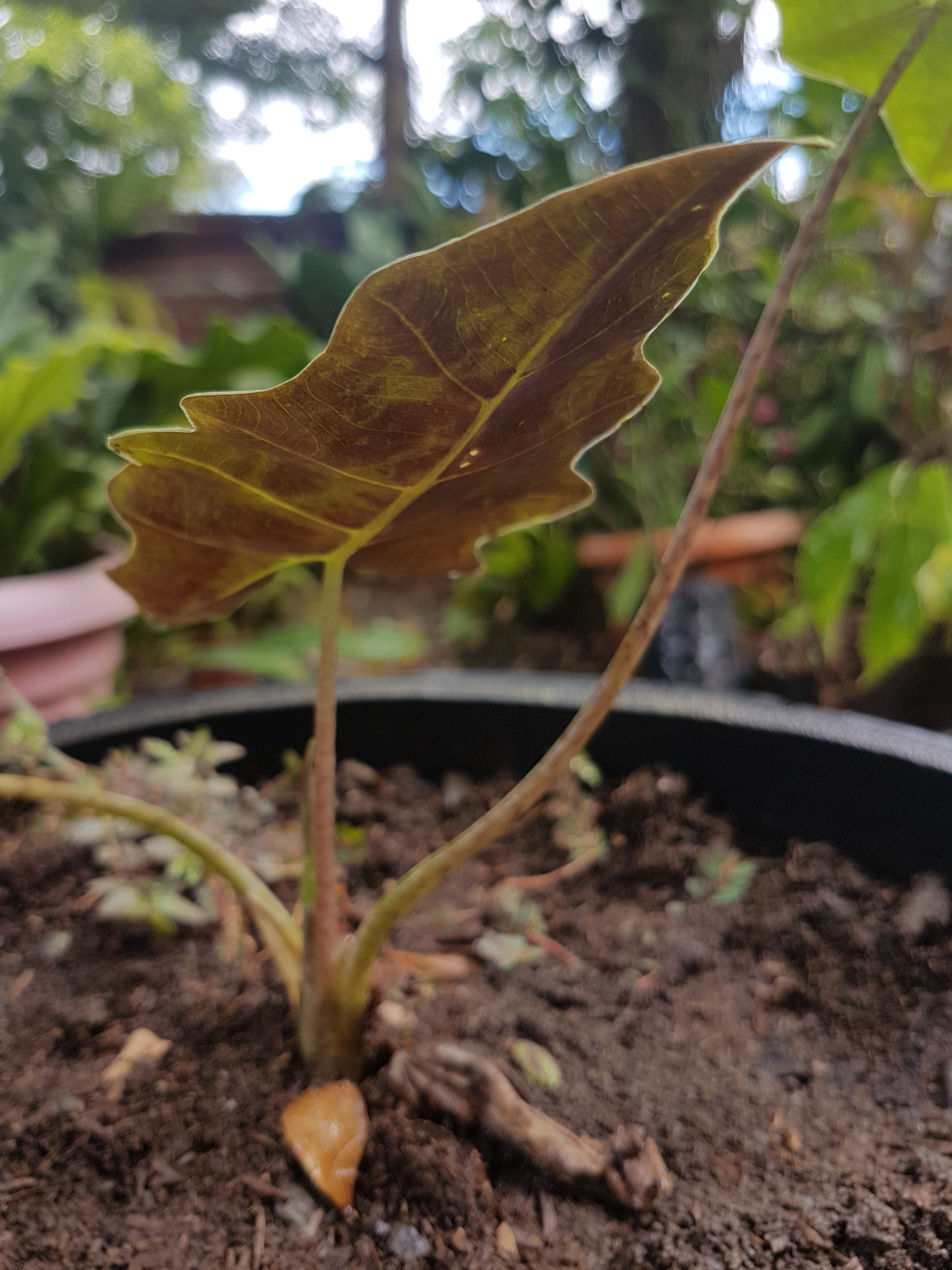
The mask plant carries dramatically large leaves with a dark green sheen, set off by thin white veins running across them. Its edges have a distinctive wavy quality while still keeping the heart shape typical of the genus, and the stem grows sturdy, almost like a small tree trunk holding up the foliage.
Source: Epic Gardening
Care recipe
The species record — the baseline every cultivar inherits unless it says otherwise.
Care notes are early — not yet verified
- Light
- ai:claude-opus-4-8
- Water
- ai:claude-opus-4-8 (range 5-10d)
- Humidity
- ai:claude-opus-4-8
- Soil
- ai:claude-fable-5
- Care
- ai:claude-fable-5
Bright, indirect
≈ every 10 days
High
18–29 °C
Loose, well-draining bark-based aroid mix
Separate rhizome offsets at repotting
Dilute balanced feed monthly in spring and summer
Moderate
Rarely flowers indoors; grown for scalloped silver-veined leaves
Toxic to cats & dogs & humans
Araceae contain insoluble calcium oxalate crystals, which cause oral and gastrointestinal irritation if chewed or ingested. This is where toxicity lives: every cultivar of this species inherits it and none can override it.
Reference images
Every image credited. Licenses link to their deeds.
PrimarySources: ai:claude-opus-4-8 · ai:claude-opus-4-8 (range 5-10d) · ai:claude-fable-5 · ai:claude-opus-4-8 (family inference)
Kept true by its growers
Every fact here carries its source. Grow Sander's Alocasia yourself? What you’ve observed — how it drinks, how it holds its color, a name that’s off — and a clear photo of your plant are exactly what keep this page honest. Contributions are reviewed before anything changes.
Sign in to add what you know →