Species · genus Alocasia · Araceae
Asian Taro
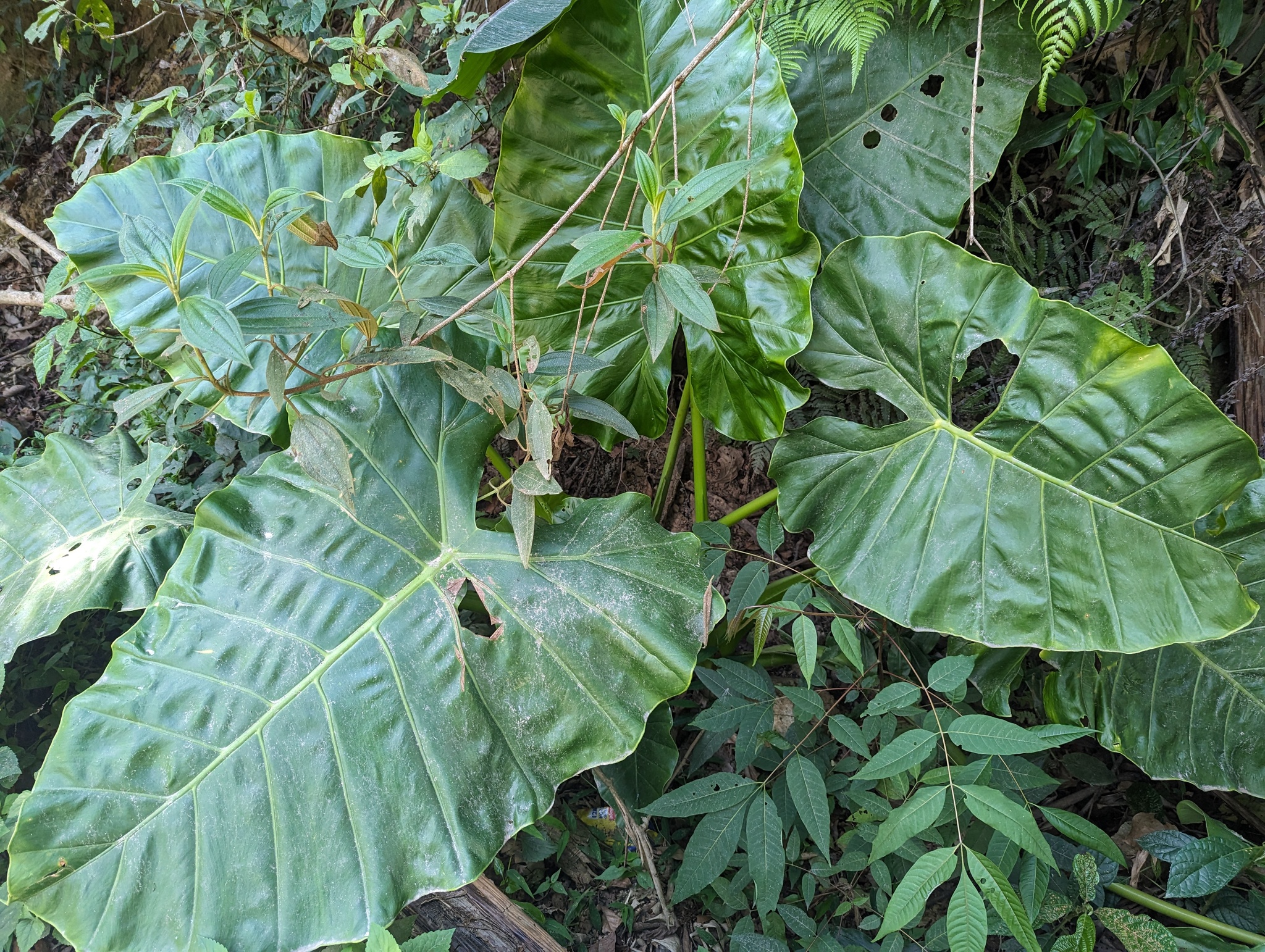
Alocasia odora (G.Lodd.) Spach
Also known as: Elephant-ear · Taro · Giant Elephant's Ear
Cultivars of A. odora
The named forms growers keep — each with its own page, each honest about how much we know.
No named cultivars catalogued under A. odora yet. When growers document a stable, named form, it earns its own page here.
Guide
The species-level account. Cultivar pages build on this and say where they differ.
The Elephant's Ear
Alocasia is a genus of tropical, rhizomatous perennials grown for their bold, shield- or arrow-shaped leaves and prominent veining. Their scale and drama have earned them the common name elephant's ear, and they make a fitting centrepiece in a warm, bright room.
Source: RHS
Forest Floor Origins
Alocasias come from tropical forests, where oversized leaves evolved to gather what light filters down through the canopy above. They sit in the arum family, Araceae, alongside houseplants such as peace lily and Swiss cheese plant, and are close relatives of taro, the root crop grown widely across Africa and South-East Asia.
Source: RHS
Warmth, Light, Moisture
Alocasias want bright but indirect light, since strong sun scorches the foliage, and steady warmth above 16°C through the growing season, with no cold draughts. Water once the top 5cm of compost has dried out, from April to October, and feed with a general liquid fertiliser across the same months to support the leaf production. They also want medium to high humidity, kept up with a gravel tray, misting, grouping of plants, or a humidifier, since home air tends to run drier than they'd like.
Source: RHS
Offsets and Rhizome Division
The simplest method is separating the small offsets that form at the base of a mature plant in spring, sliced away with as much root as possible and potted individually into gritty compost. The fleshy rhizome can also be divided in late spring or early summer, with the pieces kept warm and well lit until new shoots appear. Wear gloves throughout, as the sap is an irritant.
Source: RHS
Bold Foliage, Many Forms
The genus spans a wide range of leaf shapes, sizes, and colours, from the dark, silver-veined leaves of 'Polly' to the sea-creature silhouette of 'Stingray' and the wavy-edged spears of A. lauterbachiana. Some species, like A. macrorrhizos and A. odora, climb to around 1.5 metres and give a jungle presence, while others stay compact enough for a small, humid bathroom.
Source: RHS
Dryness Invites Mites
Low humidity is the main trigger for trouble, drying leaf edges to brown and making conditions inviting for red spider mite, which favours a dry atmosphere. Mealybugs are another pest to watch for on this genus.
Source: RHS
Overwatering and Cold
Root rot is the classic outcome of overwatering, particularly if the plant is kept too wet during its dormant winter rest. Cold draughts and temperatures below 10°C can damage or kill these tropical plants, so warmth needs to be steady, with at least 16°C through the growing season. Given consistent warmth, humidity, water, and feeding in season, followed by a cooler dry winter, alocasias are generally vigorous and untroubled.
Source: RHS
Dormancy and Repotting
In winter alocasias slow down and go dormant, and should be kept cooler and drier, though never below 10°C, with watering reduced to a minimum. Some leaf loss during this rest is normal, and fresh growth returns once spring warmth arrives. Repot every couple of years, or check in spring for crowded roots, moving up only about 5cm in pot diameter at a time and using a gritty, peat-free mix with added drainage.
Source: RHS
Care recipe
The species record — the baseline every cultivar inherits unless it says otherwise.
Care notes are early — not yet verified
- Light
- ai:claude-opus-4-8
- Water
- ai:claude-opus-4-8 (range 5-10d)
- Humidity
- ai:claude-opus-4-8
- Soil
- ai:claude-fable-5
- Care
- ai:claude-fable-5
Bright, indirect
≈ every 10 days
High
16–30 °C
Rich, well-draining mix with bark and perlite
Divide the freely produced rhizome offsets
Balanced liquid feed monthly through the growing season
Fast
Can produce fragrant greenish spathes; grown for foliage
Toxic to cats & dogs & humans
Araceae contain insoluble calcium oxalate crystals, which cause oral and digestive irritation if chewed or ingested. This is where toxicity lives: every cultivar of this species inherits it and none can override it.
Reference images
Every image credited. Licenses link to their deeds.
PrimarySources: ai:claude-opus-4-8 · ai:claude-opus-4-8 (range 5-10d) · ai:claude-fable-5 · ai:claude-opus-4-8 (family inference)
Kept true by its growers
Every fact here carries its source. Grow Asian Taro yourself? What you’ve observed — how it drinks, how it holds its color, a name that’s off — and a clear photo of your plant are exactly what keep this page honest. Contributions are reviewed before anything changes.
Sign in to add what you know →