Species · genus Alocasia · Araceae
Green Velvet Alocasia
Alocasia micholitziana Sander
Also known as: Elephant's-ear · Alocasia 'Frydek'
Cultivars of A. micholitziana
The named forms growers keep — each with its own page, each honest about how much we know.
No named cultivars catalogued under A. micholitziana yet. When growers document a stable, named form, it earns its own page here.
Guide
The species-level account. Cultivar pages build on this and say where they differ.
A Velvet-Leaved Aroid
Alocasia 'Frydek', also sold as Green Velvet, is a tropical perennial in the Araceae family, the same family that gives us philodendron and monstera. It is grown almost entirely as a houseplant for its dramatic foliage rather than for flowers.
Source: Epic Gardening
From Philippine Forest Floors
This cultivar of Alocasia micholitziana traces back to the Philippines, where it grows on the floor of tropical rainforest. It belongs to a genus of some 79 species, many of which share the common nickname elephant ear.
Source: Epic Gardening
Bright Shade, Even Moisture
Indoors this plant wants bright, indirect light and resents more than a couple of hours of direct sun, which scorches the leaves; grown outdoors it prefers partial shade. Water once the top inch or two of soil has dried, always letting excess drain away rather than sitting in a saucer, and feed monthly with a liquid fertiliser from spring through fall while it is actively growing. It settles best in warm rooms between 65 and 85°F, in a light, airy mix amended with perlite, bark, and compost, and it is content on average household humidity rather than misting.
Source: Epic Gardening
By Division or Corm
'Frydek' is propagated by division or by corm, not by stem cutting, and spring or early summer is the time to attempt it. For division, a plant needs at least two bulbs and active new growth; the roots are rinsed clean and the bulbs separated with a sharp knife before potting into fresh soil. For corms, only those still attached to the main plant or already rooted will grow; they are set in a shallow dish with the top exposed and the base submerged, covered to build humidity, and can take a month or more to show new growth before transplanting.
Source: Epic Gardening
Arrowhead Leaves, White Veins
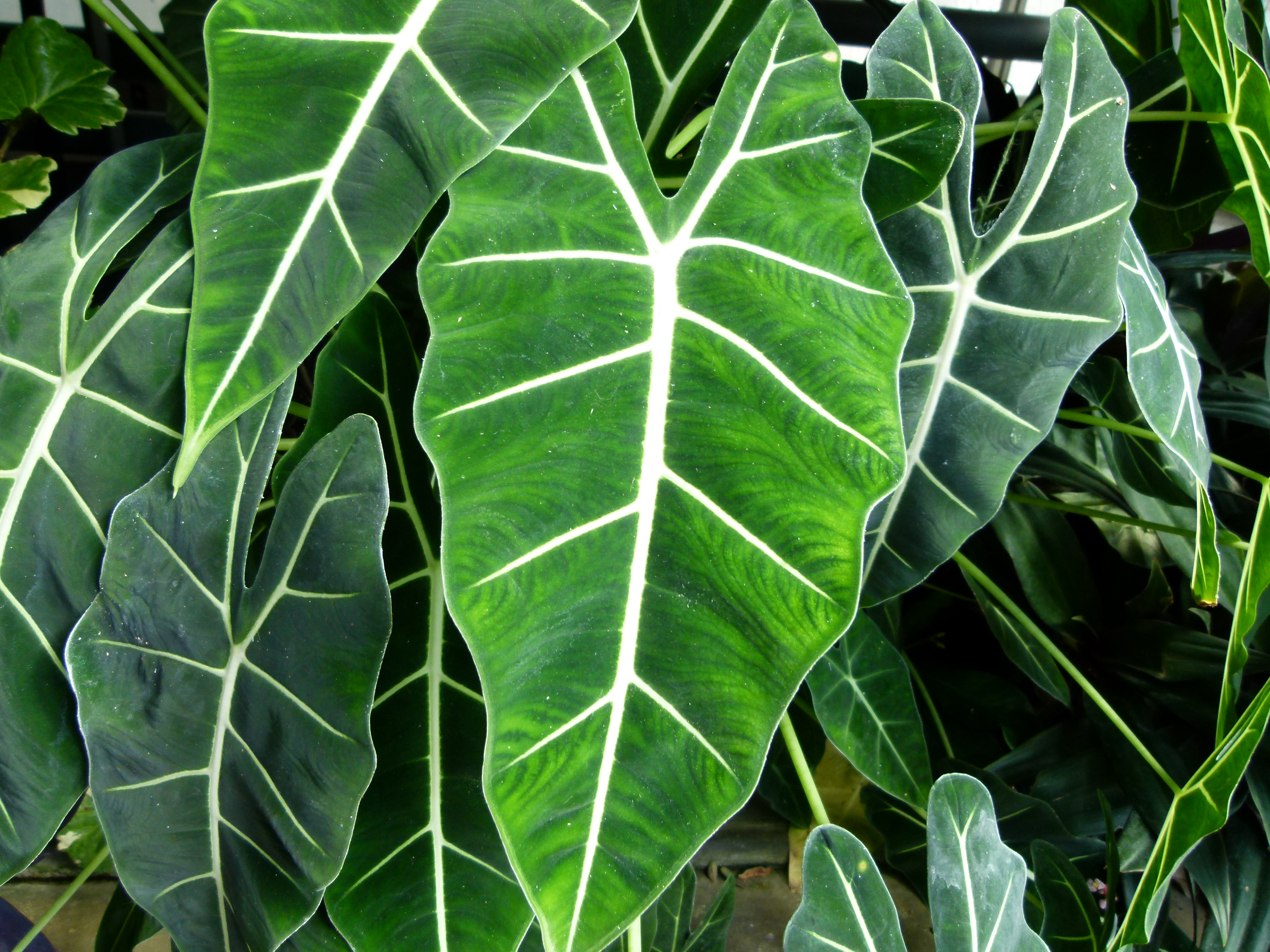
The leaves are arrow-shaped, deep green, and velvety, marked with clean white veining and wavy margins, reaching up to a foot long on stalks that can run to 45cm. The undersides are pale green, and the plant forms a clump to about half a metre to a metre in height and spread. Flowers, when they appear, are an unshowy greenish spathe typical of the family.
Source: RHS
Sap-Suckers to Watch
Mealybugs, aphids, and spider mites are the pests most likely to trouble this plant, with aphids and spider mites being the sap-sucking insects most commonly found on it. Catching an infestation early matters, since these pests can spread quickly to other houseplants nearby.
Source: Epic Gardening
Reading the Leaves
Yellowing foliage usually traces back to under- or over-watering, and is corrected by adjusting the watering schedule or improving drainage with perlite, bark, or coco coir. Leaves dropping outside the normal autumn slowdown point to a sudden shift in light or temperature worth investigating. Drooping can stem from overwatering, underwatering, transplant shock, temperature stress, pests, or disease, so the fix depends on working through each condition in turn; overwatering specifically invites root and stem rot, which can sometimes be salvaged by trimming away mushy brown roots and repotting into fresh soil.
Source: Epic Gardening
Light Hands, Long Waits
Pruning needs are minimal: lower leaves naturally brown and shrivel with age and can simply be pinched or cut away to keep the plant tidy and lower disease risk. Because it tolerates being a little root-bound, repotting is only needed every two to three years, ideally in spring or summer using a pot just one or two sizes larger. Grown outdoors, the plant may drop its leaves and go dormant over winter, returning in spring if the bulb stays firm, and it needs no fertiliser during this dormant stretch since it isn't actively growing.
Source: Epic Gardening
Care recipe
The species record — the baseline every cultivar inherits unless it says otherwise.
Care notes are early — not yet verified
- Light
- ai:claude-opus-4-8
- Water
- ai:claude-opus-4-8 (range 5-10d)
- Humidity
- ai:claude-opus-4-8
- Soil
- ai:claude-fable-5
- Care
- ai:claude-fable-5
Bright, indirect
≈ every 10 days
High
18–29 °C
Airy, fast-draining aroid mix with bark and perlite
Separate rhizome offsets at repotting
Dilute balanced feed monthly in spring and summer
Moderate
Rarely flowers indoors; grown for veined foliage
Toxic to cats & dogs & humans
Araceae contain insoluble calcium oxalate crystals, which irritate the mouth and digestive tract if chewed. This is where toxicity lives: every cultivar of this species inherits it and none can override it.
Reference images
Every image credited. Licenses link to their deeds.
PrimarySources: ai:claude-opus-4-8 · ai:claude-opus-4-8 (range 5-10d) · ai:claude-fable-5 · ai:claude-opus-4-8 (family inference)
Kept true by its growers
Every fact here carries its source. Grow Green Velvet Alocasia yourself? What you’ve observed — how it drinks, how it holds its color, a name that’s off — and a clear photo of your plant are exactly what keep this page honest. Contributions are reviewed before anything changes.
Sign in to add what you know →