Species · genus Alocasia · Araceae
Giant Taro
Alocasia macrorrhizos (L.) G.Don
Also known as: Ape · Cunjevoi · Giant Alocasia · Pai · Elephant's-ear Plant
Cultivars of A. macrorrhizos
The named forms growers keep — each with its own page, each honest about how much we know.
No named cultivars catalogued under A. macrorrhizos yet. When growers document a stable, named form, it earns its own page here.
Guide
The species-level account. Cultivar pages build on this and say where they differ.
Giant Taro, Elephant's Ear
Alocasia macrorrhizos is a rhizomatous tropical perennial of the arum family, grown both for its enormous elephant-ear leaves and, in the tropics, for its edible starchy rhizome. It is sold under names like giant taro, giant elephant's ear, and cunjevoi.
Source: Missouri Botanical Garden
A Naturalised Forest Understory Plant
This is a forest understory species that has spread widely across tropical regions from India through Southeast Asia to Malaysia, though its precise original homeland is uncertain. The RHS places its natural range from central Malesia to northeastern Australia. It sits close to Colocasia, the genus its own name was built to distinguish itself from, and the two are told apart mainly by posture: Alocasia holds its leaves skyward on rigid stalks, while Colocasia lets them droop.
Source: Missouri Botanical Garden
Warmth, Bright Light, Steady Moisture
Grow it indoors in bright but indirect light, in a peat-free houseplant compost with added perlite, and keep it warm, above 16°C, through the growing season while avoiding cold draughts. Water freely once the top of the compost has dried, from spring through autumn, and feed with a general liquid fertiliser every two to three weeks over that same stretch. It appreciates medium to high humidity, best supplied by standing the pot on a tray of moist gravel. Come winter, ease off watering, hold the temperature above 10°C, and let it rest.
Source: RHS
Offsets or Rhizome Division
The simplest route is separating the small offsets that sprout at the base of a mature plant in spring, slicing them free with as much root as possible and potting them into gritty, peat-free compost. Alternatively, divide the fleshy rhizome itself in late spring or early summer, then keep the pieces warm and well lit until new shoots appear. Wear gloves throughout, since the sap can irritate skin.
Source: RHS
Leaves Built to Catch Light
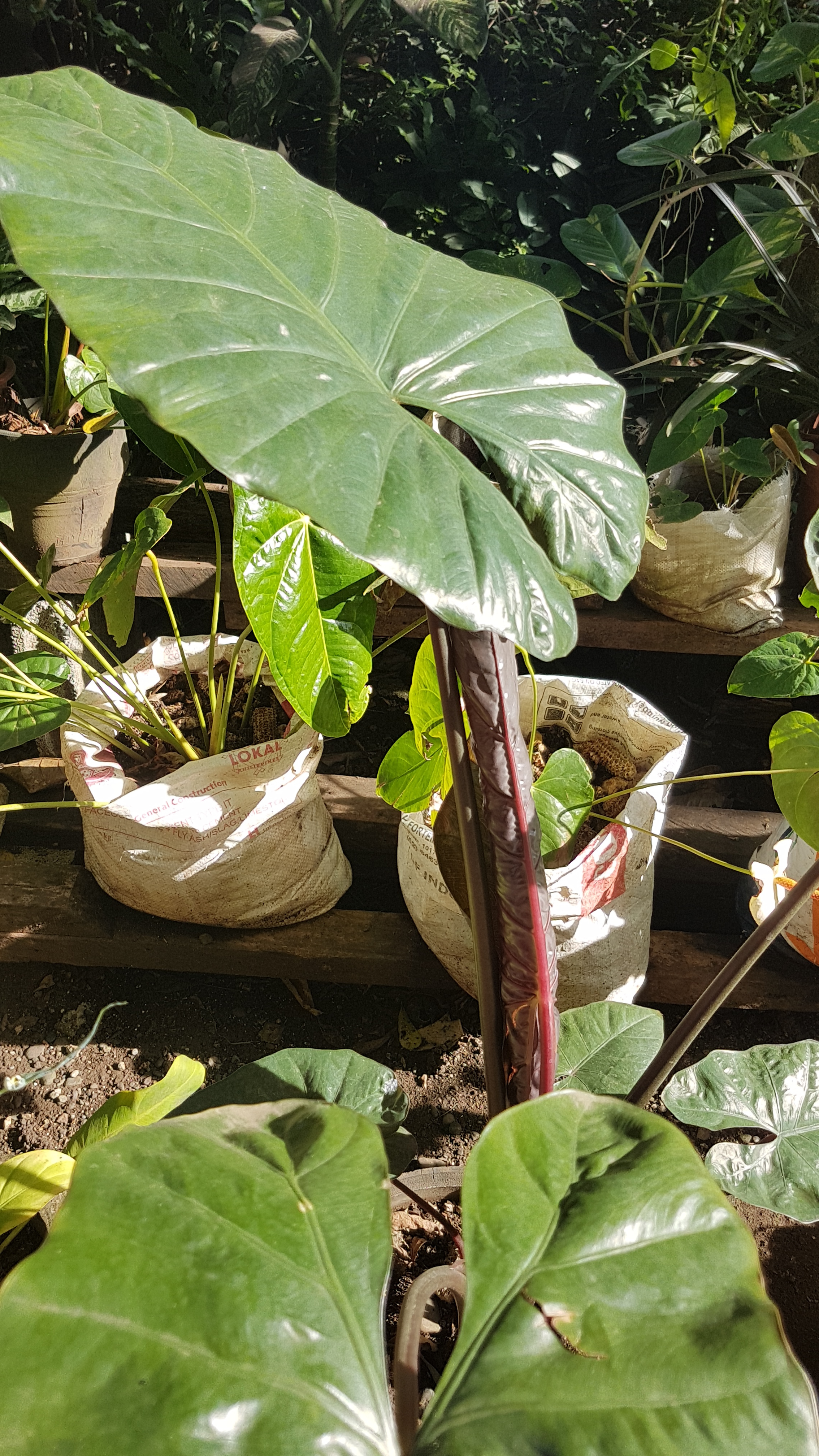
The leaves are thick, heart-shaped, prominently veined and wavy-edged, reaching three to six feet long on rigid, long-sheathed stalks that emerge from a stout trunk which becomes woody with age. Given room, the whole plant can climb to twelve to fifteen feet tall with a six to ten foot spread. It flowers intermittently through the year with a greenish spathe and spadix in the jack-in-the-pulpit style, occasionally followed by red berry-like fruit. Alocasias in general evolved this oversized foliage to gather what light filters down through a tropical canopy.
Source: Missouri Botanical Garden
Watch for Sap-Suckers
Keep an eye out for spider mites, scale, mealybugs and aphids. The RHS notes glasshouse red spider mite and mealybugs in particular as the plant's common troubles, with dry air favouring the mites.
Source: Missouri Botanical Garden
Humidity and Overwatering Issues
Low humidity tends to brown the leaf edges and draws in red spider mites, which favour dry air. Watering too much, especially during the winter rest, is the usual route to root rot. Cold draughts and temperatures below 10°C can also set the plant back, so it is worth keeping it above 16°C through the growing season.
Source: RHS
Repotting and Winter Rest
A young plant can generally stay in its original pot for about a year, then wants repotting every couple of years, checking for crowded roots each spring and sizing up by only about two inches in pot diameter at a time. No pruning or training is needed beyond cutting off fading or dead leaves at the base, always with gloves on. In winter, allow the plant to go dormant in cooler, drier conditions; it may drop some foliage then, but fresh leaves return once growth resumes in spring.
Source: RHS
Care recipe
The species record — the baseline every cultivar inherits unless it says otherwise.
Care notes are early — not yet verified
- Light
- ai:claude-opus-4-8
- Water
- ai:claude-opus-4-8 (range 5-10d)
- Humidity
- ai:claude-opus-4-8
- Soil
- ai:claude-fable-5
- Care
- ai:claude-fable-5
Bright, indirect
≈ every 10 days
High
16–32 °C
Rich, well-draining mix with bark and perlite
Divide the large rhizome offsets
Balanced feed every few weeks while growing vigorously
Fast
May bloom indoors with a pale green spathe; grown for size
Toxic to cats & dogs & humans
Araceae contain insoluble calcium oxalate crystals, which irritate the mouth and digestive tract if chewed. This is where toxicity lives: every cultivar of this species inherits it and none can override it.
Reference images
Every image credited. Licenses link to their deeds.
PrimarySources: ai:claude-opus-4-8 · ai:claude-opus-4-8 (range 5-10d) · ai:claude-fable-5 · ai:claude-opus-4-8 (family inference)
Kept true by its growers
Every fact here carries its source. Grow Giant Taro yourself? What you’ve observed — how it drinks, how it holds its color, a name that’s off — and a clear photo of your plant are exactly what keep this page honest. Contributions are reviewed before anything changes.
Sign in to add what you know →