Species · genus Alocasia · Araceae
Giant Caladium
Alocasia cuprea (H.Low ex Sankey) K.Koch
Cultivars of A. cuprea
The named forms growers keep — each with its own page, each honest about how much we know.
No named cultivars catalogued under A. cuprea yet. When growers document a stable, named form, it earns its own page here.
Guide
The species-level account. Cultivar pages build on this and say where they differ.
Copper Alocasia Overview
Alocasia cuprea, commonly called copper alocasia, is a tender evergreen perennial in the arum family, grown mainly as a houseplant or conservatory subject. It forms a bushy clump of large, glossy, oval leaves and stays fairly compact for an alocasia, reaching only around 80cm high with a similar spread.
Source: RHS
A Bornean Native
This species hails from Borneo, where it grows as part of the tropical understorey flora. In cultivation it is treated as a tender perennial suited to warm, sheltered conditions such as a heated glasshouse or a bright indoor room.
Source: RHS
Warmth, Filtered Light, Steady Moisture
Grow this alocasia indoors in a peat-free houseplant mix with added perlite, positioned in bright but filtered or indirect light. Water freely through the growing season and feed with a general liquid fertiliser every two to three weeks from spring to autumn, cutting watering right back in winter. Humidity matters too; standing the pot on a tray of moist gravel helps, and temperatures should stay above 18°C, as this plant does not tolerate cold.
Source: RHS
Division Or Stem Cuttings
Propagate by dividing the plant in spring or summer, or by taking stem cuttings in spring.
Source: RHS
Rippled Copper Foliage
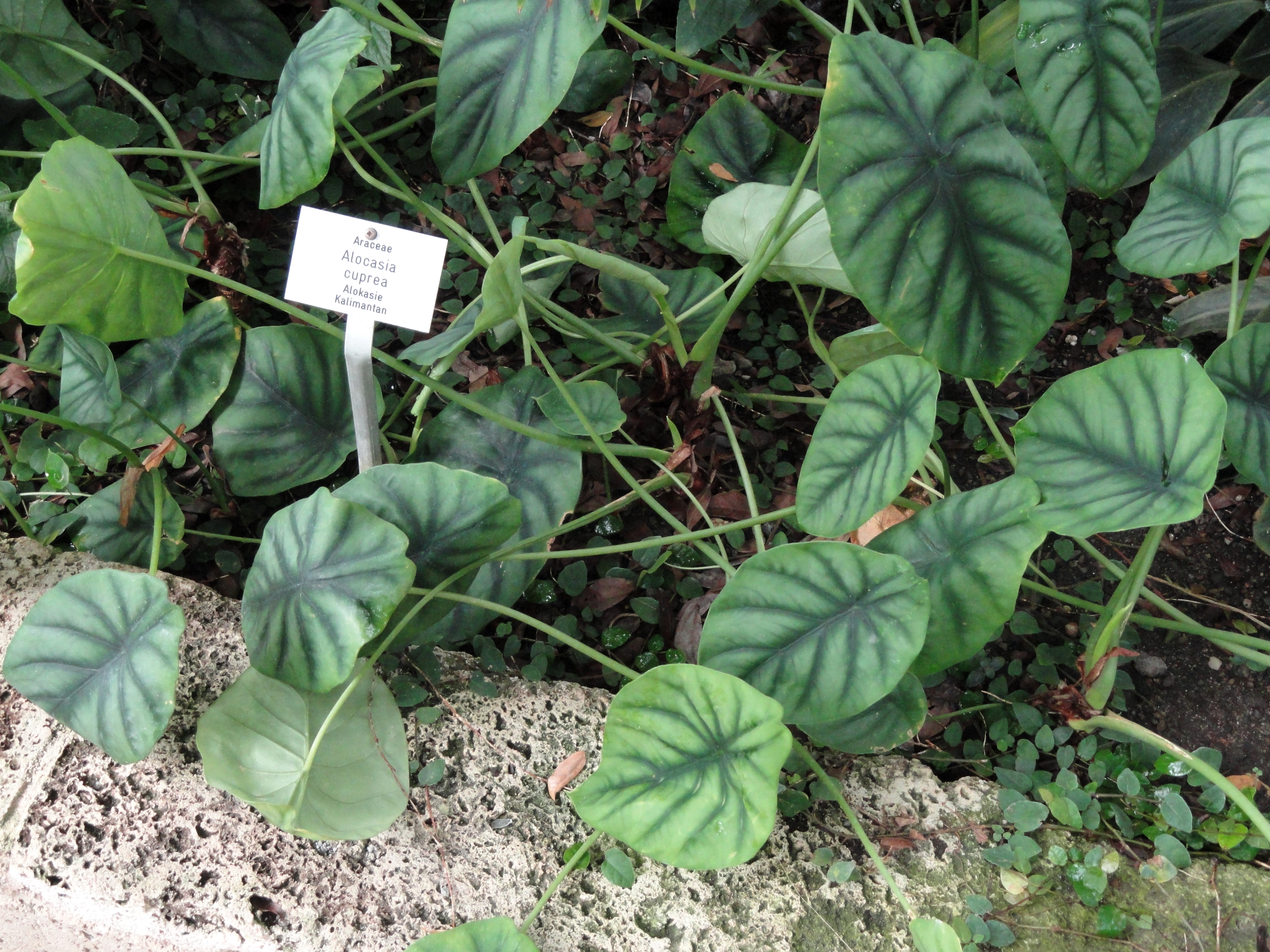
The leaves are the whole point here: young growth emerges flushed red, then matures into a striking mix of green and coppery bronze on top, with dark reddish purple undersides. Each leaf is rippled in texture with deeply indented veins, and can reach up to 60cm long. Occasionally the plant produces small, insignificant pairs of white spathe flowers, though foliage remains the main attraction. A cultivar called 'Red Secret' shows a similar pattern but with darker green upper colouring and more intensely dark red undersides.
Source: RHS
Watch For Mites, Mealybugs
Glasshouse red spider mite and mealybugs are the pests most likely to trouble this plant. The species is otherwise generally disease-free.
Source: RHS
Little Pruning Needed
No routine pruning is required for this alocasia. Beyond seasonal adjustments to watering and warmth, it asks for little in the way of shaping or cutting back.
Source: RHS
Care recipe
The species record — the baseline every cultivar inherits unless it says otherwise.
Care notes are early — not yet verified
- Light
- ai:claude-opus-4-8
- Water
- ai:claude-opus-4-8 (range 5-10d)
- Humidity
- ai:claude-opus-4-8
- Soil
- ai:claude-fable-5
- Care
- ai:claude-fable-5
Bright, indirect
≈ every 10 days
High
18–29 °C
Chunky, airy aroid mix that drains fast
Divide rhizome offsets when repotting
Dilute balanced feed monthly through the growing season
Slow
Rarely flowers indoors; prized for metallic leaves
Toxic to cats & dogs & humans
Araceae contain insoluble calcium oxalate crystals, which irritate the mouth and digestive tract if chewed or ingested. This is where toxicity lives: every cultivar of this species inherits it and none can override it.
Reference images
Every image credited. Licenses link to their deeds.
PrimarySources: ai:claude-opus-4-8 · ai:claude-opus-4-8 (range 5-10d) · ai:claude-fable-5 · ai:claude-opus-4-8 (family inference)
Kept true by its growers
Every fact here carries its source. Grow Giant Caladium yourself? What you’ve observed — how it drinks, how it holds its color, a name that’s off — and a clear photo of your plant are exactly what keep this page honest. Contributions are reviewed before anything changes.
Sign in to add what you know →