Species · genus Alocasia · Araceae
Chinese Taro
Alocasia cucullata (Lour.) G.Don
Also known as: Chinese Ape · Buddha's Hand
Cultivars of A. cucullata
The named forms growers keep — each with its own page, each honest about how much we know.
No named cultivars catalogued under A. cucullata yet. When growers document a stable, named form, it earns its own page here.
Guide
The species-level account. Cultivar pages build on this and say where they differ.
Chinese Taro, Explained
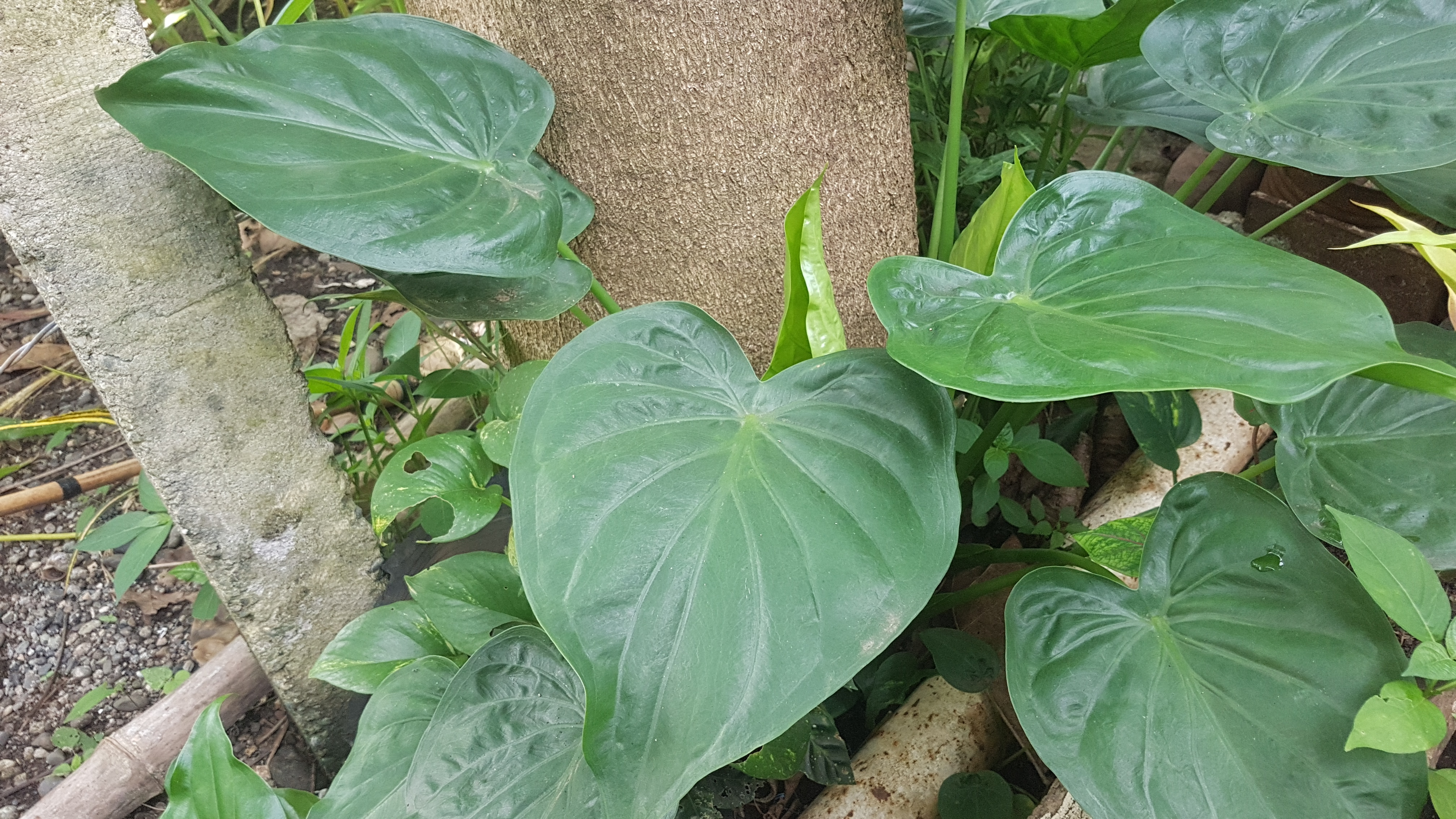
Alocasia cucullata, known to the RHS as Chinese taro, is a tender evergreen perennial that grows as a bushy plant to around a metre tall, with upright, branching stems. It carries broadly oval, heart-shaped, glossy green leaves and only rarely produces pale yellow spathe flowers.
Source: RHS
A Temple Plant
This species is also called the Hooded Dwarf or Buddha hands plant, names tied to its history. In Laos and Thailand it was often kept in Buddhist temples, and in some cultures its leaves have been used as a topical medicine.
Source: Epic Gardening
A Steady Indoor Rhythm
Grown indoors, it does best in a peat-free houseplant compost with added perlite, set in bright but filtered or indirect light. Water freely and feed with a general liquid fertiliser every two to three weeks from spring through autumn, and offer humidity by standing the pot on a tray of moist gravel or pebbles. In winter, cut watering back to a minimum and keep the plant above 12°C.
Source: RHS
Division or Cuttings
Propagate this plant by division in spring or summer, or by taking stem cuttings in spring.
Source: RHS
Cascading, Uneven Leaves
The most telling feature of this plant is that its heart-shaped leaves grow to noticeably different sizes on the same stem, giving a cascading look rather than a tidy, even one. Left to grow well, a mature specimen starts to resemble a small flourishing bush.
Source: Epic Gardening
Mites and Mealybugs
Keep an eye out for glasshouse red spider mite and mealybugs, the two pests this plant tends to attract.
Source: RHS
Little Pruning Needed
No pruning is required for this plant, and it is generally free of disease.
Source: RHS
Care recipe
The species record — the baseline every cultivar inherits unless it says otherwise.
Care notes are early — not yet verified
- Light
- ai:claude-opus-4-8
- Water
- ai:claude-opus-4-8 (range 5-10d)
- Humidity
- ai:claude-opus-4-8
- Soil
- ai:claude-fable-5
- Care
- ai:claude-fable-5
Bright, indirect
≈ every 10 days
High
16–30 °C
Well-draining aroid mix with bark and perlite
Separate the readily produced rhizome offsets
Balanced liquid feed monthly in spring and summer
Moderate
Rarely flowers indoors
Toxic to cats & dogs & humans
Araceae contain insoluble calcium oxalate crystals, which irritate the mouth and digestive tract if chewed. This is where toxicity lives: every cultivar of this species inherits it and none can override it.
Reference images
Every image credited. Licenses link to their deeds.
PrimarySources: ai:claude-opus-4-8 · ai:claude-opus-4-8 (range 5-10d) · ai:claude-fable-5 · ai:claude-opus-4-8 (family inference)
Kept true by its growers
Every fact here carries its source. Grow Chinese Taro yourself? What you’ve observed — how it drinks, how it holds its color, a name that’s off — and a clear photo of your plant are exactly what keep this page honest. Contributions are reviewed before anything changes.
Sign in to add what you know →