Species · genus Alocasia · Araceae
Alocasia Dragon Scale
Alocasia baginda Kurniawan & P.C.Boyce
Also known as: Dragon Scale · Dragon Scale Alocasia · Alocasia Silver Dragon · Silver Dragon
Cultivars of A. baginda
The named forms growers keep — each with its own page, each honest about how much we know.
No named cultivars catalogued under A. baginda yet. When growers document a stable, named form, it earns its own page here.
Guide
The species-level account. Cultivar pages build on this and say where they differ.
A Scaled Beauty
'Dragon Scale' is a cultivar of Alocasia baginda, grown for foliage so heavily veined and textured it looks almost reptilian. It belongs to the Araceae family and is one of the more manageable alocasias, though it still asks for consistent attention rather than neglect.
Source: Epic Gardening
Borneo's Understory
The species Alocasia baginda is native to Borneo, in Kalimantan, where it grows as part of the wet tropical biome. This forest-floor origin explains why the plant, grown as 'Dragon Scale' indoors, is adapted to filtered light and humid, sheltered conditions rather than open sun.
Source: Kew
Light, Water, Warmth Together
Give it bright, indirect light, such as an east-facing window, since direct afternoon sun scorches the leaves while too little light stalls growth. Keep the soil consistently lightly moist in a chunky, well-draining aroid mix, watering when the top inch or two dries out and easing off in fall and winter. It wants warm, stable temperatures between 55 and 80°F and humidity of 60 to 80 percent, with a diluted balanced fertilizer every four to six weeks during the growing season only.
Source: Epic Gardening
Division and Corms
'Dragon Scale' cannot be propagated from leaf or stem cuttings; division and corm propagation are the only reliable routes, best attempted in spring or early summer. For division, separate rooted clumps along the rhizome by hand, ensuring each section keeps its own roots and at least one growth point. Corms found near the roots can also be potted or started in water, though they are slower and some should always be left with the mother plant as a reserve.
Source: Epic Gardening
Metallic, Scale-Like Leaves
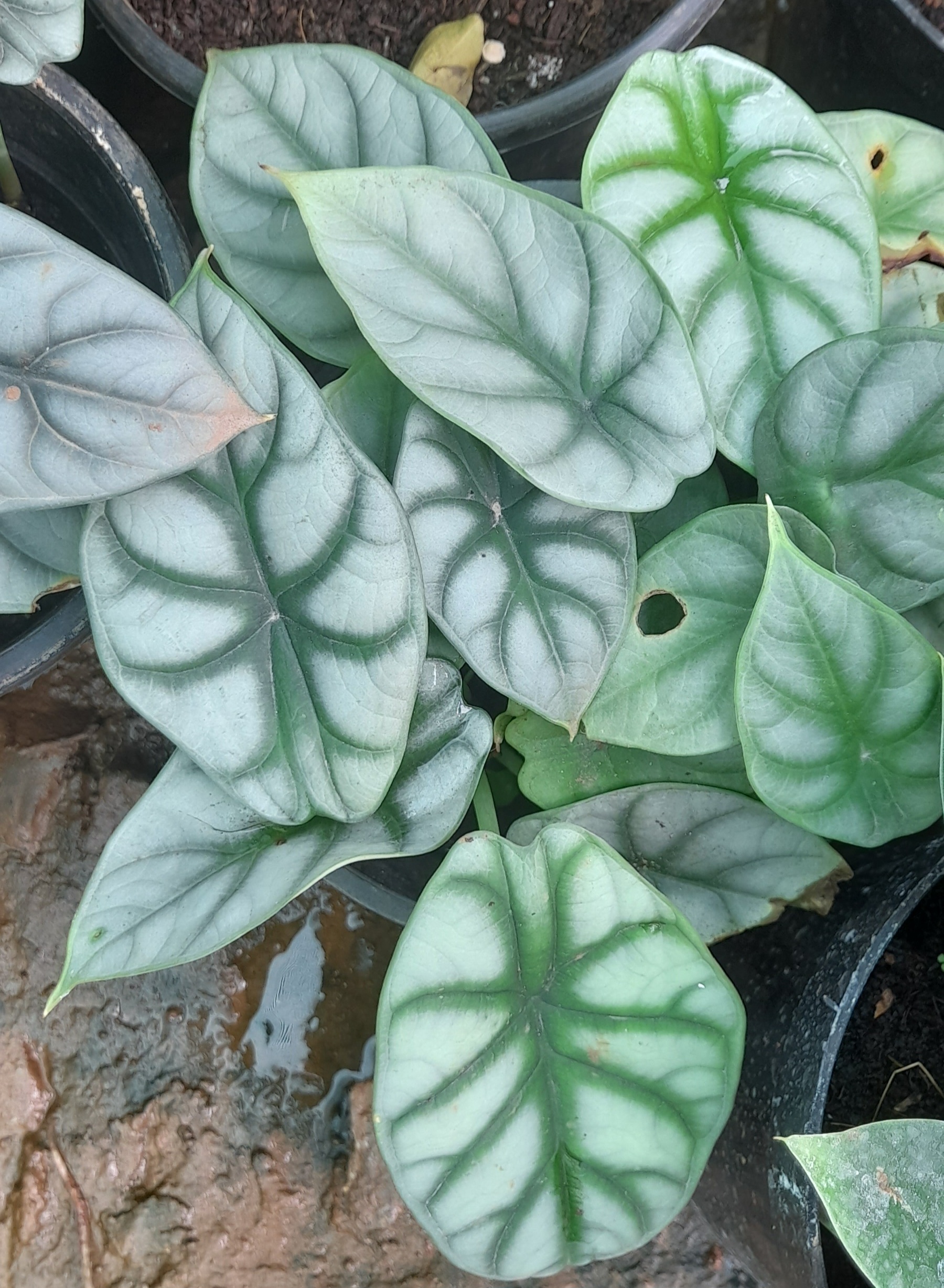
The leaves are thick, rigid, and leathery, marked by deep veins that raise the surface into a scale-like pattern in silvery jade green darkening toward the center. New leaves emerge paler and deepen with age, so a single plant often shows several tones at once. It grows from underground rhizomes and tubers that store water and nutrients, letting the plant regrow after dieback, and all parts contain calcium oxalate crystals that are toxic if ingested.
Source: Epic Gardening
Watch the Undersides
Spider mites are the most common pest, and the textured leaf surface makes them easier to miss than on smooth-leaved plants, so check leaf undersides regularly for fine webbing or stippling. Mealybugs and scale can also turn up, especially on new growth. Wiping affected areas and treating with insecticidal soap or neem oil, alongside keeping humidity up, helps head off infestations.
Source: Epic Gardening
Wilting, Yellowing, Rot
Wilting most often traces back to watering: a wet, wilting plant suggests overwatering and root rot, while a bone-dry, wilting plant just needs a drink. Occasional yellowing of an older leaf is normal, but widespread or new-leaf yellowing points to overwatering, nutrient deficiency, or insufficient light. Brown edges signal low humidity or inconsistent watering, brown patches in leaf centers suggest sunburn, and root rot itself is almost always the result of overwatering or poor drainage.
Source: Epic Gardening
Tidying and Repotting
Wipe the textured leaves occasionally with a damp cloth to clear dust and deter pests, and snip off yellowing or dead leaves at the base as they appear. Repot every two to three years, or once roots show at the drainage holes, moving up only one pot size and choosing spring so the plant can settle in during active growth. Cold below 55°F, low light, or repotting stress can push the plant into dormancy and leaf drop, but the tubers usually carry it through to regrowth in spring.
Source: Epic Gardening
Care recipe
The species record — the baseline every cultivar inherits unless it says otherwise.
Care notes are early — not yet verified
- Light
- ai:claude-opus-4-8
- Water
- ai:claude-opus-4-8 (range 5-10d)
- Humidity
- ai:claude-opus-4-8
- Soil
- ai:claude-fable-5
- Care
- ai:claude-fable-5
Bright, indirect
≈ every 10 days
High
18–29 °C
Very loose, fast-draining aroid mix rich in bark
Separate rhizome divisions or offsets
Light balanced feed monthly in the growing season
Slow
Rarely flowers indoors
Toxic to cats & dogs & humans
Araceae contain insoluble calcium oxalate crystals, which irritate the mouth and digestive tract if chewed. This is where toxicity lives: every cultivar of this species inherits it and none can override it.
Reference images
Every image credited. Licenses link to their deeds.
PrimarySources: ai:claude-opus-4-8 · ai:claude-opus-4-8 (range 5-10d) · ai:claude-fable-5 · ai:claude-opus-4-8 (family inference)
Kept true by its growers
Every fact here carries its source. Grow Alocasia Dragon Scale yourself? What you’ve observed — how it drinks, how it holds its color, a name that’s off — and a clear photo of your plant are exactly what keep this page honest. Contributions are reviewed before anything changes.
Sign in to add what you know →