Species · genus Agave · Asparagaceae
Royal Agave
Agave victoriae-reginae T.Moore
Also known as: Queen Victoria Agave
Cultivars of A. victoriae-reginae
The named forms growers keep — each with its own page, each honest about how much we know.
No named cultivars catalogued under A. victoriae-reginae yet. When growers document a stable, named form, it earns its own page here.
Guide
The species-level account. Cultivar pages build on this and say where they differ.
The Royal Agave
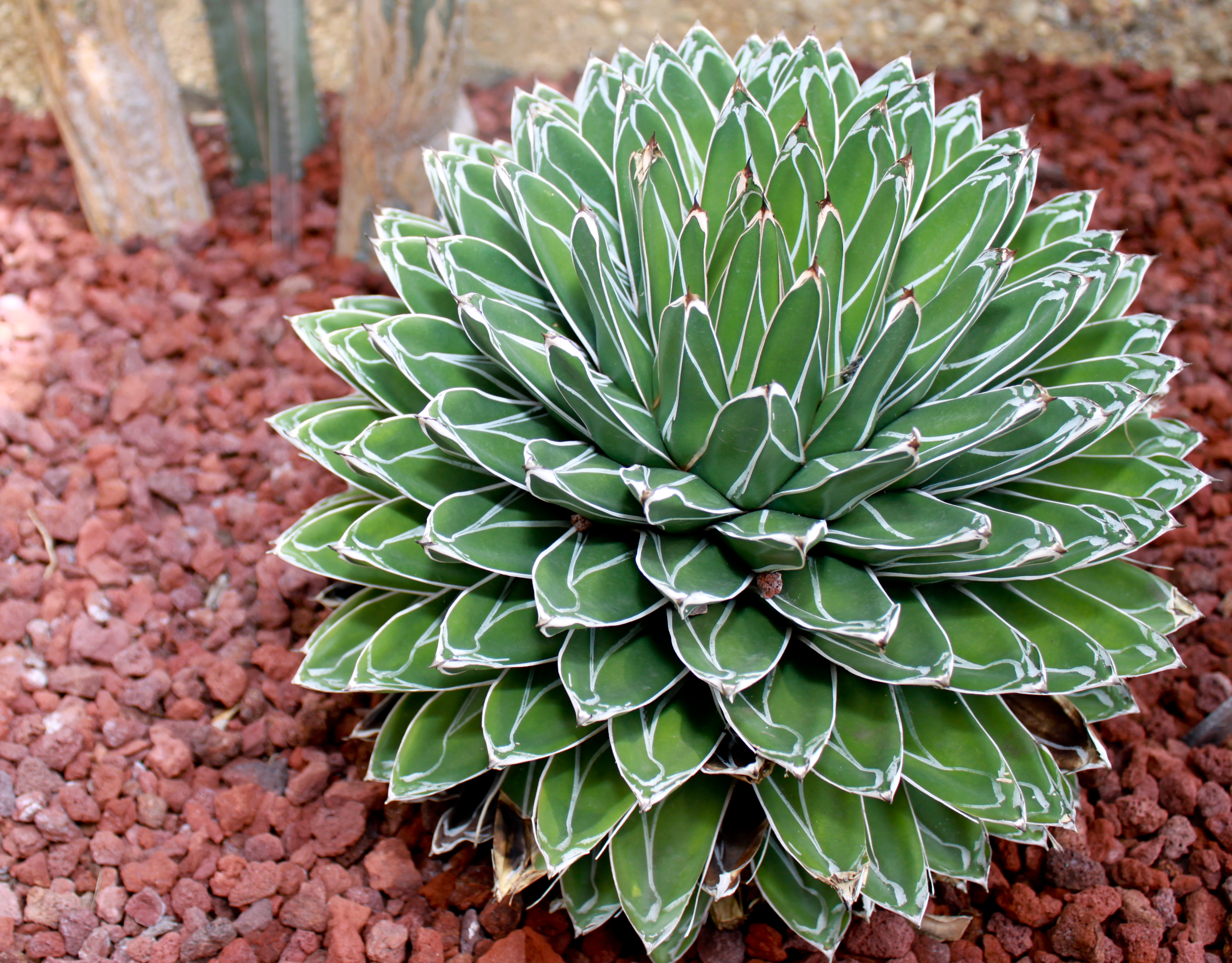
Agave victoriae-reginae, sometimes called the royal agave or Queen Victoria century plant, is an evergreen succulent that forms a tight, sculptural rosette of hard, spine-tipped leaves. It stays compact for a houseplant or patio pot, reaching only a modest 0.1 to 0.5 metres in height and spread even at maturity.
Source: RHS
A Mexican Native
This agave hails from Mexico, and it carries an Award of Garden Merit from the RHS as a recognised garden and greenhouse performer. It is listed under several synonyms, including Agave ferdinandi-regis and Agave victoriae-reginae var. nickelsiae, reflecting some history of botanical reclassification.
Source: RHS
Sun, Sand, and Restraint
Give this agave full sun, ideally a south- or west-facing spot with shelter, and grow it in well-drained loam or sandy compost, such as a standard cactus mix, with an acid to neutral pH. Water freely through summer and feed with a balanced liquid fertiliser three to four times during the growing season, but keep the plant almost dry over winter. It is drought resistant and rated H2, meaning it tolerates cool conditions but not frost, so it needs winter protection or an overwintering spot in a greenhouse or conservatory.
Source: RHS
Offsets Do the Work
Propagation is by offsets, taken either in spring or autumn.
Source: RHS
Thick Rosettes, Rare Blooms
The plant's defining feature is its rosette of thick, straight, mid-green leaves tipped with sharp spines, each leaf reaching up to 30cm long. Given time, it can send up narrow flower spikes of creamy-white blooms in racemes stretching to an impressive 4 metres, though this is a slow plant, typically taking 5 to 10 years to reach maturity.
Source: RHS
Watch for Scale
Scale insects are the main pest concern to watch for on this agave.
Source: RHS
A Generally Trouble-Free Plant
The species is generally disease-free, and it needs no pruning as part of its upkeep. Do bear in mind it is a skin irritant and harmful if eaten by pets, so gloves and care in handling are worthwhile.
Source: RHS
Container or Border Living
This agave suits patio and container growing, and can be bedded out or stood outside for summer before returning indoors. No pruning is required, and its main seasonal task is the shift from free summer watering to near-dryness in winter.
Source: RHS
Care recipe
The species record — the baseline every cultivar inherits unless it says otherwise.
Care notes are early — not yet verified
- Light
- ai:claude-opus-4-8
- Water
- ai:claude-opus-4-8 (range 14-30d)
- Humidity
- ai:claude-opus-4-8
- Soil
- ai:claude-fable-5
- Care
- ai:claude-fable-5
Direct sun
≈ every 30 days
Low — average room
5–32 °C
Very gritty, extra-sharp draining succulent mix
Slow-forming offsets; commonly grown from seed
Very light feed once in the growing season
Slow
Essentially never indoors; one bloom after decades
Not yet documented
This is where toxicity lives — every cultivar of this species inherits it and none can override it.
Reference images
Every image credited. Licenses link to their deeds.
PrimarySources: ai:claude-opus-4-8 · ai:claude-opus-4-8 (range 14-30d) · ai:claude-fable-5
Kept true by its growers
Every fact here carries its source. Grow Royal Agave yourself? What you’ve observed — how it drinks, how it holds its color, a name that’s off — and a clear photo of your plant are exactly what keep this page honest. Contributions are reviewed before anything changes.
Sign in to add what you know →