Species · genus Agave · Asparagaceae
Butterfly Agave
Agave potatorum Zucc.
Also known as: Verschaffelt Agave
Cultivars of A. potatorum
The named forms growers keep — each with its own page, each honest about how much we know.
No named cultivars catalogued under A. potatorum yet. When growers document a stable, named form, it earns its own page here.
Guide
The species-level account. Cultivar pages build on this and say where they differ.
A Rosette from Mexico
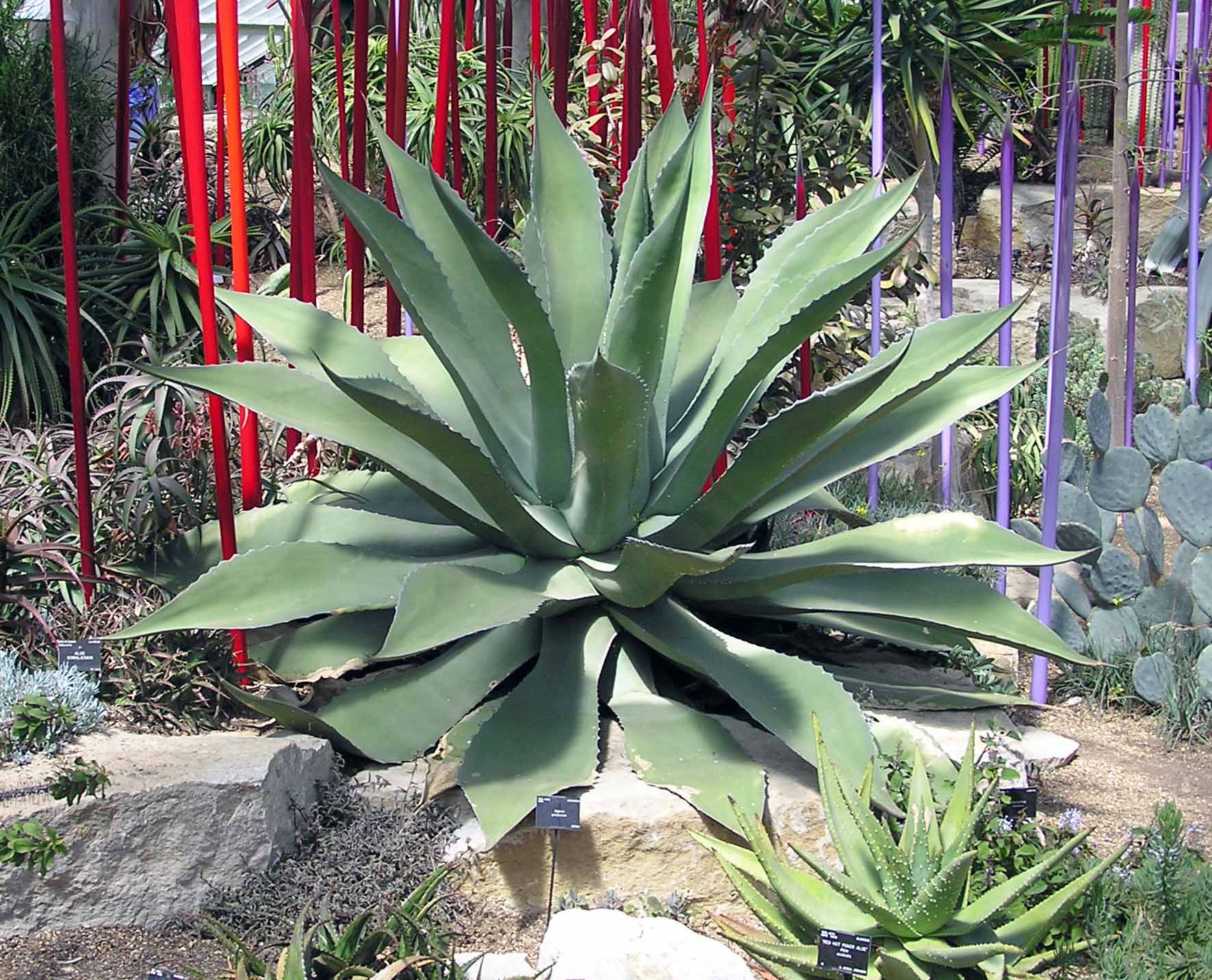
Agave potatorum, also called the Verschaffelt agave or toper's agave, is a succulent perennial that forms a compact, symmetrical rosette of glaucous foliage. It belongs to the Asparagaceae family and is prized in cultivation for its neat, architectural form.
Source: RHS
Native Mexican Range
This species comes from Mexico, found natively from southern Puebla across west-central Veracruz and into central Oaxaca. It grows there in a seasonally dry tropical setting, the kind of arid landscape that shaped its water-thrifty habits.
Source: Kew
Sun, Drainage, Restraint
Give this agave full light and a sharply-draining or cactus compost, ideally a west- or south-facing spot with some shelter. Water freely through summer but let the compost dry out between waterings, and feed with a low-nitrogen fertiliser three or four times during the growing period. Ease off watering in autumn and keep the plant cool and dry over winter, protecting it from frost or bringing it into a greenhouse or conservatory.
Source: RHS
Seed or Offsets
Propagate this agave from seed, or simply remove the offsets it produces around the base of the rosette.
Source: RHS
Spined, Symmetrical, Monocarpic
The rosette is light green to blue-grey and glaucous, edged with reddish-brown marginal spines and finished with a larger, twisted spine at each leaf tip. It is usually solitary or only slowly clump-forming. Like other agaves, its stems are monocarpic, flowering and setting seed just once, on a spike that can reach three to five metres, before the rosette dies.
Source: RHS
Watch for Scale
Scale insects are the pest most likely to trouble this agave. Otherwise it is generally free of disease.
Source: RHS
Care recipe
The species record — the baseline every cultivar inherits unless it says otherwise.
Care notes are early — not yet verified
- Light
- ai:claude-opus-4-8
- Water
- ai:claude-opus-4-8 (range 14-28d)
- Humidity
- ai:claude-opus-4-8
- Soil
- ai:claude-fable-5
- Care
- ai:claude-fable-5
Direct sun
≈ every 28 days
Low — average room
5–32 °C
Very gritty, fast-draining succulent mix
Offsets, though a shy pupper; often from seed
Light feed once or twice during active growth
Slow
Rarely flowers indoors; blooms once then dies
Not yet documented
This is where toxicity lives — every cultivar of this species inherits it and none can override it.
Reference images
Every image credited. Licenses link to their deeds.
PrimarySources: ai:claude-opus-4-8 · ai:claude-opus-4-8 (range 14-28d) · ai:claude-fable-5
Kept true by its growers
Every fact here carries its source. Grow Butterfly Agave yourself? What you’ve observed — how it drinks, how it holds its color, a name that’s off — and a clear photo of your plant are exactly what keep this page honest. Contributions are reviewed before anything changes.
Sign in to add what you know →