Species · genus Agave · Asparagaceae
Parry's Agave
Agave parryi Engelm.
Cultivars of A. parryi
The named forms growers keep — each with its own page, each honest about how much we know.
No named cultivars catalogued under A. parryi yet. When growers document a stable, named form, it earns its own page here.
Guide
The species-level account. Cultivar pages build on this and say where they differ.
A Rosette of the Desert
Agave parryi, known as Parry's agave, is a rosette-forming perennial succulent grown for its structural form rather than for flowers, which appear only rarely. It belongs to the Asparagaceae family and holds an RHS Award of Garden Merit.
Source: RHS
High Desert Native
This agave comes from grasslands, chaparral, desert scrub, and pinyon-juniper or oak woodlands of Arizona, New Mexico, and northern Mexico, generally at elevations between 4,000 and 8,000 feet. Its genus name derives from the Greek agauos, meaning admirable, likely in reference to its flower spikes, while the species name honors the physician and plant collector Charles C. Parry. Native peoples used the plant historically as a source of food, fiber, soap, and medicine, and its fermented liquids form the basis of pulque, mescal, and tequila.
Source: Missouri Botanical Garden
Sun, Grit, and Restraint
Give this agave full sun and a sandy, gritty, well-drained soil, since sharp drainage matters more than moisture here. Under glass it can be watered freely through summer with an occasional low-nitrogen feed, then watered less as autumn arrives and kept dry over winter. Outdoors it tolerates dry soil and drought readily, but poorly drained ground invites root rot regardless of season.
Source: RHS
Offsets and Seed
Parry's agave is propagated either from seed or by removing the offsets, sometimes called suckers, that root at the base of the mother rosette. Left in place, these offsets slowly build a colony of rosettes around the original plant over time.
Source: Missouri Botanical Garden
Blue Rosette, Rare Bloom
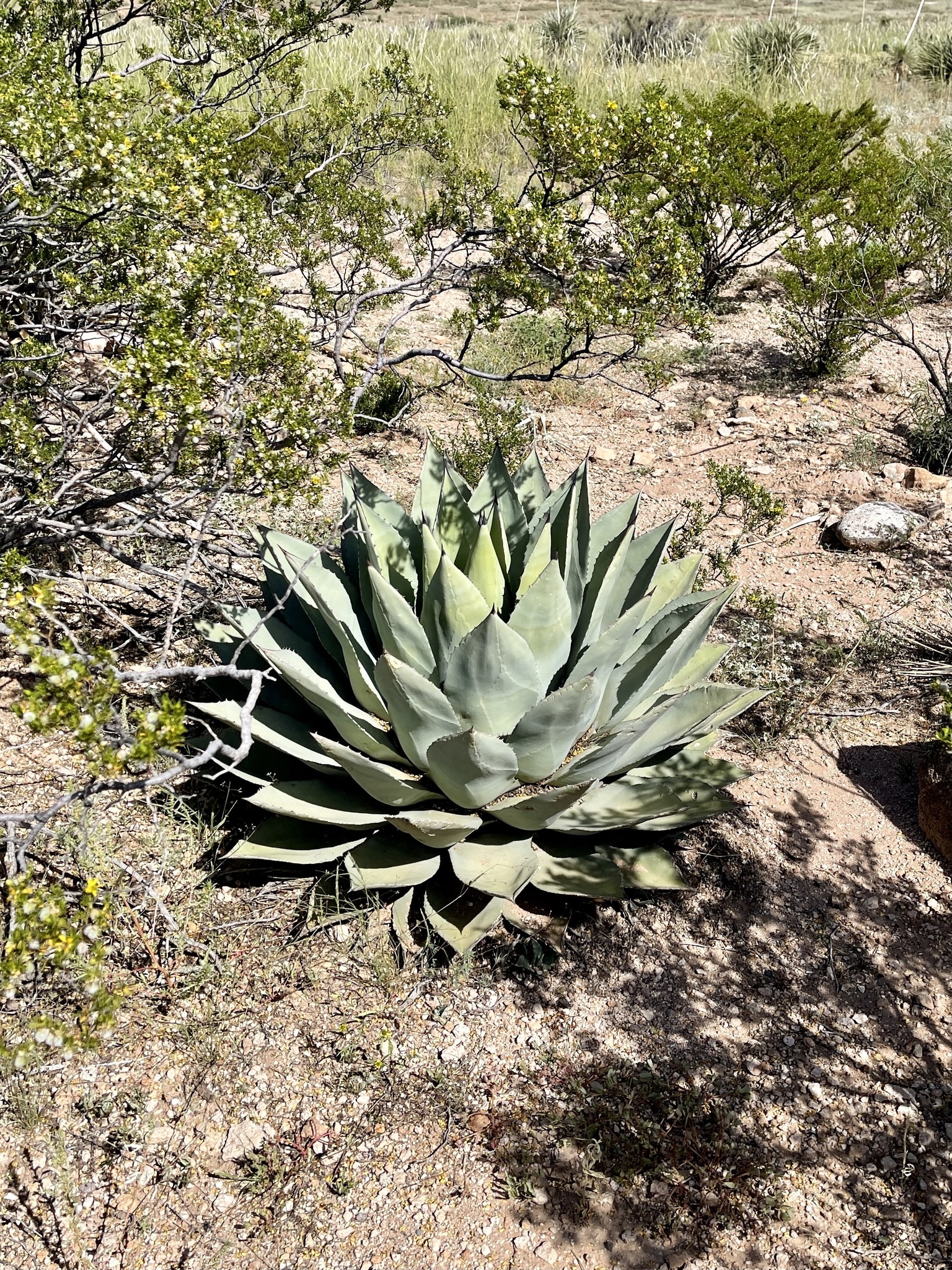
The plant forms thick, rigid, smooth blue-gray leaves up to a foot long, arranged into a large, dense, symmetrical basal rosette that eventually reaches about two feet tall and three feet wide. Each leaf carries spiny margins and a terminal spine roughly an inch long. Flowering happens only once per rosette, typically between 10 and 15 years of age though sometimes not until 20 to 30 years, sending up a single towering stalk to 20 feet with dozens of branches of creamy yellow flowers; the rosette then dies, leaving its offsets behind.
Source: Missouri Botanical Garden
Weevils, Slugs, Scale
Agave weevil can be a troublesome pest, and slugs and snails may damage the foliage as well. The RHS also notes that scale insects can be an issue, though otherwise the plant is generally free of disease.
Source: Missouri Botanical Garden
Rot from Wet Feet
The main recurring problem is root rot, which develops particularly in soils that are poorly drained or kept too moist. Good drainage and restrained watering are the surest ways to avoid it.
Source: Missouri Botanical Garden
Little Pruning Needed
This agave asks for medium maintenance overall, but pruning itself is not required. Its winter hardiness is notable for a succulent, with reports of plants surviving temperatures as low as -20F, provided the cold stays dry rather than wet.
Source: Missouri Botanical Garden
Care recipe
The species record — the baseline every cultivar inherits unless it says otherwise.
Care notes are early — not yet verified
- Light
- ai:claude-opus-4-8
- Water
- ai:claude-opus-4-8 (range 14-30d)
- Humidity
- ai:claude-opus-4-8
Direct sun
≈ every 30 days
Low — average room
Not documented
Not documented
Not documented
Not documented
Not documented
Not documented
Not yet documented
This is where toxicity lives — every cultivar of this species inherits it and none can override it.
Reference images
Every image credited. Licenses link to their deeds.
Sources: ai:claude-opus-4-8 · ai:claude-opus-4-8 (range 14-30d)
Kept true by its growers
Every fact here carries its source. Grow Parry's Agave yourself? What you’ve observed — how it drinks, how it holds its color, a name that’s off — and a clear photo of your plant are exactly what keep this page honest. Contributions are reviewed before anything changes.
Sign in to add what you know →