Species · genus Agave · Asparagaceae
Whale's Tongue Agave
Agave ovatifolia G.D.Starr & Villarreal
Cultivars of A. ovatifolia
The named forms growers keep — each with its own page, each honest about how much we know.
No named cultivars catalogued under A. ovatifolia yet. When growers document a stable, named form, it earns its own page here.
Guide
The species-level account. Cultivar pages build on this and say where they differ.
The Whale's Tongue Agave
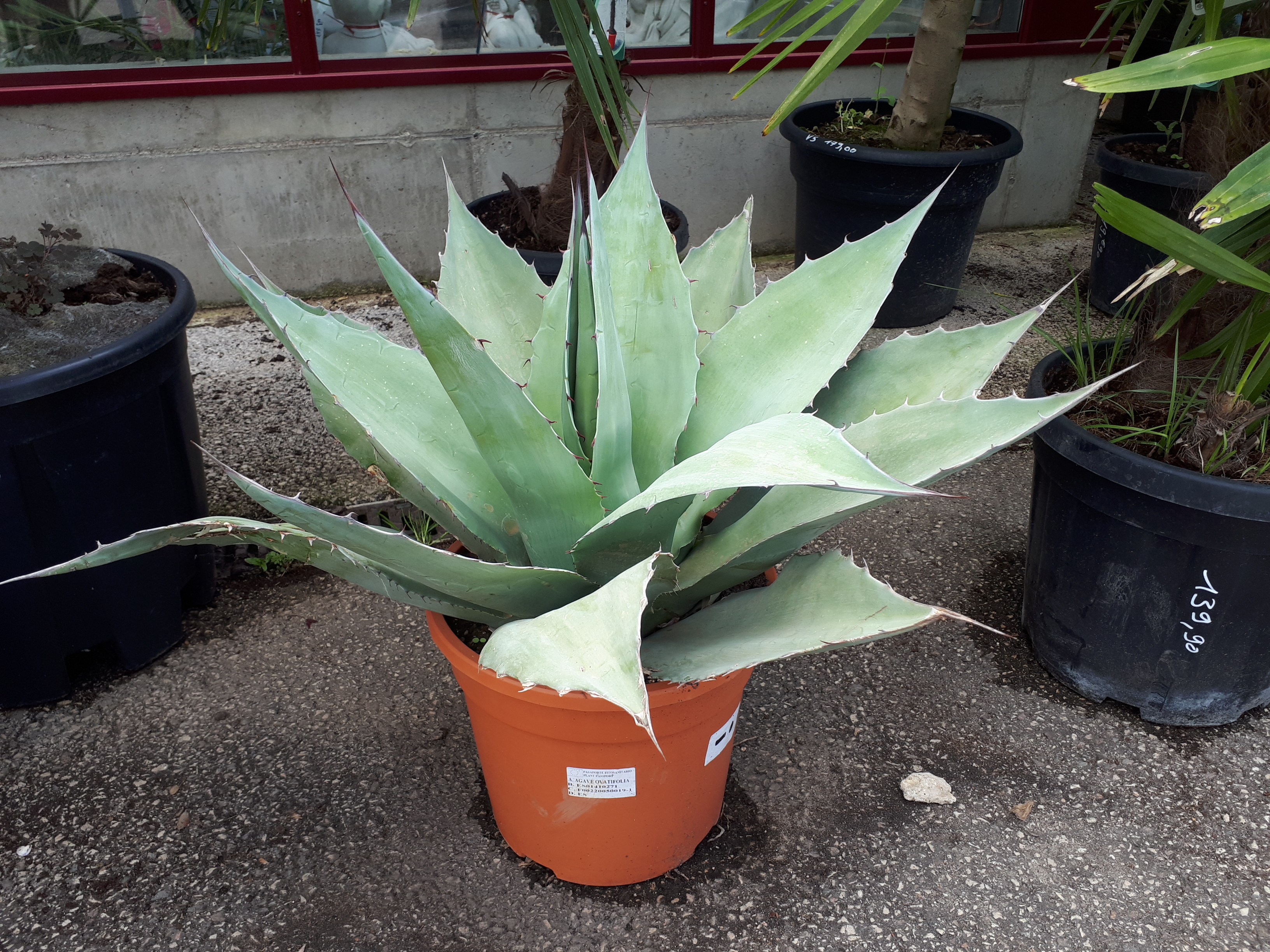
Agave ovatifolia, known as whale's tongue agave, is an evergreen succulent perennial prized for its thick rosette of pale, powder-blue and gray leaves. It belongs to the family Asparagaceae and is grown mainly for texture and form in dry, sun-baked gardens.
Source: Epic Gardening
From Northeastern Mexico
This agave is native to northeastern Mexico, part of a genus of monocots suited to the hot, arid regions of the Americas. It was brought into cultivation by the Texas nurseryman Lynn Lowrey in the mid-1980s, and has proven surprisingly tolerant of extreme winter conditions for a desert plant.
Source: Epic Gardening
Sun, Neglect, and Drainage
Grow this agave in full sun to light shade, in sharply drained, sandy or rocky soil that never stays wet. Water is needed only sparingly once the plant is established, roughly every couple of weeks in summer and monthly in winter, and it is best left unfed since fertilizing can hasten the flowering that ends the plant's life. It tolerates a good deal of neglect and is considered hardy against cold and moisture compared with many other agave species.
Source: Epic Gardening
By Seed, Not Offsets
Whale's tongue agave does not produce offsets, so propagation relies on seed sown in early spring at a temperature of roughly 55 to 70°F (13 to 21°C). Because the plant grows solitary and can eventually flower and die, it helps to give seedlings a well-lit spot of their own.
Source: RHS
A Rounded, Cupped Rosette
A solitary plant, it forms a rounded rosette of distinctively cupped, broad, almost egg-shaped leaves, which is where both its species name and common name come from. The leaf margins carry only small teeth, but each leaf ends in a sharp, dark terminal spine. After around ten to twenty years the rosette sends up a tall flowering spike of greenish-yellow blooms, and the rosette itself then dies, reproducing afterward only by seed or bulbils rather than offsets.
Source: RHS
Scale and the Snout Weevil
The RHS notes this agave may be susceptible to scale insects but is otherwise generally disease-free. Epic Gardening flags the agave snout weevil as a more serious threat, since it lays eggs in the plant's center and can cause the whole succulent to collapse, leaving removal of affected plants as the only real response.
Source: RHS
Watch the Water
Too little light can leave the leaves chlorotic and cause them to drop, while too much can singe the leaf tips, so the balance of sun matters. Overwatering or poorly drained soil is the main cause of trouble, leading to root rot; damaged leaves should be removed and watering paused until the soil dries out, with severe cases needing a move to fresh, better-draining soil.
Source: Epic Gardening
Little Pruning Needed
This agave asks for very little upkeep. The RHS lists no pruning as required, while Epic Gardening suggests any light trimming of dead leaves is best done at the end of winter, using a clean blade and taking care not to remove too much at once, since overcutting can stress the plant's water storage.
Source: Epic Gardening
Care recipe
The species record — the baseline every cultivar inherits unless it says otherwise.
Care notes are early — not yet verified
- Light
- ai:claude-opus-4-8
- Water
- ai:claude-opus-4-8 (range 14-30d)
- Humidity
- ai:claude-opus-4-8
- Soil
- ai:claude-fable-5
- Care
- ai:claude-fable-5
Direct sun
≈ every 30 days
Low — average room
-5–32 °C
Gritty, free-draining cactus and succulent mix
Slow to offset; usually grown from seed or occasional pups
Dilute succulent feed once or twice in the growing season
Slow
Rarely flowers indoors; one tall bloom spike at maturity
Not yet documented
This is where toxicity lives — every cultivar of this species inherits it and none can override it.
Reference images
Every image credited. Licenses link to their deeds.
PrimarySources: ai:claude-opus-4-8 · ai:claude-opus-4-8 (range 14-30d) · ai:claude-fable-5
Kept true by its growers
Every fact here carries its source. Grow Whale's Tongue Agave yourself? What you’ve observed — how it drinks, how it holds its color, a name that’s off — and a clear photo of your plant are exactly what keep this page honest. Contributions are reviewed before anything changes.
Sign in to add what you know →