Species · genus Agave · Asparagaceae
Lechuguilla
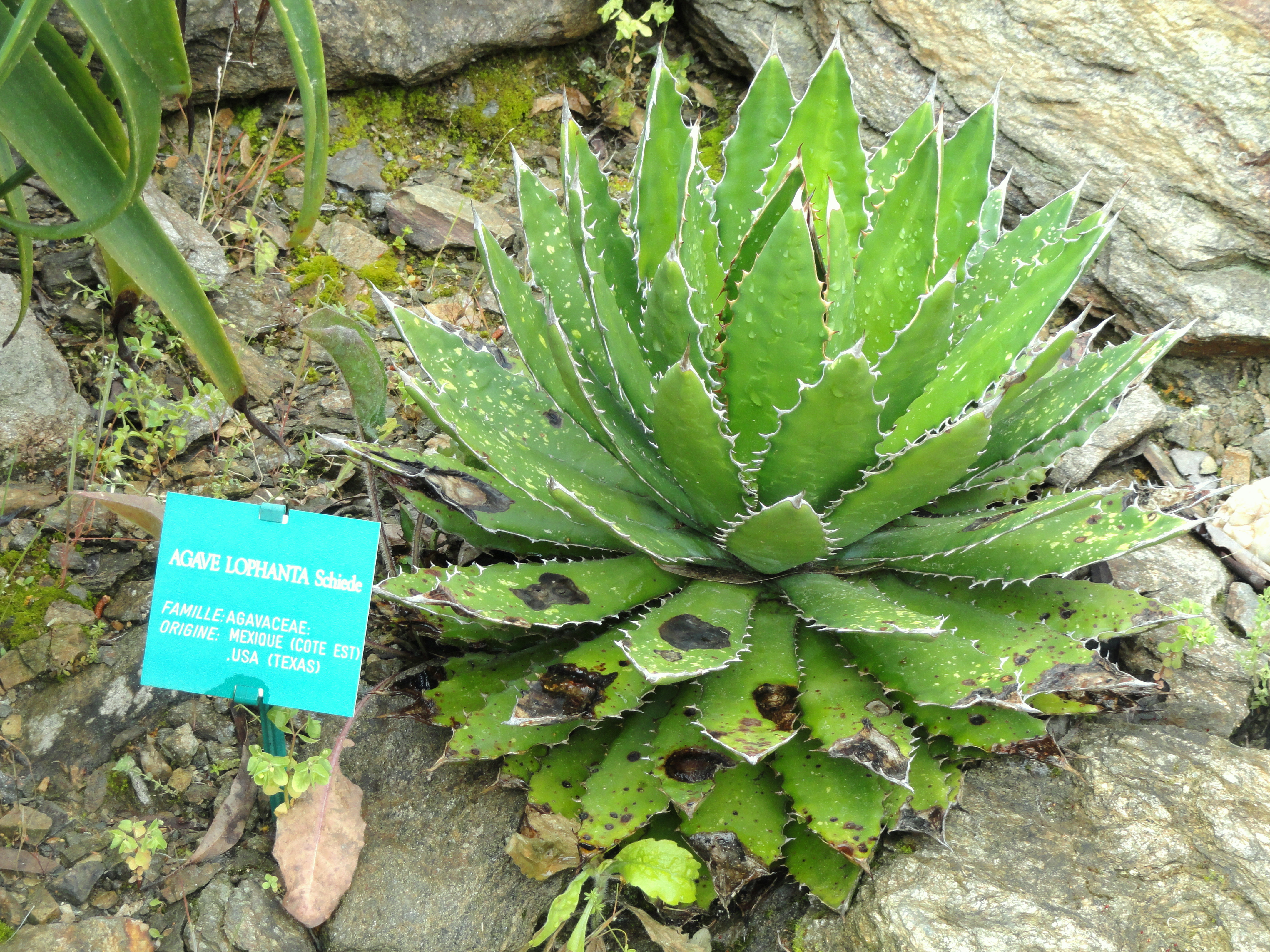
Agave lophantha Schiede
Also known as: Thorn-crest Agave · Thorn-crested Agave · Thorncrest Century Plant
Cultivars of A. lophantha
The named forms growers keep — each with its own page, each honest about how much we know.
No named cultivars catalogued under A. lophantha yet. When growers document a stable, named form, it earns its own page here.
Guide
The species-level account. Cultivar pages build on this and say where they differ.
A Striped Rosette Succulent
Agave univittata 'Quadricolor' is a variegated succulent that builds up into clump-forming rosettes of rigid, toothed leaves. It carries an RHS Award of Garden Merit and is grown as a cactus-and-succulent houseplant or container specimen.
Source: RHS
A Name With History
This cultivar's lineage traces back to Agave lophantha, of which univittata is treated as a synonym in botanical records dating to a description published in 1866. The plant is also still sometimes labelled Agave lophantha 'Quadricolor', a nod to that older name.
Source: Kew
Sun, Grit, and Restraint
Give this agave full sun and a well-drained mix such as standard cactus compost, ideally under glass in bright, filtered light. Water moderately while it is actively growing and feed every two or three weeks with a balanced liquid feed, then hold back to keep it almost dry through winter.
Source: RHS
Offsets Do the Work
New plants are raised from offsets, taken off the parent rosette in spring or autumn.
Source: RHS
Striped, Toothed Leaves
The rosettes are made of fleshy, spiny-edged leaves marked in bands of green and yellow, occasionally taking on a pink tinge when temperatures drop. It stays fairly low, reaching only 0.1 to 0.5 metres in height though it can spread wider, and takes a good decade or two to reach full size.
Source: RHS
Watch for Scale
Scale insects are the pest worth keeping an eye on with this agave. Otherwise it is generally free of disease.
Source: RHS
Little Pruning Needed
No pruning is required for this plant. Its main care rhythm is seasonal: active feeding and watering in growth, then a dry rest over winter.
Source: RHS
Care recipe
The species record — the baseline every cultivar inherits unless it says otherwise.
Care notes are early — not yet verified
- Light
- ai:claude-opus-4-8
- Water
- ai:claude-opus-4-8 (range 14-30d)
- Humidity
- ai:claude-opus-4-8
- Soil
- ai:claude-fable-5
- Care
- ai:claude-fable-5
Direct sun
≈ every 30 days
Low — average room
7–32 °C
Gritty, fast-draining cactus and succulent mix
Offsets removed from the parent rosette
Light succulent feed once or twice during the growing season
Moderate
Rarely flowers indoors; a once-in-a-lifetime bloom spike
Not yet documented
This is where toxicity lives — every cultivar of this species inherits it and none can override it.
Reference images
Every image credited. Licenses link to their deeds.
PrimarySources: ai:claude-opus-4-8 · ai:claude-opus-4-8 (range 14-30d) · ai:claude-fable-5
Kept true by its growers
Every fact here carries its source. Grow Lechuguilla yourself? What you’ve observed — how it drinks, how it holds its color, a name that’s off — and a clear photo of your plant are exactly what keep this page honest. Contributions are reviewed before anything changes.
Sign in to add what you know →