Species · genus Agave · Asparagaceae
Lecheguilla Agave
Agave lechuguilla Torr.
Also known as: Tampico Fiber · Shin-dagger Agave
Cultivars of A. lechuguilla
The named forms growers keep — each with its own page, each honest about how much we know.
No named cultivars catalogued under A. lechuguilla yet. When growers document a stable, named form, it earns its own page here.
Guide
The species-level account. Cultivar pages build on this and say where they differ.
A Desert Rosette
Agave lechuguilla, also called lecheguilla, is an evergreen succulent that grows as a clump of upright, narrow rosettes. It belongs to the Asparagaceae family and is grown here as a cactus-house or conservatory subject rather than a typical houseplant.
Source: RHS
Mexican Desert Native
This species comes from a native range stretching from southern New Mexico and Texas down through northeast and central Mexico, where it grows in desert and dry shrubland. It was first described by Torrey in 1859, and it has since become naturalised in a few places abroad, including the Canary Islands and Spain.
Source: Kew
Sun, Grit, Restraint
Give this agave full sun and a well-drained, sandy or loamy mix, ideally cactus compost, kept on the acid-to-neutral side. Water sparingly while it is in growth and keep it nearly dry through winter, feeding with a dilute liquid fertiliser three or four times over the growing season. It can spend summer outdoors in a sunny spot, but it does best overwintering under glass, in a greenhouse or conservatory, and can cope with cooler conditions there if kept dry.
Source: RHS
Seed or Offsets
Lecheguilla is propagated either from seed or by removing the offsets it produces around the base, taken off in spring or autumn. It is a generous offsetter, so plants of this species usually multiply readily on their own.
Source: RHS
Spined, Streaked Leaves
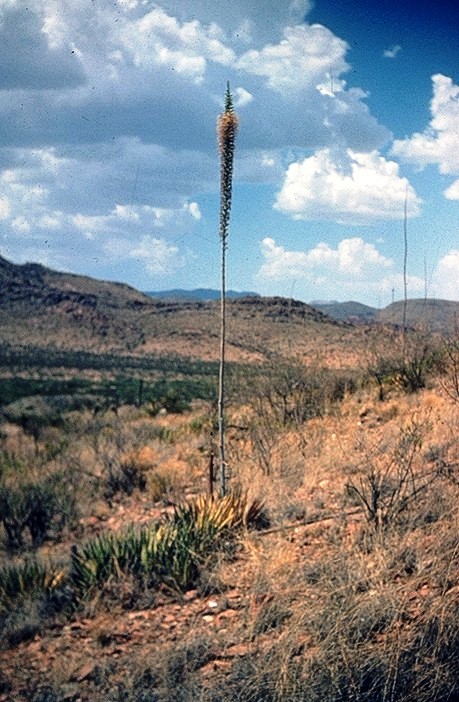
Each rosette is made of narrowly lance-shaped to linear leaves in a light green, edged with sharp teeth and tipped with a greyish spine up to about 4.5cm long. Some leaves carry darker green streaks on their undersides. On mature plants a tall flower spike of yellow blooms eventually appears, and once it has finished the central rosette that produced it dies away, though the clump itself carries on through its offsets.
Source: RHS
Watch for Scale
Scale insects are the pest most likely to trouble this plant, so it is worth checking the leaves periodically for their presence.
Source: RHS
Otherwise Trouble-Free
Beyond the odd scale insect, this agave is generally disease-free, and no pruning is required to keep it tidy.
Source: RHS
Care recipe
The species record — the baseline every cultivar inherits unless it says otherwise.
Care notes are early — not yet verified
- Light
- ai:claude-opus-4-8
- Water
- ai:claude-opus-4-8 (range 14-30d)
- Humidity
- ai:claude-opus-4-8
- Soil
- ai:claude-fable-5
- Care
- ai:claude-fable-5
Direct sun
≈ every 30 days
Low — average room
7–32 °C
Fast-draining cactus and succulent mix with extra grit
Offsets (pups) separated from the base
Dilute succulent feed once or twice in spring and summer
Slow
Rarely flowers indoors; blooms once at maturity, then dies
Not yet documented
This is where toxicity lives — every cultivar of this species inherits it and none can override it.
Reference images
Every image credited. Licenses link to their deeds.
Sources: ai:claude-opus-4-8 · ai:claude-opus-4-8 (range 14-30d) · ai:claude-fable-5
Kept true by its growers
Every fact here carries its source. Grow Lecheguilla Agave yourself? What you’ve observed — how it drinks, how it holds its color, a name that’s off — and a clear photo of your plant are exactly what keep this page honest. Contributions are reviewed before anything changes.
Sign in to add what you know →