Species · genus Agave · Asparagaceae
Madrecuixe
Agave karwinskii Zucc.
Also known as: Cuixe · Bicuishe · Tobasiche · Tobaziche · Verde Agave
Cultivars of A. karwinskii
The named forms growers keep — each with its own page, each honest about how much we know.
No named cultivars catalogued under A. karwinskii yet. When growers document a stable, named form, it earns its own page here.
Guide
The species-level account. Cultivar pages build on this and say where they differ.
A Mexican Rosette Succulent
Agave karwinskii is a succulent perennial from Mexico, growing as one of the many rosette-forming species in the agave family. It belongs to the same genus that gives us the well-known century plants and the sources of tequila and sisal.
Source: Kew
Native to Oaxaca and Puebla
This species is native to south-central Mexico, specifically the states of Oaxaca and Puebla, where it was first described by Zuccarini in 1832. It grows naturally within desert and dry shrubland habitats, conditions that have shaped its tolerance for aridity.
Source: Kew
Sun, Grit, and Patience
Give an agave full sun and very free-draining, gritty soil, since it dislikes both shade and overly fertile, permanently moist ground. In pots, a peat-free cactus compost with added grit suits it well, and feeding is best left minimal given its preference for lean conditions.
Source: RHS
Pups or Patience with Seed
The easiest route is dividing the pups that form around the base of a mature plant, which are simply clones of the parent and can be dug up and replanted. Seed is also viable once a plant flowers and its tubular blooms set seed, though this takes far longer to reach a usable size.
Source: Epic Gardening
Spined Rosettes, Sculptural Form
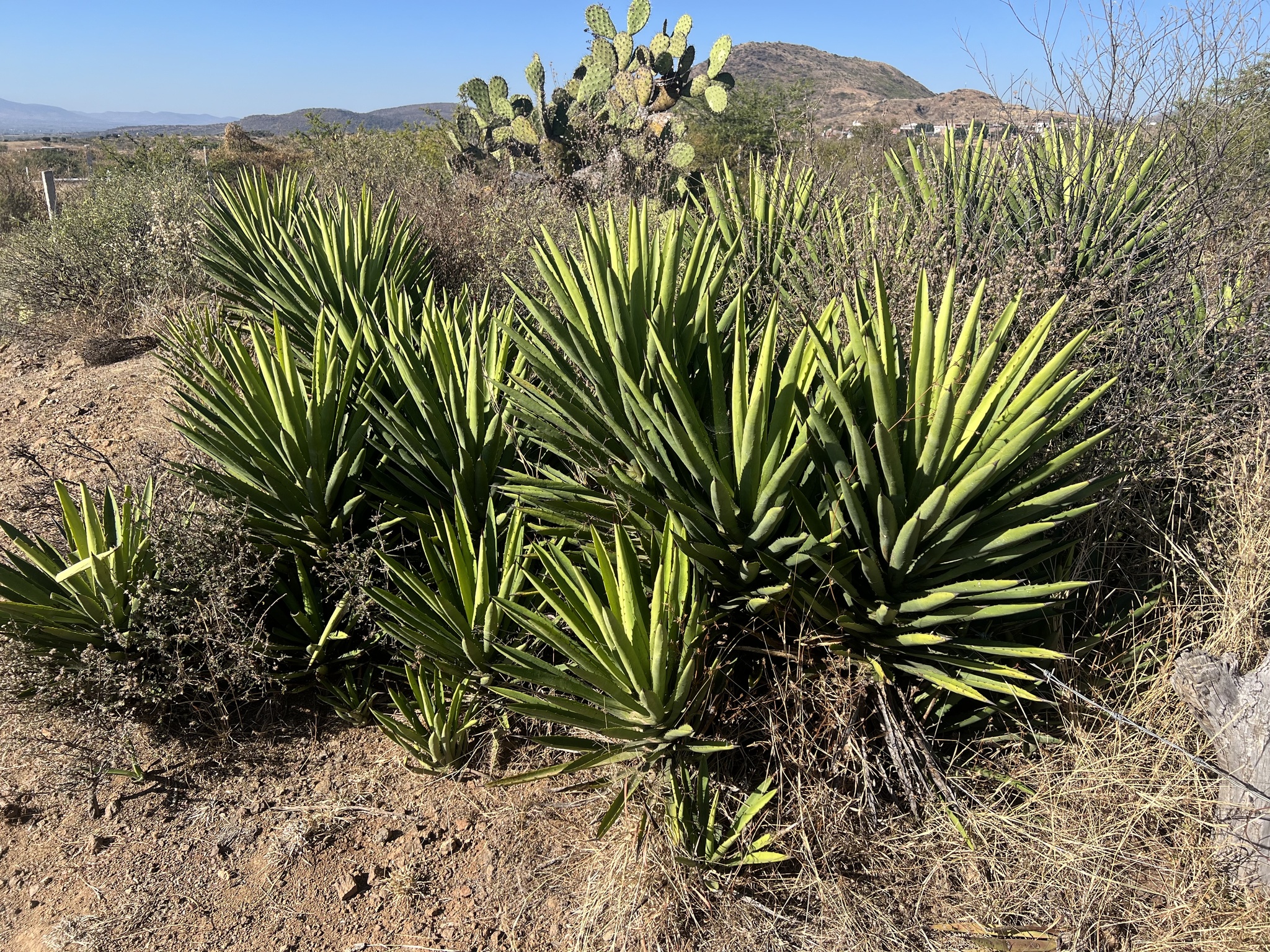
Agaves carry thick, firm succulent leaves that taper to a point, often edged with spines or fine thread-like filaments along the margins. Colouring tends toward greyish-green, sometimes trimmed with cream or yellow, and the overall habit is a striking architectural rosette.
Source: RHS
Weevils and Occasional Slugs
Agave plants are not troubled by many pests, but the agave weevil is the one to watch, feeding at the base of the leaf where it meets the stem and causing wilting, often just before a plant is due to bloom. Slugs and snails can also nibble at younger, less established plants, though mature ones are largely safe from them.
Source: Epic Gardening
Water Is the Usual Culprit
Wrinkled leaves that yellow and drop from the bottom up point to underwatering, while distorted or curling growth often traces back to too little light or too much moisture in the soil. Root rot and crown rot both stem from excess water, showing up as a soft, mushy stem or rotting at the base, and are best countered by cutting back on watering and improving drainage.
Source: Epic Gardening
Care recipe
The species record — the baseline every cultivar inherits unless it says otherwise.
Care notes are early — not yet verified
- Light
- ai:claude-opus-4-8
- Water
- ai:claude-opus-4-8 (range 14-28d)
- Humidity
- ai:claude-opus-4-8
- Soil
- ai:claude-fable-5
- Care
- ai:claude-fable-5
Direct sun
≈ every 28 days
Low — average room
8–34 °C
Gritty, sharply draining cactus and succulent mix
Readily separated offsets and bulbils
Light feed once or twice during the growing season
Slow
Tall branching spike after many years, forms dense clumps
Not yet documented
This is where toxicity lives — every cultivar of this species inherits it and none can override it.
Reference images
Every image credited. Licenses link to their deeds.
PrimarySources: ai:claude-opus-4-8 · ai:claude-opus-4-8 (range 14-28d) · ai:claude-fable-5
Kept true by its growers
Every fact here carries its source. Grow Madrecuixe yourself? What you’ve observed — how it drinks, how it holds its color, a name that’s off — and a clear photo of your plant are exactly what keep this page honest. Contributions are reviewed before anything changes.
Sign in to add what you know →