Species · genus Agave · Asparagaceae
Desert Agave
Agave deserti Engelm.
Also known as: Century Plant · Maguey · Mescal
Cultivars of A. deserti
The named forms growers keep — each with its own page, each honest about how much we know.
No named cultivars catalogued under A. deserti yet. When growers document a stable, named form, it earns its own page here.
Guide
The species-level account. Cultivar pages build on this and say where they differ.
The Desert Agave
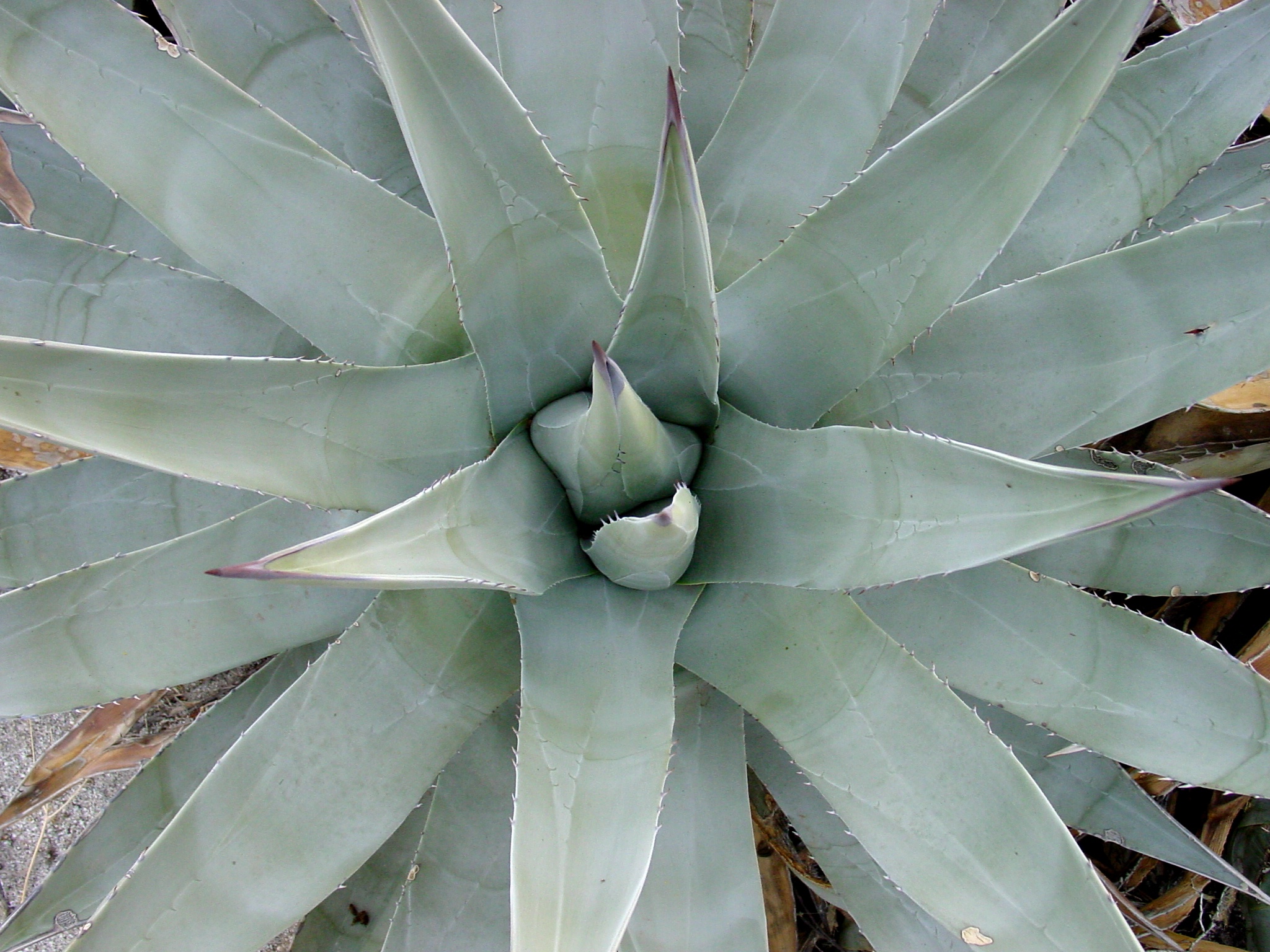
Agave deserti, the desert agave, is a rosette-forming succulent with thick, sharp-tipped, greyish-green leaves. It offsets freely and, once mature, can send up a tall flowering spike topped with silvery yellow blooms.
Source: RHS
A Native of Arid Lands
This species hails from the true deserts of California, Arizona, and northern Mexico, where it has adapted to very arid, hot conditions. The wider agave genus is largely a North American story, with the great majority of species found in Mexico, and the name itself comes from the Greek for noble or marvelous, given by Linnaeus.
Source: RHS
Sun, Grit, and Restraint
Give this plant full sun and a well-drained loam or sandy mix, ideally under glass in cactus compost if grown outside a mild climate. Water sparingly through the growing season and keep it entirely dry over winter, since it tolerates cold far better than it tolerates wet. A dilute liquid feed three or four times during the growing season is enough.
Source: RHS
Offsets Do the Work
The straightforward route is to remove offsets in spring or autumn and pot them on separately.
Source: RHS
Rosette, Spike, Pups
Leaves are 15 to 40cm long, greyish-green, thick, and tipped with a sharp point, arranged in the classic agave rosette. Offsets, or pups, appear freely around the base, and mature plants may push up a flower spike as tall as 2 metres, carrying silvery yellow blooms in summer.
Source: RHS
Scale, Mostly
Desert agave is not a plant that invites much trouble, but scale insects may turn up on it. Otherwise it is generally free of disease.
Source: RHS
Wet Feet Are the Enemy
Across agaves generally, too much moisture is the root of most trouble: overwatering can bring on root rot, seen as a soft, mushy stem and rotten roots, or crown rot, where the base deteriorates, yellows, and collapses. Wrinkled, yellowing leaves that shrivel from the bottom up usually point the other way, to underwatering, and a deep watering after checking the soil is the usual fix. Distorted or curling growth tends to trace back to too little light or too much water sitting around the roots.
Source: Epic Gardening
No Pruning Needed
This plant asks for no pruning at all under normal circumstances, and outdoors it can go into a raised desert bed as long as it gets complete protection from winter wet.
Source: RHS
Care recipe
The species record — the baseline every cultivar inherits unless it says otherwise.
Care notes are early — not yet verified
- Light
- ai:claude-opus-4-8
- Water
- ai:claude-opus-4-8 (range 21-35d)
- Humidity
- ai:claude-opus-4-8
- Soil
- ai:claude-fable-5
- Care
- ai:claude-fable-5
Direct sun
≈ every 35 days
Low — average room
8–35 °C
Gritty, sharply draining cactus and succulent mix
Separate offsets from the base
Minimal, a light feed once in spring is plenty
Slow
Yellow flower spike only after decades, monocarpic
Not yet documented
This is where toxicity lives — every cultivar of this species inherits it and none can override it.
Reference images
Every image credited. Licenses link to their deeds.
PrimarySources: ai:claude-opus-4-8 · ai:claude-opus-4-8 (range 21-35d) · ai:claude-fable-5
Kept true by its growers
Every fact here carries its source. Grow Desert Agave yourself? What you’ve observed — how it drinks, how it holds its color, a name that’s off — and a clear photo of your plant are exactly what keep this page honest. Contributions are reviewed before anything changes.
Sign in to add what you know →