Species · genus Agave · Asparagaceae
Pulque Agave
Agave applanata K.Koch
Also known as: Maguey
Cultivars of A. applanata
The named forms growers keep — each with its own page, each honest about how much we know.
No named cultivars catalogued under A. applanata yet. When growers document a stable, named form, it earns its own page here.
Guide
The species-level account. Cultivar pages build on this and say where they differ.
A Slow, Silvered Rosette
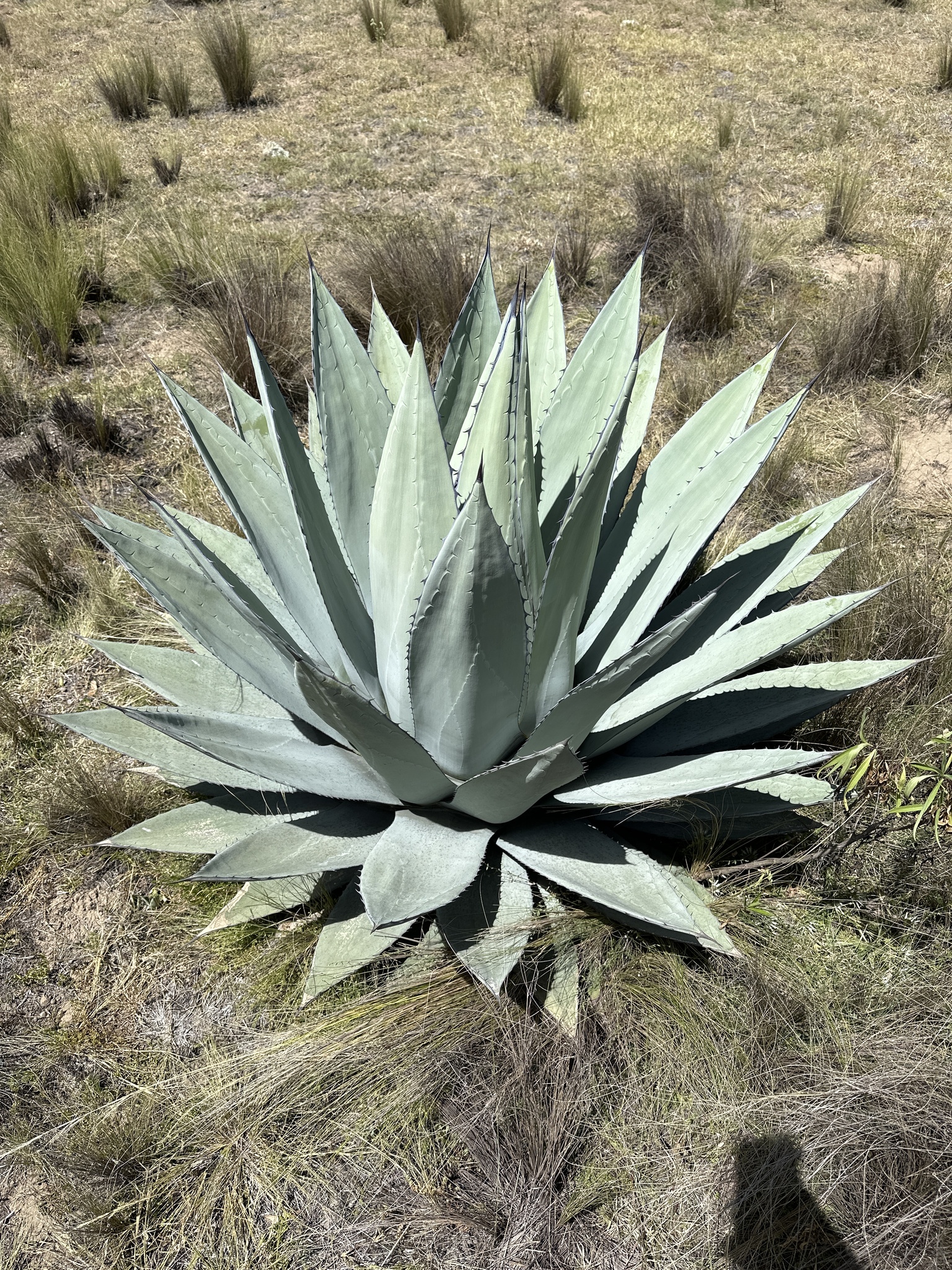
Agave applanata is an evergreen succulent that builds a stiff rosette of powdery blue-grey leaves edged with sharp, slate-purple teeth and spines. It is grown as a architectural specimen for cactus and succulent collections, valued more for form than for flower.
Source: RHS
A Mexican Dryland Native
This species comes from Mexico, where it grows naturally in desert and dry shrubland across the central, gulf, northeast, and southwest regions of the country. It belongs to the agave genus, first described by Linnaeus, and was itself named by K.Koch in the mid-nineteenth century.
Source: Kew
Sun, Grit, and Restraint
Give this agave full sun and a well-drained loam or sandy mix, ideally cactus compost under glass, in an acid or neutral soil. Water freely while it is actively growing, then hold back to almost dry over winter, and feed with a dilute liquid fertiliser three or four times through the growing season. It can spend summer outdoors in a sunny spot but needs the shelter of a greenhouse or conservatory to overwinter, as it only tolerates low temperatures without surviving a freeze.
Source: RHS
Seed or Offsets
New plants can be raised from seed, or by removing offsets from young plants, which is best done in spring or autumn.
Source: RHS
Shape Shifts With Age
Young plants sit low and spreading, flattened close to the ground, but the rosette gradually becomes more upright as the plant matures, with the terminal spines lengthening over time. Growth is slow, though it can eventually reach up to 1.5 metres high. On mature specimens a tall spike of yellow-green flowers may rise from the centre, and once that bloom is spent, the rosette that produced it dies back.
Source: RHS
Watch for Scale
Scale insects are the main pest concern to watch for on this agave. Beyond that, it is generally free of disease.
Source: RHS
Little Upkeep Needed
No pruning is required for this species. Its main handling consideration is caution rather than cutting back, since the leaf edges carry sharp spines and the sap is a skin irritant, so gloves and protective equipment are worth wearing, and the plant is harmful if eaten by pets.
Source: RHS
Care recipe
The species record — the baseline every cultivar inherits unless it says otherwise.
Care notes are early — not yet verified
- Light
- ai:claude-opus-4-8
- Water
- ai:claude-opus-4-8 (range 14-28d)
- Humidity
- ai:claude-opus-4-8
- Soil
- ai:claude-fable-5
- Care
- ai:claude-fable-5
Direct sun
≈ every 28 days
Low — average room
10–32 °C
Gritty, sharply draining cactus and succulent mix
Separate basal offsets from the parent
Light feed once or twice through spring and summer
Slow
Tall flower spike only after many years, then the rosette dies
Not yet documented
This is where toxicity lives — every cultivar of this species inherits it and none can override it.
Reference images
Every image credited. Licenses link to their deeds.
Sources: ai:claude-opus-4-8 · ai:claude-opus-4-8 (range 14-28d) · ai:claude-fable-5
Kept true by its growers
Every fact here carries its source. Grow Pulque Agave yourself? What you’ve observed — how it drinks, how it holds its color, a name that’s off — and a clear photo of your plant are exactly what keep this page honest. Contributions are reviewed before anything changes.
Sign in to add what you know →