Species · genus Aeonium · Crassulaceae
Haworth's Aeonium
Aeonium haworthii Salm-Dyck ex Webb & Berthel.
Also known as: Haworths Aeonium · Pinwheel
Cultivars of A. haworthii
The named forms growers keep — each with its own page, each honest about how much we know.
No named cultivars catalogued under A. haworthii yet. When growers document a stable, named form, it earns its own page here.
Guide
The species-level account. Cultivar pages build on this and say where they differ.
A Tricolor Succulent
Aeonium 'Kiwi' is a tricolor form of Aeonium haworthii, grown for rosettes that shift from lemon-yellow through green to a red edge. It is a branched, evergreen succulent in the Crassulaceae family, low-growing and bushy in habit.
Source: RHS
An Uncertain Parentage
Nobody can say for certain where the kiwi aeonium came from. The prevailing story treats it as a hybrid or variegated form of Aeonium haworthii, a species native to Tenerife in the Canary Islands, and it circulates under names like Haworth's aeonium, Pinwheel, or Dream Color.
Source: Epic Gardening
A Different Rhythm
This succulent wants full sun but resents high heat, so a couple of hours of direct light a day suits it better than a full baking, with a south or east window doing the job indoors. Water more lightly and more often than a typical succulent while it grows through winter and spring, then let it rest nearly dry through its summer dormancy. Feed sparingly, about once a month at half strength during active growth, and hold off entirely once it slows down.
Source: Epic Gardening
Cuttings and Offsets
Kiwi aeonium propagates readily from stem cuttings or by division, best attempted in spring or winter while the plant is actively growing. A cutting is taken a few inches below the rosette, left to dry for a day or two, then set upright in well-draining soil and watered as usual once established. Offsets that form along low-hanging stems root on their own and can simply be cut away and planted, or left until rooted and then divided.
Source: Epic Gardening
Color, Bloom, and a Short Life
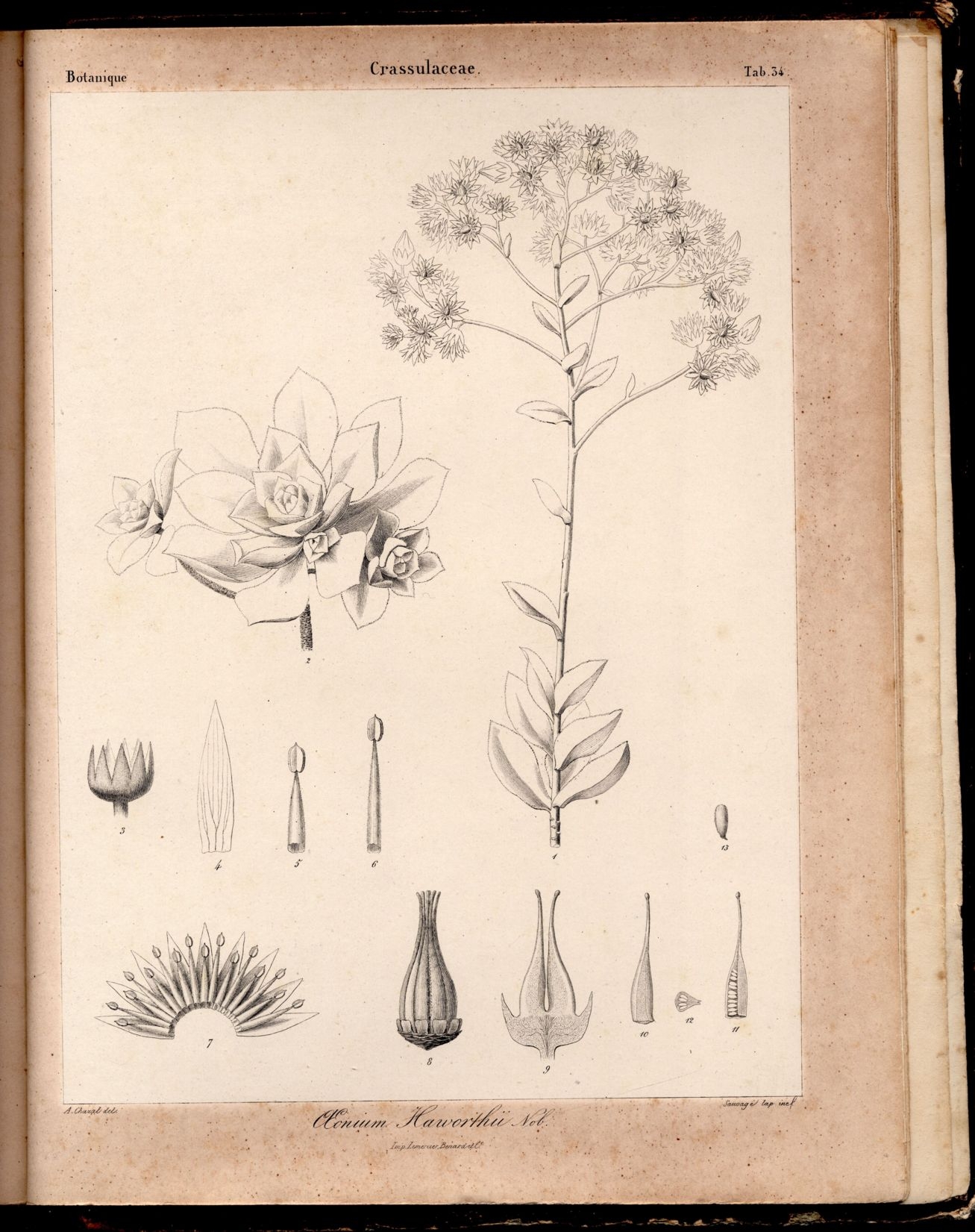
The leaves open lemon-yellow and mature toward green with a red edge, the tricolor effect intensifying with sun exposure. After some years the plant can send up panicles of small, pale yellow or pink-tinged, star-shaped flowers. Because Aeonium 'Kiwi' is monocarpic, the rosette that flowers will die afterward, so unbloomed stems are worth propagating ahead of time if the plant is to be kept going.
Source: RHS
Occasional Sap Feeders
Kiwi aeonium is not especially pest-prone, but when trouble does show up it tends to be mealybugs or aphids. Mealybugs appear as white, cottony patches and can leave the plant droopy and discolored if left unchecked, while aphids gather on leaf undersides and can bring on sooty mold. Insecticidal soap, or a cotton swab dipped in rubbing alcohol for mealybugs, handles both.
Source: Epic Gardening
Sun, Water, and Light
Crusty brown or black spots are sunburn, permanent once they appear but no longer damaging if the plant is moved out of harsh sun and heat; bruising from handling leaves similar brown marks. Too little water leaves the plant drooping with shriveled leaves, while too much brings on mushy, discolored growth and eventually root rot, recognizable by soft, discolored roots. Insufficient light causes etiolation, the stretched-out stems that ruin the tight rosette shape, and this can only be corrected by moving the plant into brighter conditions or propagating fresh cuttings.
Source: Epic Gardening
Repotting and Shaping
Repot every few years, ideally at the end of summer just as dormancy is ending, moving up to a slightly larger container with fresh, well-draining soil. Pruning is optional and mainly cosmetic: trimming back stray stems and offsets keeps the naturally shrubby, close-clustered rosette form, and a plant that has become entirely leggy is better propagated and restarted than pruned back.
Source: Epic Gardening
Care recipe
The species record — the baseline every cultivar inherits unless it says otherwise.
Care notes are early — not yet verified
- Light
- ai:claude-opus-4-8
- Water
- ai:claude-opus-4-8 (range 10-18d)
- Humidity
- ai:claude-opus-4-8
- Soil
- ai:claude-fable-5
- Care
- ai:claude-fable-5
Bright, indirect
≈ every 18 days
Low — average room
10–27 °C
Gritty, well-draining cactus and succulent mix
Easy stem cuttings, callus then root
Light balanced feed monthly during winter growth
Moderate
Pale pink-white flowers on side rosettes, which survive blooming
Not yet documented
This is where toxicity lives — every cultivar of this species inherits it and none can override it.
Reference images
Every image credited. Licenses link to their deeds.
PrimarySources: ai:claude-opus-4-8 · ai:claude-opus-4-8 (range 10-18d) · ai:claude-fable-5
Kept true by its growers
Every fact here carries its source. Grow Haworth's Aeonium yourself? What you’ve observed — how it drinks, how it holds its color, a name that’s off — and a clear photo of your plant are exactly what keep this page honest. Contributions are reviewed before anything changes.
Sign in to add what you know →