Species · genus Aeonium · Crassulaceae
Canary Aeonium
Aeonium canariense (L.) Webb & Berthel.
Cultivars of A. canariense
The named forms growers keep — each with its own page, each honest about how much we know.
No named cultivars catalogued under A. canariense yet. When growers document a stable, named form, it earns its own page here.
Guide
The species-level account. Cultivar pages build on this and say where they differ.
The Canary Island Aeonium
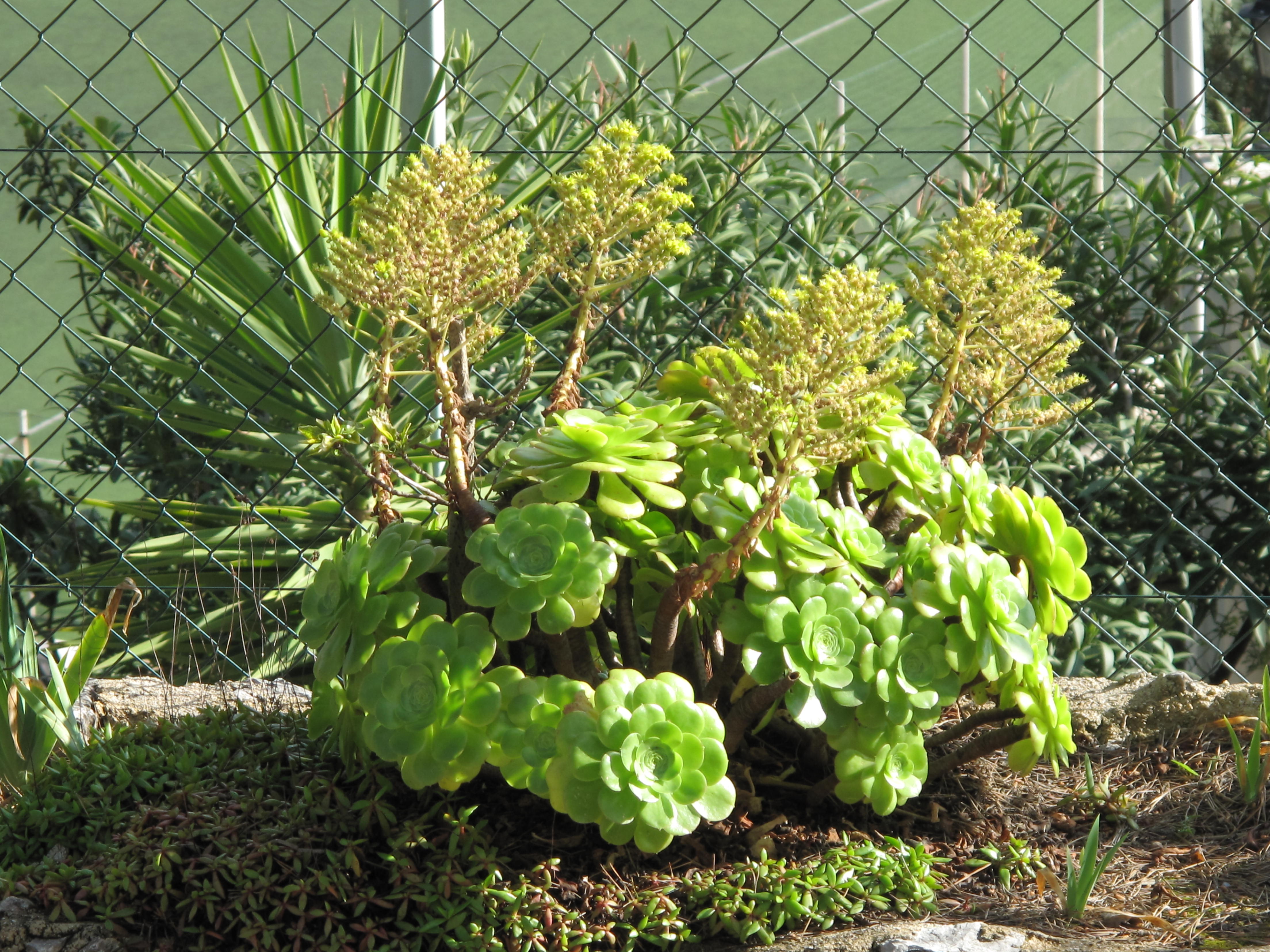
Aeonium canariense, sometimes sold as the giant velvet rose or velvet rose, is a rosette-forming succulent in the Crassulaceae family. It carries bright green, fleshy leaves gathered into large rosettes, and in the trade is also found under the older name Aeonium giganteum.
Source: RHS
Native to the Canaries
This species comes from the Canary Islands, with its range centred on Tenerife. A related variety, subplanum, is confined to the island of Gomera, showing how these aeoniums have diversified across the archipelago.
Source: RHS
Sun, Drainage, and Restraint
Aeonium canariense wants full sun to partial shade and any well-lit, well-drained loam or sandy soil. The subplanum variety prefers a standard cactus compost under glass in bright, filtered light, watered moderately through the growing season with a balanced liquid feed every two or three weeks, then kept almost dry over winter. Both are best given a sheltered spot, and neither tolerates being frozen.
Source: RHS
Seed, Cuttings, or Offsets
The species itself can be raised from seed sown at 19-24°C in spring, or from rosette cuttings kept at 18°C and just barely moist until they root. The subplanum variety is instead propagated by rooting the offsets that form at the base of a spent rosette.
Source: RHS
Rosettes on a Rising Stem
The plant slowly builds a bare stem as its rosette climbs, reaching around a metre in the wild but usually closer to half a metre when grown in a pot. Left unpruned it keeps a single upright form, but cutting the top encourages side shoots and a bushier shape. Given time, it may send up spikes of yellow-green flowers, after which that particular rosette dies.
Source: RHS
Aphids and Mealybugs
Both forms of this aeonium may draw aphids or mealybugs, though the RHS notes they are otherwise generally free of disease.
Source: RHS
Little Pruning Needed
No routine pruning is required, though trimming the top of a rosette on the main species will push it to branch and fill out rather than stay tall and single-stemmed. Time to maturity is reckoned at five to ten years.
Source: RHS
Care recipe
The species record — the baseline every cultivar inherits unless it says otherwise.
Care notes are early — not yet verified
- Light
- ai:claude-opus-4-8
- Water
- ai:claude-opus-4-8 (range 10-21d)
- Humidity
- ai:claude-opus-4-8
- Soil
- ai:claude-fable-5
- Care
- ai:claude-fable-5
Bright, indirect
≈ every 21 days
Low — average room
10–27 °C
Gritty, well-draining cactus and succulent mix
Leaf or stem cuttings, callused before rooting
Light balanced feed monthly in the cooler growing months
Slow
Large golden flower dome once mature, monocarpic rosette
Not yet documented
This is where toxicity lives — every cultivar of this species inherits it and none can override it.
Reference images
Every image credited. Licenses link to their deeds.
PrimarySources: ai:claude-opus-4-8 · ai:claude-opus-4-8 (range 10-21d) · ai:claude-fable-5
Kept true by its growers
Every fact here carries its source. Grow Canary Aeonium yourself? What you’ve observed — how it drinks, how it holds its color, a name that’s off — and a clear photo of your plant are exactly what keep this page honest. Contributions are reviewed before anything changes.
Sign in to add what you know →