Species · genus Aeonium · Crassulaceae
Tree Aeonium
Aeonium arboreum (L.) Webb & Berthel.
Also known as: Tree Aenium
Cultivars of A. arboreum
The named forms growers keep — each with its own page, each honest about how much we know.
No named cultivars catalogued under A. arboreum yet. When growers document a stable, named form, it earns its own page here.
Guide
The species-level account. Cultivar pages build on this and say where they differ.
The houseleek tree
Aeonium arboreum, known as the houseleek tree, is a succulent sub-shrub in the Crassulaceae family, grown for its rosettes of fleshy leaves held on branching stems. It is treated as a houseplant, cactus and succulent, or conservatory subject in cooler climates, and forms include the deep purple 'Atropurpureum' and the compact, dark-edged 'Tip Top'.
Source: RHS
A Gran Canaria native
The species comes from Gran Canaria, and its bushy, evergreen habit reflects that Mediterranean-type climate of origin. It has earned the RHS Award of Garden Merit, and its cultivars, including the dark-leaved 'Atropurpureum', are widely offered by nurseries.
Source: RHS
Sun, grit, restraint
Give it full sun in a sheltered, south- or west-facing spot, and grow it in a peat-free, loam-based compost with added grit for sharp drainage. Water moderately while it is in growth and withhold water entirely once it goes dormant, feeding with a balanced liquid fertiliser two or three times over the growing season. It is frost-tender, rated only to H1C or H2 depending on the form, so in winter it wants a frost-free greenhouse or conservatory rather than an open garden.
Source: RHS
Seed or rosette cuttings
Propagate by sowing seed at 19-24°C in spring, or by taking cuttings of the rosettes and keeping them at around 18°C, barely moist, until they root. 'Tip Top' is propagated more simply, by rosette cuttings alone.
Source: RHS
Rosettes and colour
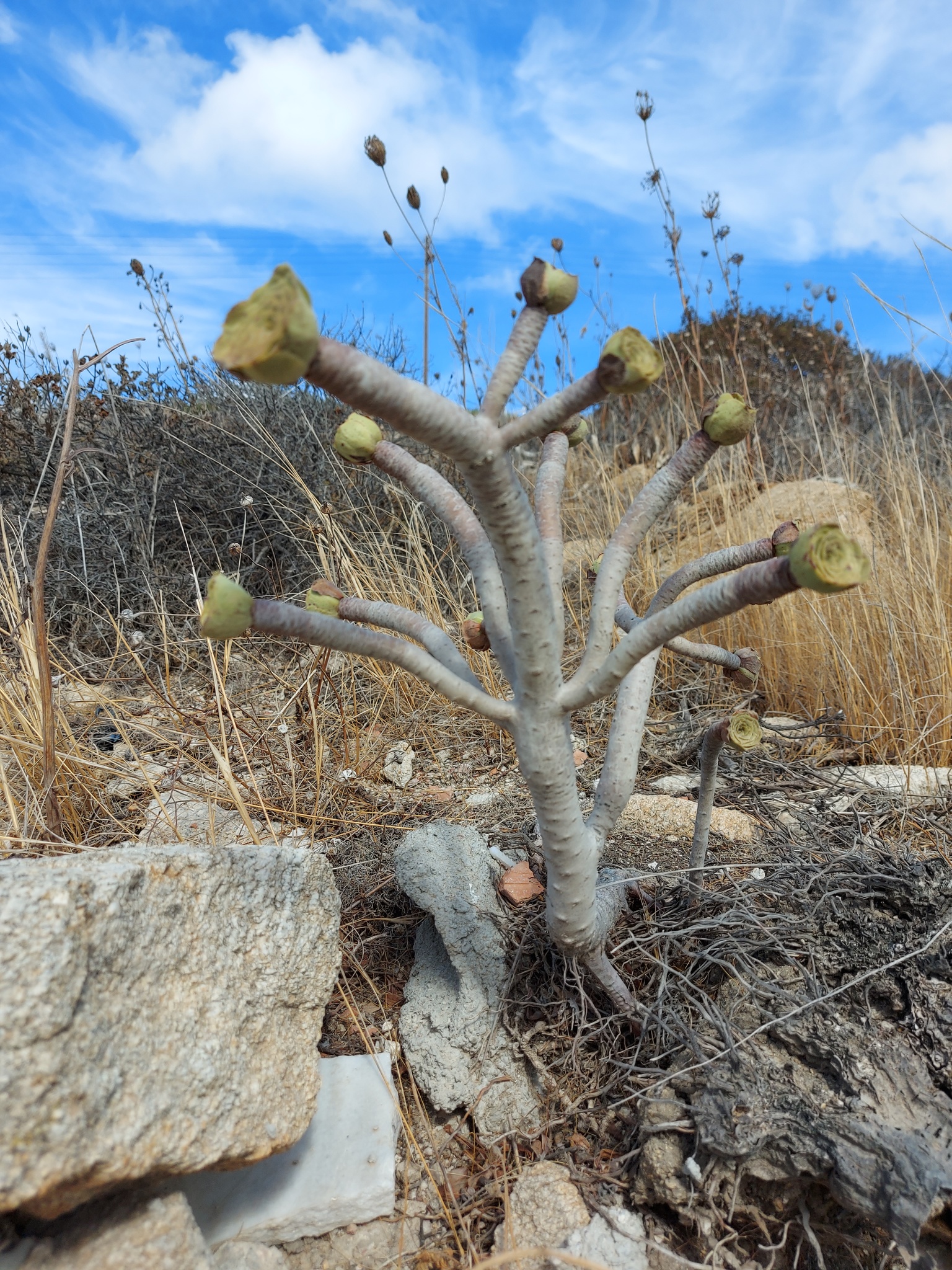
This is a sparsely branched or lax sub-shrub reaching up to 1.5 metres, its shoots topped with terminal rosettes of fleshy, spoon-shaped leaves. In late spring it can send up large conical panicles of small, star-shaped yellow flowers. The straight species carries green foliage, 'Atropurpureum' turns a deep red-purple, and 'Tip Top' shows green at the rosette centre darkening to burgundy or near-black at the leaf edges.
Source: RHS
Aphids and mealybugs
Watch for aphids and mealybugs, the pests most likely to trouble this plant. The 'Tip Top' cultivar can also draw vine weevil grubs. Beyond that, the plant is generally free of disease.
Source: RHS
No pruning needed
No pruning is required for this plant. Its main seasonal task is protection: move container-grown plants under glass for winter, since it will not tolerate being frozen.
Source: RHS
Care recipe
The species record — the baseline every cultivar inherits unless it says otherwise.
Care notes are early — not yet verified
- Light
- ai:claude-opus-4-8
- Water
- ai:claude-opus-4-8 (range 10-21d)
- Humidity
- ai:claude-opus-4-8
- Soil
- ai:claude-fable-5
- Care
- ai:claude-fable-5
Direct sun
≈ every 21 days
Low — average room
10–27 °C
Gritty, well-draining cactus and succulent mix
Root stem cuttings after letting them callus
Light balanced feed monthly during active winter growth
Moderate
Yellow flower cones after several years, the rosette then dies
Not yet documented
This is where toxicity lives — every cultivar of this species inherits it and none can override it.
Reference images
Every image credited. Licenses link to their deeds.
PrimarySources: ai:claude-opus-4-8 · ai:claude-opus-4-8 (range 10-21d) · ai:claude-fable-5
Kept true by its growers
Every fact here carries its source. Grow Tree Aeonium yourself? What you’ve observed — how it drinks, how it holds its color, a name that’s off — and a clear photo of your plant are exactly what keep this page honest. Contributions are reviewed before anything changes.
Sign in to add what you know →