Species · genus Aechmea · Bromeliaceae
Urnplant
Aechmea fasciata (Lindl.) Baker
Cultivars of A. fasciata
The named forms growers keep — each with its own page, each honest about how much we know.
No named cultivars catalogued under A. fasciata yet. When growers document a stable, named form, it earns its own page here.
Guide
The species-level account. Cultivar pages build on this and say where they differ.
A rosette bromeliad
Aechmea fasciata 'Primera' is a tropical evergreen perennial grown for its rosette of strap-shaped leaves and its striking flower head. It belongs to the Bromeliaceae family, alongside other Aechmea forming similar funnel-shaped rosettes.
Source: RHS
An epiphytic bromeliad
In warmer climates where temperatures stay above 10°C, this Aechmea can be grown outdoors as an epiphyte or in moist, gritty, humus-rich soil. Elsewhere it is suited to pots as a house or conservatory subject.
Source: RHS
Light, moisture, and warmth
Give this plant full sun or partial shade, in a sheltered spot with an east, south, or west aspect. It prefers moist but well-drained conditions and tolerates acid, alkaline, or neutral soils. Where it is kept as a house or conservatory plant, use epiphytic bromeliad compost and position it in bright, filtered light; it needs protection from temperatures below 10°C.
Source: RHS
Grown from offsets
New plants are propagated by removing the offsets that form around the base of the rosette.
Source: RHS
Grey leaves, pink bracts
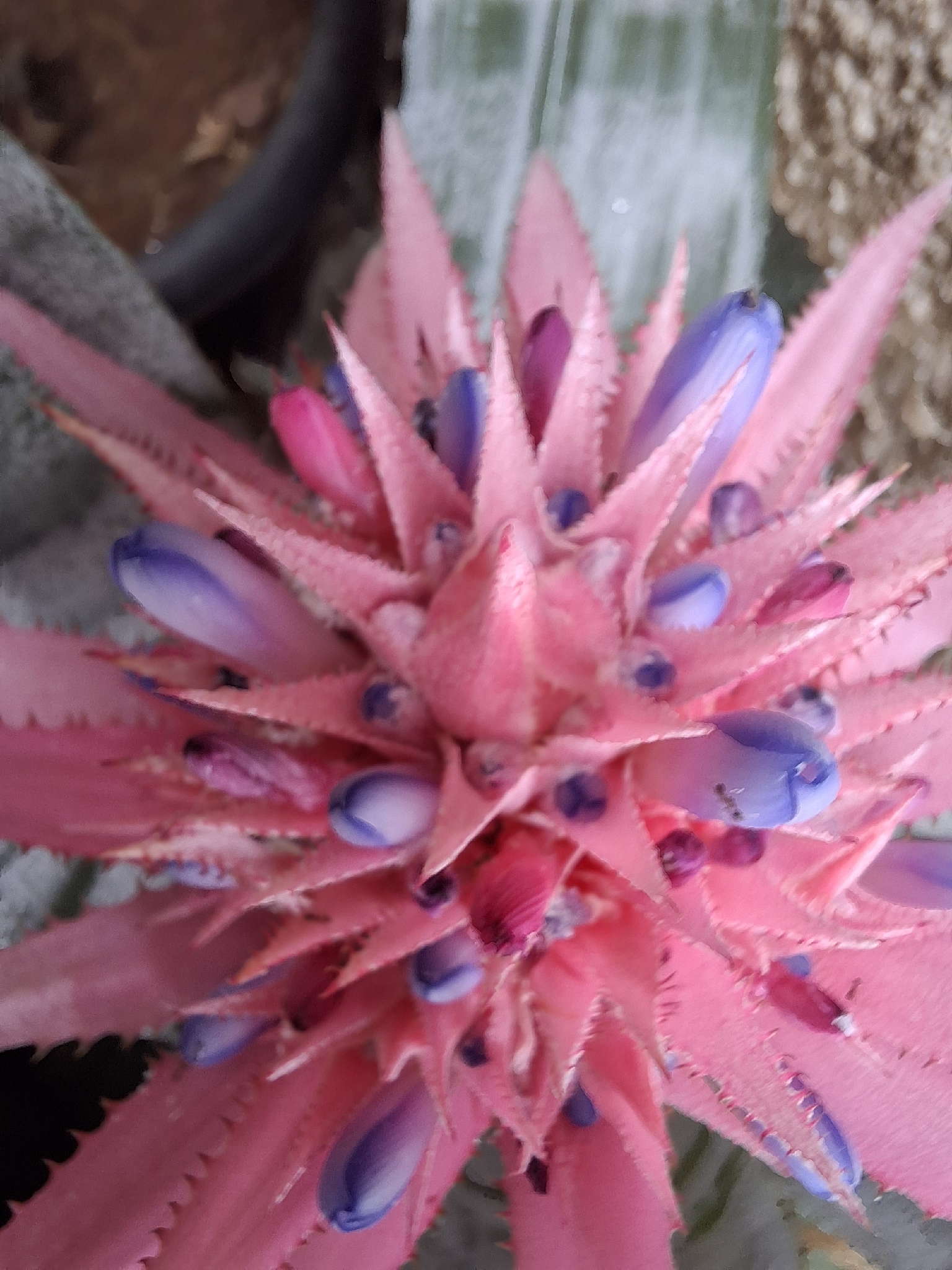
The plant forms a dense clump of grey, strap-shaped foliage around a central flower head. Small purple flowers sit surrounded by spiky pink bracts, and this display may appear at any time of year. It stays compact, generally reaching only 0.1 to 0.5 metres in height and spread over two to five years.
Source: RHS
Scale and mealybugs
Watch for scale insects and mealybugs, which are the pests most likely to trouble this plant.
Source: RHS
Little upkeep needed
This Aechmea requires no pruning and is generally disease-free, making it an easy plant to keep tidy.
Source: RHS
Care recipe
The species record — the baseline every cultivar inherits unless it says otherwise.
Care notes are early — not yet verified
- Light
- ai:claude-opus-4-8
- Water
- ai:claude-opus-4-8 (range 7-14d)
- Humidity
- ai:claude-opus-4-8
- Soil
- ai:claude-fable-5
- Care
- ai:claude-fable-5
Bright, indirect
≈ every 14 days
High
13–28 °C
Loose, fast-draining bromeliad or orchid mix
Detach and pot offsets after the parent flowers
Dilute liquid feed monthly in the growing season, avoid over-feeding
Slow
Silvery leaves and a striking pink flower head at maturity
Not yet documented
This is where toxicity lives — every cultivar of this species inherits it and none can override it.
Reference images
Every image credited. Licenses link to their deeds.
PrimarySources: ai:claude-opus-4-8 · ai:claude-opus-4-8 (range 7-14d) · ai:claude-fable-5
Kept true by its growers
Every fact here carries its source. Grow Urnplant yourself? What you’ve observed — how it drinks, how it holds its color, a name that’s off — and a clear photo of your plant are exactly what keep this page honest. Contributions are reviewed before anything changes.
Sign in to add what you know →