Species · genus Aechmea · Bromeliaceae
Brazilian Vaseplant
Aechmea distichantha Lem.
Cultivars of A. distichantha
The named forms growers keep — each with its own page, each honest about how much we know.
No named cultivars catalogued under A. distichantha yet. When growers document a stable, named form, it earns its own page here.
Guide
The species-level account. Cultivar pages build on this and say where they differ.
A Bromeliad Rosette
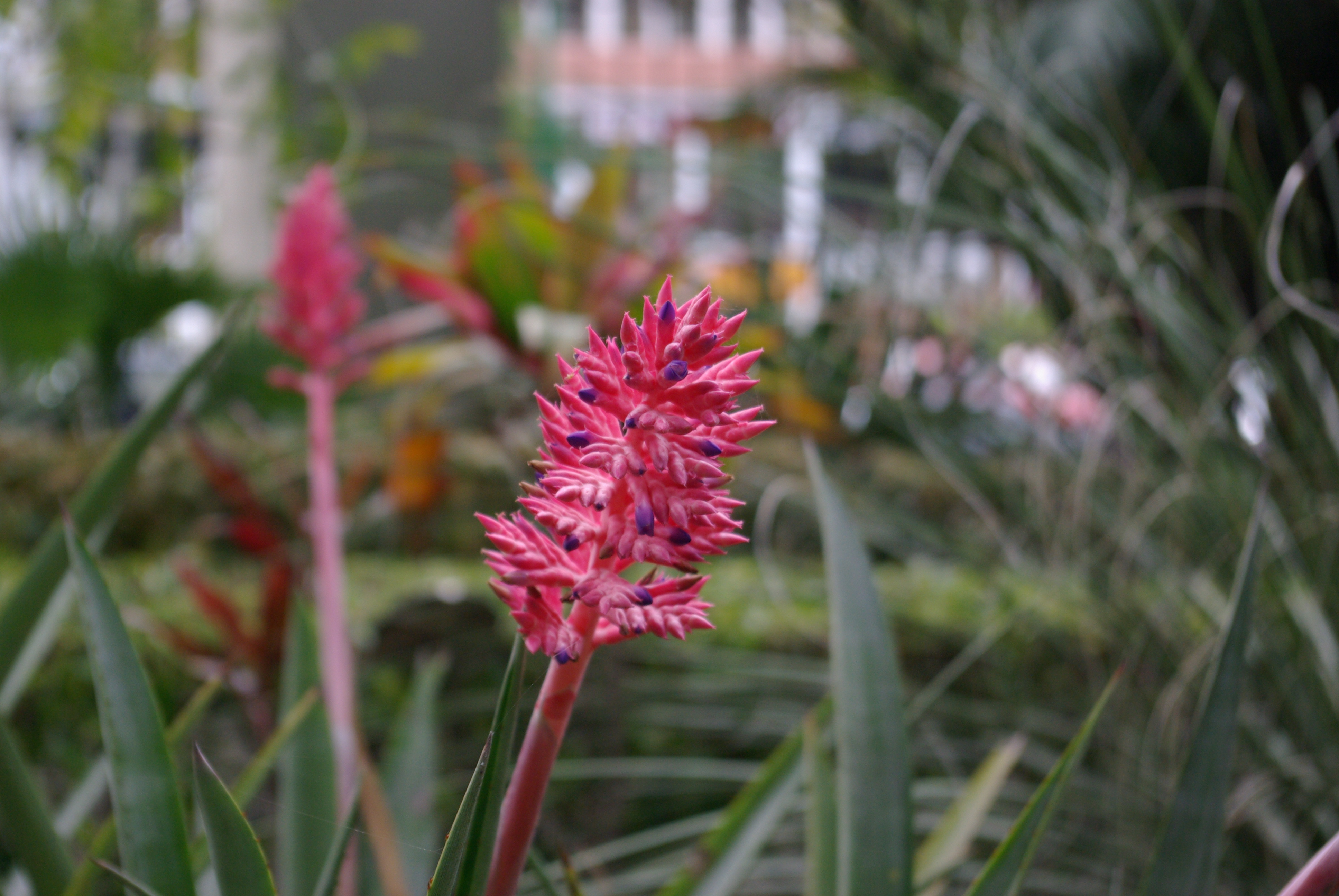
Aechmea distichantha is an evergreen perennial bromeliad that forms a funnel-shaped rosette of strap-shaped leaves. In time it sends up a terminal flower spike, often dressed in colourful triangular bracts, followed by fleshy fruits.
Source: RHS
South American Native
This species comes from a native range stretching from Brazil to Uruguay, taking in Argentina, Paraguay, and the southern and west-central reaches of Brazil as well. It grows as a lithophyte, rooting on bare rock rather than soil, and belongs primarily to the subtropical biome.
Source: Kew
Rosette, Spike, Bracts
The genus Aechmea is known for its funnel-shaped rosettes of strap-like leaves, and this species holds to that form. Its terminal flower spike carries tubular blooms set off by colourful triangular bracts, with fleshy fruits following on afterward.
Source: RHS
Care recipe
The species record — the baseline every cultivar inherits unless it says otherwise.
Care notes are early — not yet verified
- Light
- ai:claude-opus-4-8
- Water
- ai:claude-opus-4-8 (range 7-14d)
- Humidity
- ai:claude-opus-4-8
- Soil
- ai:claude-fable-5
- Care
- ai:claude-fable-5
Bright, indirect
≈ every 14 days
Medium
12–28 °C
Loose, fast-draining bromeliad or orchid mix
Separate offsets (pups) once a third of the parent's size
Dilute liquid feed monthly in spring and summer, tank and soil
Slow
Blooms once at maturity with a lasting pink-and-purple spike
Not yet documented
This is where toxicity lives — every cultivar of this species inherits it and none can override it.
Reference images
Every image credited. Licenses link to their deeds.
Sources: ai:claude-opus-4-8 · ai:claude-opus-4-8 (range 7-14d) · ai:claude-fable-5
Kept true by its growers
Every fact here carries its source. Grow Brazilian Vaseplant yourself? What you’ve observed — how it drinks, how it holds its color, a name that’s off — and a clear photo of your plant are exactly what keep this page honest. Contributions are reviewed before anything changes.
Sign in to add what you know →