Species · genus Adiantum · Pteridaceae
Delta Maidenhair Fern
Adiantum raddianum C.Presl
Also known as: Delta Maidenhair · Fine Maidenhair Fern
Cultivars of A. raddianum
The named forms growers keep — each with its own page, each honest about how much we know.
No named cultivars catalogued under A. raddianum yet. When growers document a stable, named form, it earns its own page here.
Guide
The species-level account. Cultivar pages build on this and say where they differ.
The Delta Maidenhair Fern
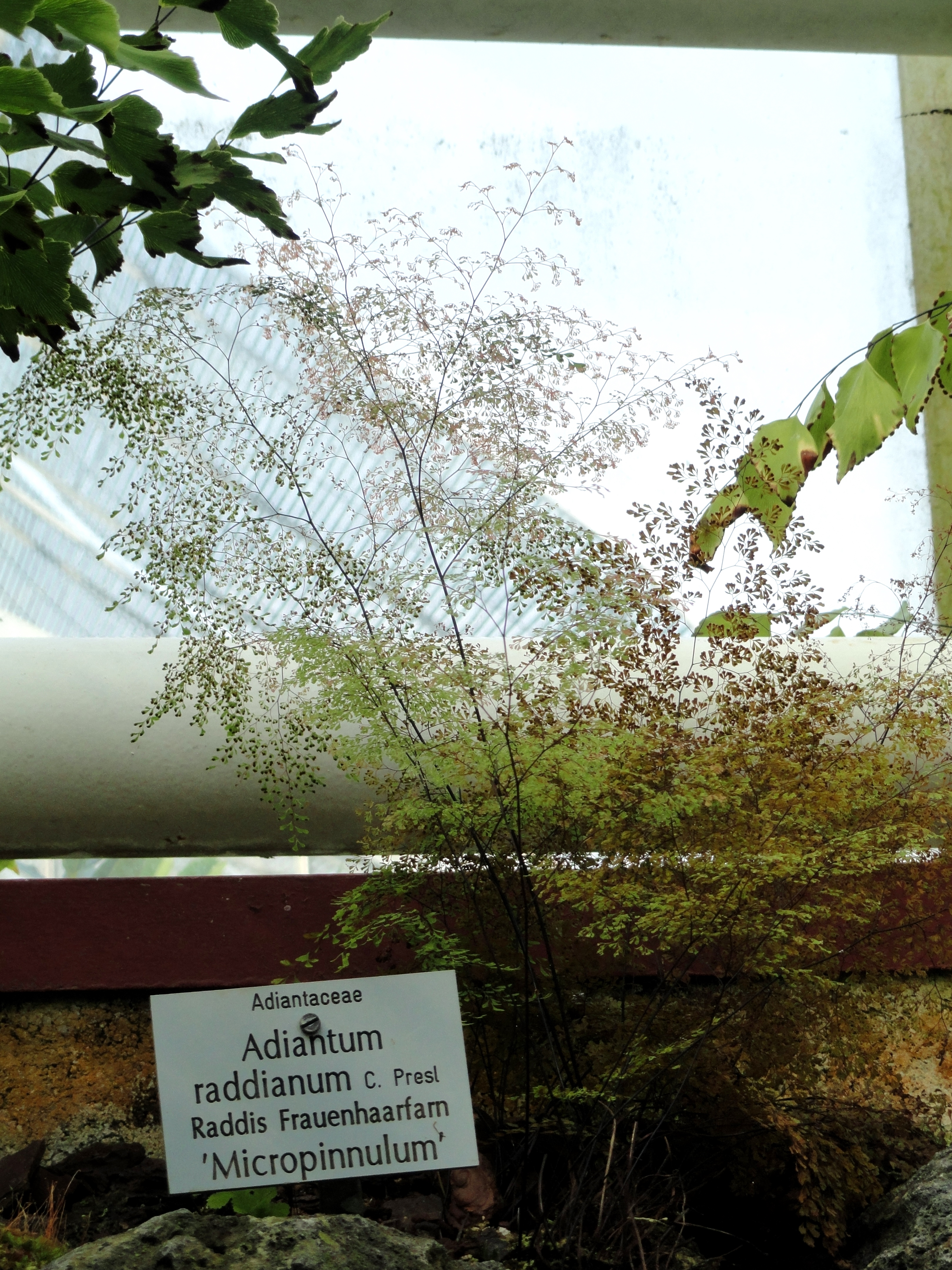
Adiantum raddianum, the delta maidenhair fern, is a tender evergreen fern that forms a bushy clump of black-stalked fronds. It stays modest in size, generally reaching somewhere between ten and fifty centimetres tall and wide, though named forms such as 'Fragrantissimum' can grow rather larger, to around seventy-five centimetres.
Source: RHS
A Tropical American Native
This fern's natural range lies in tropical America, including the West Indies. It belongs to the fern family Pteridaceae, whose members are known for shiny black stalks and fronds divided into fan-shaped or rounded segments that carry their spores beneath reflexed marginal flaps.
Source: RHS
Bright Shade, Steady Moisture
Grown indoors as a house or conservatory plant, this fern wants bright but indirect light, good ventilation, and a peat-free houseplant compost kept moist but well drained. Water freely and feed monthly at half strength from mid spring to late summer, then let watering fall back in winter. High humidity matters, so standing the pot on a tray of moist gravel or pebbles helps it settle in.
Source: RHS
By Spore Or Division
New plants come either from spores sown as soon as they are ripe, needing a minimum temperature of twenty-one degrees Celsius to germinate, or by dividing the rhizomes, usually done in early spring.
Source: RHS
Fine, Fan-Shaped Fronds
The charm here is in the detail: triangular, black-stemmed fronds broken into many small, variably lobed segments, pale green when young and darkening as they mature. Selections vary this theme, from the densely overlapping segments of 'Fragrantissimum' to the horizontally held or downward-arching fronds of 'Fritz Lüthi'.
Source: RHS
Watch For Scale
Scale insects are the pest most likely to trouble this fern, though some named forms, such as 'Fritz Lüthi', are generally reported pest-free. Diseases are not typically a concern either.
Source: RHS
Light Grooming Only
This fern asks little in the way of upkeep beyond removing dead or faded fronds as they appear. Some forms can instead be trimmed back in winter, or simply left until new growth begins to emerge in spring.
Source: RHS
Care recipe
The species record — the baseline every cultivar inherits unless it says otherwise.
Care notes are early — not yet verified
- Light
- ai:claude-opus-4-8
- Water
- ai:claude-opus-4-8 (range 2-5d)
- Humidity
- ai:claude-opus-4-8
- Soil
- ai:claude-fable-5
- Care
- ai:claude-fable-5
Bright, indirect
≈ every 5 days
High
16–24 °C
Light, humus-rich, consistently moist mix
Division of the rhizome, or spores
Dilute balanced feed every few weeks in growth
Moderate
Ferns don't flower — reproduce by spores
Not yet documented
This is where toxicity lives — every cultivar of this species inherits it and none can override it.
Reference images
Every image credited. Licenses link to their deeds.
PrimarySources: ai:claude-opus-4-8 · ai:claude-opus-4-8 (range 2-5d) · ai:claude-fable-5
Kept true by its growers
Every fact here carries its source. Grow Delta Maidenhair Fern yourself? What you’ve observed — how it drinks, how it holds its color, a name that’s off — and a clear photo of your plant are exactly what keep this page honest. Contributions are reviewed before anything changes.
Sign in to add what you know →