Species · genus Adiantum · Pteridaceae
Northern Maidenhair
Adiantum pedatum L.
Also known as: Five-finger Fern · Northern Maidenhair Fern · Pointerweed · Maidenfern · Maidenhair
Cultivars of A. pedatum
The named forms growers keep — each with its own page, each honest about how much we know.
No named cultivars catalogued under A. pedatum yet. When growers document a stable, named form, it earns its own page here.
Guide
The species-level account. Cultivar pages build on this and say where they differ.
A Woodland Native Fern
Adiantum pedatum, the northern maidenhair fern, is a deciduous, clump-forming fern in the Pteridaceae family. It is native to North America and Asia, and in Missouri it is found naturally on rich wooded slopes, ravine bottoms and damp shady woods.
Source: Missouri Botanical Garden
Name And Native Ground
Its genus name comes from the Greek adiantos, meaning unwetted, a nod to foliage that sheds water rather than holding it. The species name pedatum means cut like a bird's foot, describing the shape of the fronds. In the wild it is a plant of shaded, damp woodland rather than open ground.
Source: Missouri Botanical Garden
Shade, Moisture, Feeding
This fern wants part to full shade and does best in moist, humus-rich, slightly acidic soil that never dries out for long. Under glass the RHS recommends bright filtered light with medium to high humidity and good air movement, feeding with a half-strength balanced liquid fertiliser monthly while it is in active growth. Outdoors, ordinary moderately fertile, medium, well-drained soil is enough.
Source: RHS
Grown From Spores
The RHS notes that this fern is propagated from spores. Missouri Botanical Garden adds that established plants also spread slowly on their own, by creeping, branching rhizomes that build into larger colonies over time.
Source: RHS
Finely Cut Fronds
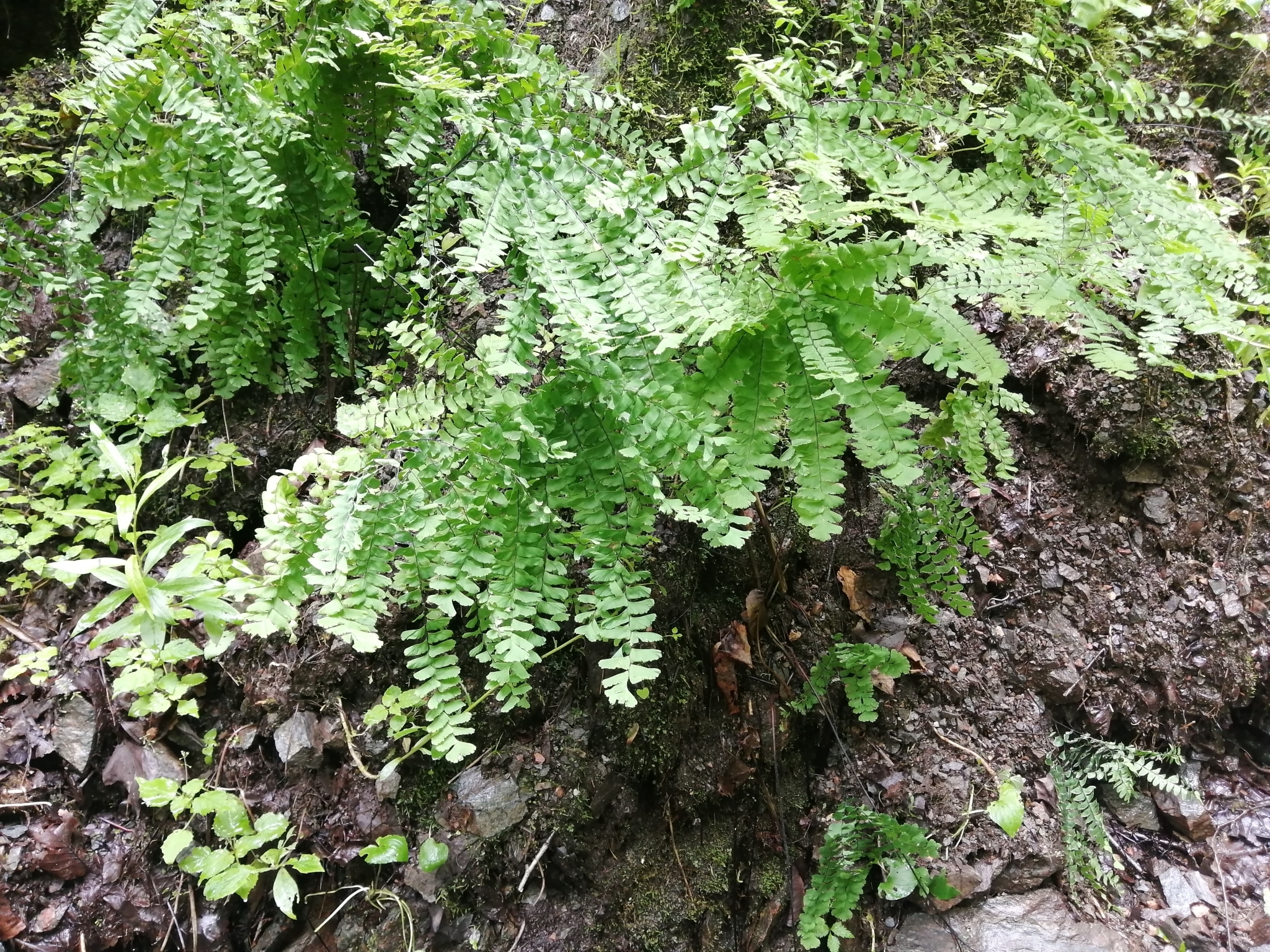
The fronds are finely textured and somewhat frilly, divided palmately so they fan out into finger-like segments on curved stalks. The wiry stems run reddish-brown to black, and the RHS describes the young fronds as sometimes deep pink before they mature. New crosiers, the coiled fiddleheads, emerge pink in spring.
Source: Missouri Botanical Garden
Mostly Trouble-Free
Under glass this fern may be susceptible to scale insects, per the RHS, though outdoors it is otherwise generally disease-free and Missouri Botanical Garden likewise reports no serious insect or disease problems.
Source: RHS
Browning In Summer Heat
High summer heat can cause the fronds to brown by mid to late summer, especially when soil moisture is not kept up or the plant is given more sun than it can handle. Keeping it consistently moist and shaded through the hottest months helps prevent this.
Source: Missouri Botanical Garden
Light Upkeep, Spring Tidy
Missouri Botanical Garden rates this fern as low maintenance overall. The RHS notes it needs no pruning as such, just the removal of damaged fronds in spring to tidy the clump before new growth gets underway.
Source: RHS
Care recipe
The species record — the baseline every cultivar inherits unless it says otherwise.
Care notes are early — not yet verified
- Light
- ai:claude-opus-4-8
- Water
- ai:claude-opus-4-8 (range 3-7d)
- Humidity
- ai:claude-opus-4-8
- Soil
- ai:claude-fable-5
- Care
- ai:claude-fable-5
Medium light
≈ every 7 days
High
10–24 °C
Humus-rich, evenly moist well-draining mix
Division of the rhizome, or spores
Weak balanced feed monthly while actively growing
Moderate
Ferns don't flower — reproduce by spores
Not yet documented
This is where toxicity lives — every cultivar of this species inherits it and none can override it.
Reference images
Every image credited. Licenses link to their deeds.
PrimarySources: ai:claude-opus-4-8 · ai:claude-opus-4-8 (range 3-7d) · ai:claude-fable-5
Kept true by its growers
Every fact here carries its source. Grow Northern Maidenhair yourself? What you’ve observed — how it drinks, how it holds its color, a name that’s off — and a clear photo of your plant are exactly what keep this page honest. Contributions are reviewed before anything changes.
Sign in to add what you know →