Species · genus Adiantum · Pteridaceae
Maidenhair Fern
Adiantum capillus-veneris L.
Also known as: Southern Maidenhair · Venus' Hair-fern · Venus's Hair Fern · Venus's Maidenhair · Black Maidenhair
Cultivars of A. capillus-veneris
The named forms growers keep — each with its own page, each honest about how much we know.
No named cultivars catalogued under A. capillus-veneris yet. When growers document a stable, named form, it earns its own page here.
Guide
The species-level account. Cultivar pages build on this and say where they differ.
Meet the maidenhair fern
Adiantum capillus-veneris, the maidenhair fern, is a low-growing, clump-forming fern in the Pteridaceae family. It carries the common names black maidenhair, Venus maidenhair, and Venus's hair, among others, and is often grown both in shady garden corners and as a houseplant.
Source: RHS
A native of these isles
This species is native to Britain and Ireland, and is at home in sheltered, shady spots. It is hardy enough for coastal and mild parts of the UK, though it will not survive being frozen through.
Source: RHS
Shade, moisture, shelter
Give this fern full or partial shade and a sheltered spot, whether it faces west, east, or north. The soil should be moist but well drained, with a neutral to alkaline pH, and it will take to clay, loam, chalk, or sandy ground alike. Grown as a houseplant, the same preference for shade and consistent moisture applies.
Source: RHS
By division or spore
The maidenhair fern is propagated either by division of the clump or by spores.
Source: RHS
Fronds on black wire
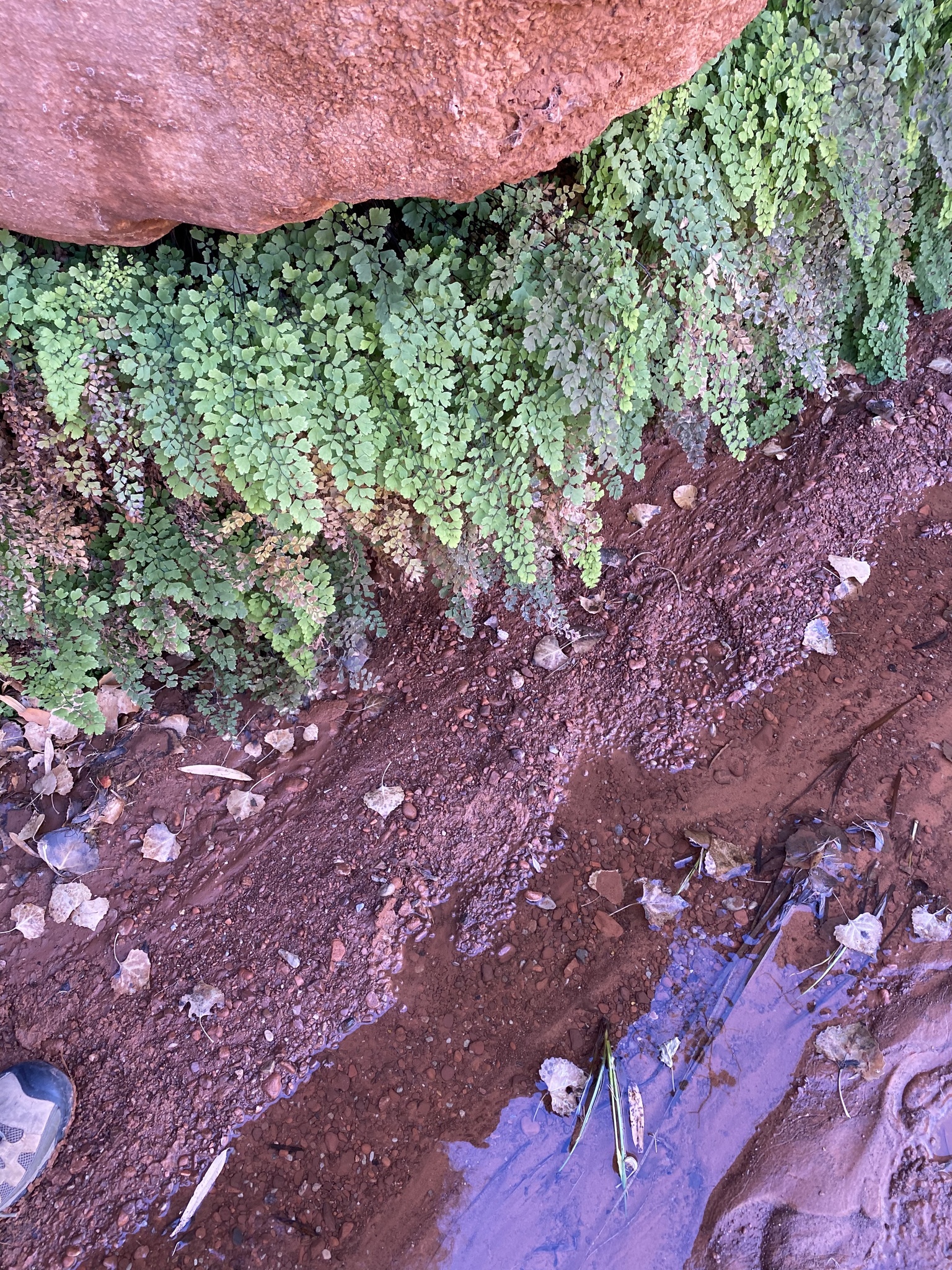
The maidenhair fern is a spreading, clump-forming plant with fronds that arch gently and divide twice over, giving them a fine, elegant texture. These fronds are carried on wiry black stems, and the foliage is semi-evergreen in warm sheltered gardens or indoors, though it can be deciduous elsewhere. It stays modest in size, reaching only 0.1 to 0.5 metres in height and spread, and takes two to five years to reach maturity.
Source: RHS
Largely untroubled
This is a fern that is generally free of both pests and disease.
Source: RHS
A light winter tidy
Faded growth can be trimmed back in winter if it looks untidy, or you can simply wait until new fronds begin to emerge in spring before cutting back the old.
Source: RHS
Care recipe
The species record — the baseline every cultivar inherits unless it says otherwise.
Care notes are early — not yet verified
- Light
- ai:claude-opus-4-8
- Water
- ai:claude-opus-4-8 (range 2-5d)
- Humidity
- ai:claude-opus-4-8
- Soil
- ai:claude-fable-5
- Care
- ai:claude-fable-5
Bright, indirect
≈ every 5 days
High
15–24 °C
Rich, moist, well-draining mix with added grit
Division of the rhizome, or spores
Weak balanced feed monthly in the growing season
Moderate
Ferns don't flower — reproduce by spores
Not yet documented
This is where toxicity lives — every cultivar of this species inherits it and none can override it.
Reference images
Every image credited. Licenses link to their deeds.
PrimarySources: ai:claude-opus-4-8 · ai:claude-opus-4-8 (range 2-5d) · ai:claude-fable-5
Kept true by its growers
Every fact here carries its source. Grow Maidenhair Fern yourself? What you’ve observed — how it drinks, how it holds its color, a name that’s off — and a clear photo of your plant are exactly what keep this page honest. Contributions are reviewed before anything changes.
Sign in to add what you know →