Species · genus Adiantum · Pteridaceae
Aleutian Maidenhair
Adiantum aleuticum (Rupr.) C.A.Paris
Also known as: Aleutian Maidenhair Fern · Five-finger Fern · Northern Maidenhair · Western Maidenhair · Western Maidenhair Fern
Cultivars of A. aleuticum
The named forms growers keep — each with its own page, each honest about how much we know.
No named cultivars catalogued under A. aleuticum yet. When growers document a stable, named form, it earns its own page here.
Guide
The species-level account. Cultivar pages build on this and say where they differ.
Aleutian Maidenhair Fern
Adiantum aleuticum, known as Aleutian maidenhair, is a clump-forming perennial fern that grows to around 50cm or more, prized for its black stalks and finely divided green fronds. It carries the RHS Award of Garden Merit and belongs to the fern family Pteridaceae.
Source: RHS
A North American Native
This fern's natural range lies in North America, and it is not native to Britain or Ireland. It has been known under several names over time, including Adiantum pedatum var. aleuticum, reflecting some past confusion with its close relative Adiantum pedatum.
Source: RHS
Light, Soil, and Feeding
This fern prefers full or partial shade and moist but well-drained soil, tolerating chalk, clay, loam or sand across acid, neutral or alkaline pH. Grown under glass, it does best in bright filtered light with medium to high humidity and good ventilation, in a mix of loam, bark, charcoal, lime chippings, sharp sand and leaf mould. While in growth, a half-strength balanced liquid feed once a month is enough to keep it going. It is rated hardy to H6, meaning it can withstand UK and northern European winters outdoors.
Source: RHS
Grown From Spores
Adiantum aleuticum is propagated by spores, the method used for ferns generally rather than seed or cuttings.
Source: RHS
Fronds and Form
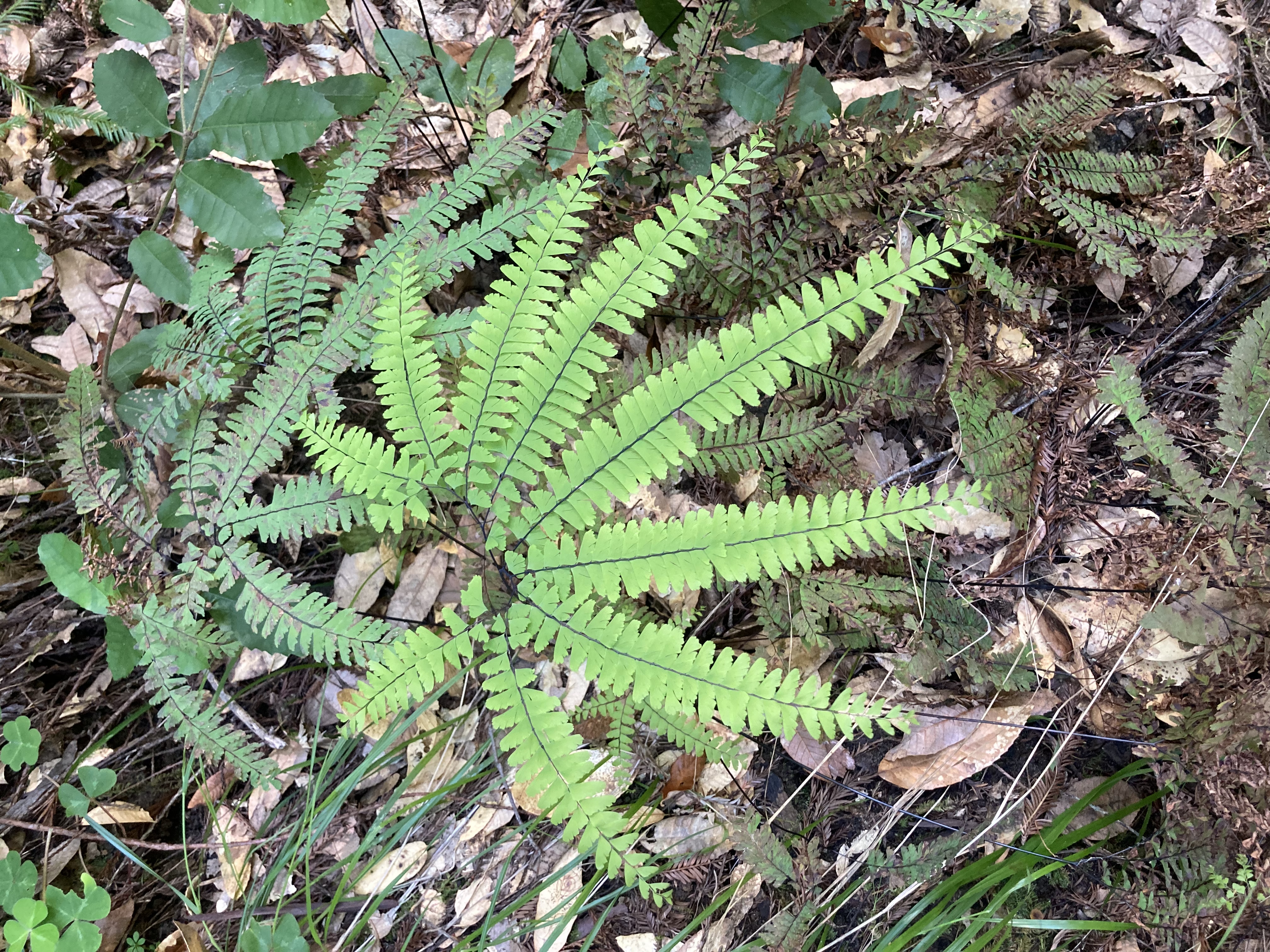
The fronds are pedately divided, meaning they branch outward like fingers from the hand, made up of oblong segments held on glossy black stalks. Growth is deciduous or semi-evergreen, and the plant forms a tidy clump reaching a height and spread of up to half a metre. A dwarf form, 'Subpumilum', keeps the same black-stalked, pedate frond structure but in miniature, standing only about 10cm tall with fresh green, tightly packed segments.
Source: RHS
Scale Under Glass
Under glass, this fern may be susceptible to scale insects, though it is otherwise generally disease-free.
Source: RHS
Light Seasonal Tidying
No routine pruning is needed for this fern, though damaged fronds are best removed in spring to keep the clump looking fresh. It suits patio containers, cottage-style borders, and underplanting beneath roses and shrubs.
Source: RHS
Care recipe
The species record — the baseline every cultivar inherits unless it says otherwise.
Care notes are early — not yet verified
- Light
- ai:claude-opus-4-8
- Water
- ai:claude-opus-4-8 (range 3-7d)
- Humidity
- ai:claude-opus-4-8
- Soil
- ai:claude-fable-5
- Care
- ai:claude-fable-5
Medium light
≈ every 7 days
High
10–24 °C
Humus-rich, moisture-retentive well-draining mix
Division of the rhizome, or spores
Weak balanced feed monthly while growing
Moderate
Ferns don't flower — reproduce by spores
Not yet documented
This is where toxicity lives — every cultivar of this species inherits it and none can override it.
Reference images
Every image credited. Licenses link to their deeds.
PrimarySources: ai:claude-opus-4-8 · ai:claude-opus-4-8 (range 3-7d) · ai:claude-fable-5
Kept true by its growers
Every fact here carries its source. Grow Aleutian Maidenhair yourself? What you’ve observed — how it drinks, how it holds its color, a name that’s off — and a clear photo of your plant are exactly what keep this page honest. Contributions are reviewed before anything changes.
Sign in to add what you know →