Species · genus Adenium · Apocynaceae
Desert Rose
Adenium obesum (Forssk.) Roem. & Schult.
Also known as: Impala Lily · Mock Azalea
Cultivars of A. obesum
The named forms growers keep — each with its own page, each honest about how much we know.
No named cultivars catalogued under A. obesum yet. When growers document a stable, named form, it earns its own page here.
Guide
The species-level account. Cultivar pages build on this and say where they differ.
A Rose That Isn't
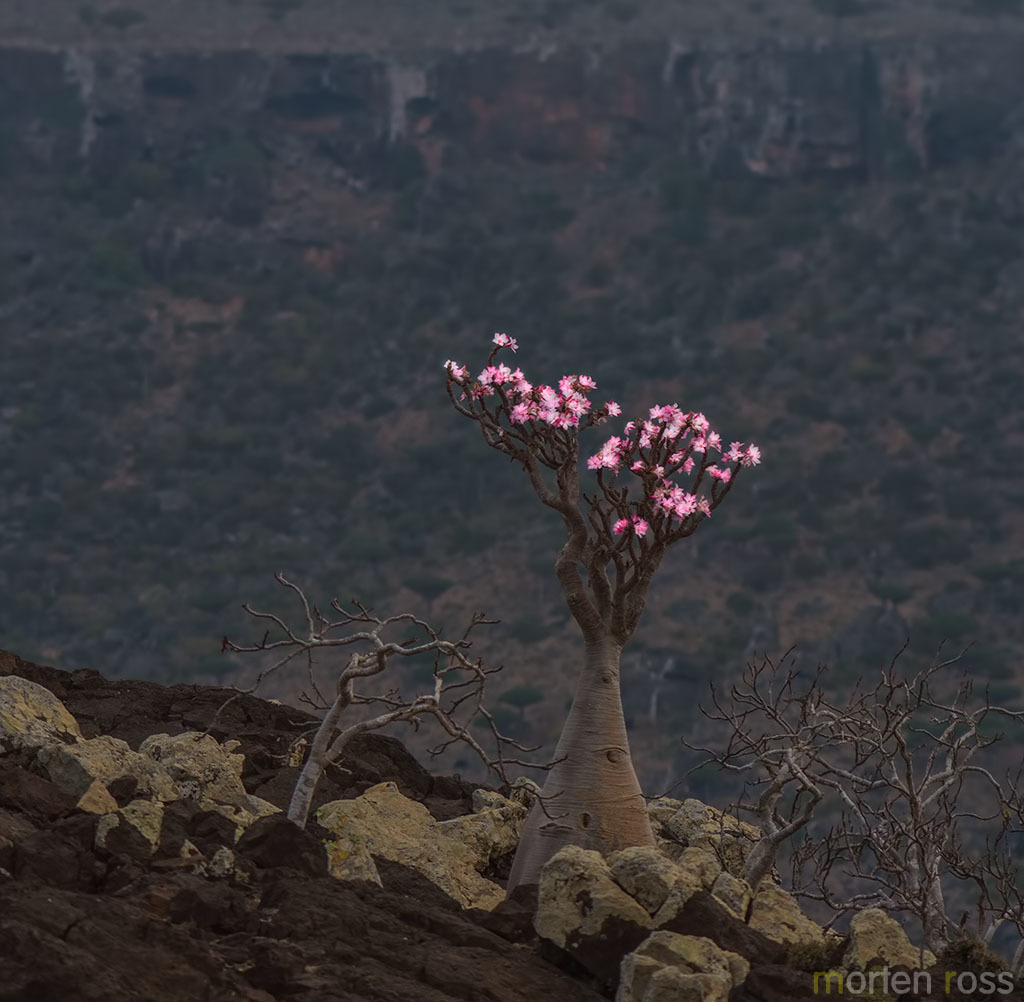
The desert rose is a succulent shrub grown for its trumpet-shaped flowers and swollen trunk, despite its name it belongs to the Apocynaceae family rather than the rose family. It is known botanically as Adenium obesum, and also goes by names like Impala Lily, Mock Azalea, and Sabi Star.
Source: Epic Gardening
Out of Arid Africa
Adenium obesum comes from arid stretches of Africa, the Middle East, and Madagascar, which explains its preference for conditions drier than most other succulents tolerate. The RHS notes its native range across Arabia and tropical Africa. It carries a large gene pool with many variations and sub-species, and it is the one Adenium variety specifically hybridized for a range of flower colors.
Source: Epic Gardening
Sun, Sparingly Watered
Give this plant more sun than you would most succulents, aiming for at least eight hours a day, ideally from a south-facing window, since sunlight is what drives bloom production. Keep soil moist but never soggy through the active growing season of late spring and summer, then cut back to watering roughly once a month in fall and winter as the plant goes dormant. Plant it in a sandy, well-draining mix with a neutral to acidic pH, and feed lightly with a balanced fertilizer, monthly if liquid or every three months if slow-release, pausing entirely in winter. It favors warmth, doing best between 65 and 90°F, and is not fussy about humidity.
Source: Epic Gardening
Cuttings Over Seed
Adenium obesum can be grown from a branch cutting or from seed, with cuttings taking root faster and both methods best attempted in spring. For cuttings, a five to six inch tip section is left to callus for a day or two, dipped in rooting hormone, and set into potting mix, typically rooting within two to six weeks. The RHS instead describes sowing seed as soon as it is ripe at around 21°C, or taking root cuttings from non-flowering shoots in summer with bottom heat.
Source: Epic Gardening
Swollen Trunk, Trumpet Blooms
This plant is built around a thick, bottle-shaped caudex that tapers into a branched top, a form that has made it a favorite subject for bonsai work. Small clusters of red, pink, or white flowers open before the ovate leaves appear, set against dark green, deciduous foliage. Indoors, in the right climate, it can grow surprisingly tall for a houseplant.
Source: RHS
Sap-Suckers to Watch
This succulent is largely trouble-free but can attract mealybugs, aphids, and spider mites. The telltale sign is discolored specks on the leaves, often found on the underside, where sap-sucking insects have been feeding. The RHS likewise flags aphids as the main pest concern, while otherwise calling the plant generally disease-free.
Source: Epic Gardening
Overwatering Is the Culprit
Most trouble with this plant traces back to overwatering rather than pests. Leaf drop is a common early sign of root rot, brought on by soggy or poorly draining soil, and it calls for trimming away any blackened, mushy roots and repotting into fresh mix. Powdery white blistering on leaves points to powdery mildew, which spreads in cool damp nights followed by warm days and eases with better airflow, while brown, red, or black scorch marks usually mean the plant needs to be moved out of overly intense midday sun.
Source: Epic Gardening
Light Pruning, Long Dormancy
This plant asks for little upkeep beyond removing dead or damaged branches and occasional trimming for shape, best done in spring before the plant heads back outdoors. Below 50°F it drops its leaves and goes dormant, and in prolonged cold it can die, so it needs to come indoors to a space that will not freeze, where it can go months without light or water. Repotting is rarely needed, mainly when roots crowd the container, and is best done in late winter or early spring using a pot just a couple of inches larger.
Source: Epic Gardening
Care recipe
The species record — the baseline every cultivar inherits unless it says otherwise.
Care notes are early — not yet verified
- Light
- ai:claude-opus-4-8
- Water
- ai:claude-opus-4-8 (range 10-21d)
- Humidity
- ai:claude-opus-4-8
- Soil
- ai:claude-fable-5
- Care
- ai:claude-fable-5
Direct sun
≈ every 21 days
Low — average room
15–32 °C
Gritty, fast-draining cactus or succulent mix
Seed, or cuttings (cuttings lack the swollen caudex)
Dilute balanced feed monthly in spring and summer
Slow
Showy pink to red trumpet blooms in bright light
Toxic to cats & dogs & horses
Desert rose — cardiac glycosides in the milky sap (ASPCA: toxic to cats, dogs, horses). This is where toxicity lives: every cultivar of this species inherits it and none can override it.
Reference images
Every image credited. Licenses link to their deeds.
Sources: ai:claude-opus-4-8 · ai:claude-opus-4-8 (range 10-21d) · ai:claude-fable-5 · ASPCA
Kept true by its growers
Every fact here carries its source. Grow Desert Rose yourself? What you’ve observed — how it drinks, how it holds its color, a name that’s off — and a clear photo of your plant are exactly what keep this page honest. Contributions are reviewed before anything changes.
Sign in to add what you know →