Species · genus Acorus · Acoraceae
Slender Sweet Flag
Acorus gramineus Aiton
Also known as: Grass-leaf Sweet Flag · Grassleaf Sweet Flag · Grass-leaved Sweet-Flag · Grassleaf Sweetflag · Grassy-leaved Sweet Flag
Cultivars of A. gramineus
The named forms growers keep — each with its own page, each honest about how much we know.
No named cultivars catalogued under A. gramineus yet. When growers document a stable, named form, it earns its own page here.
Guide
The species-level account. Cultivar pages build on this and say where they differ.
A Grassy Sweet Flag
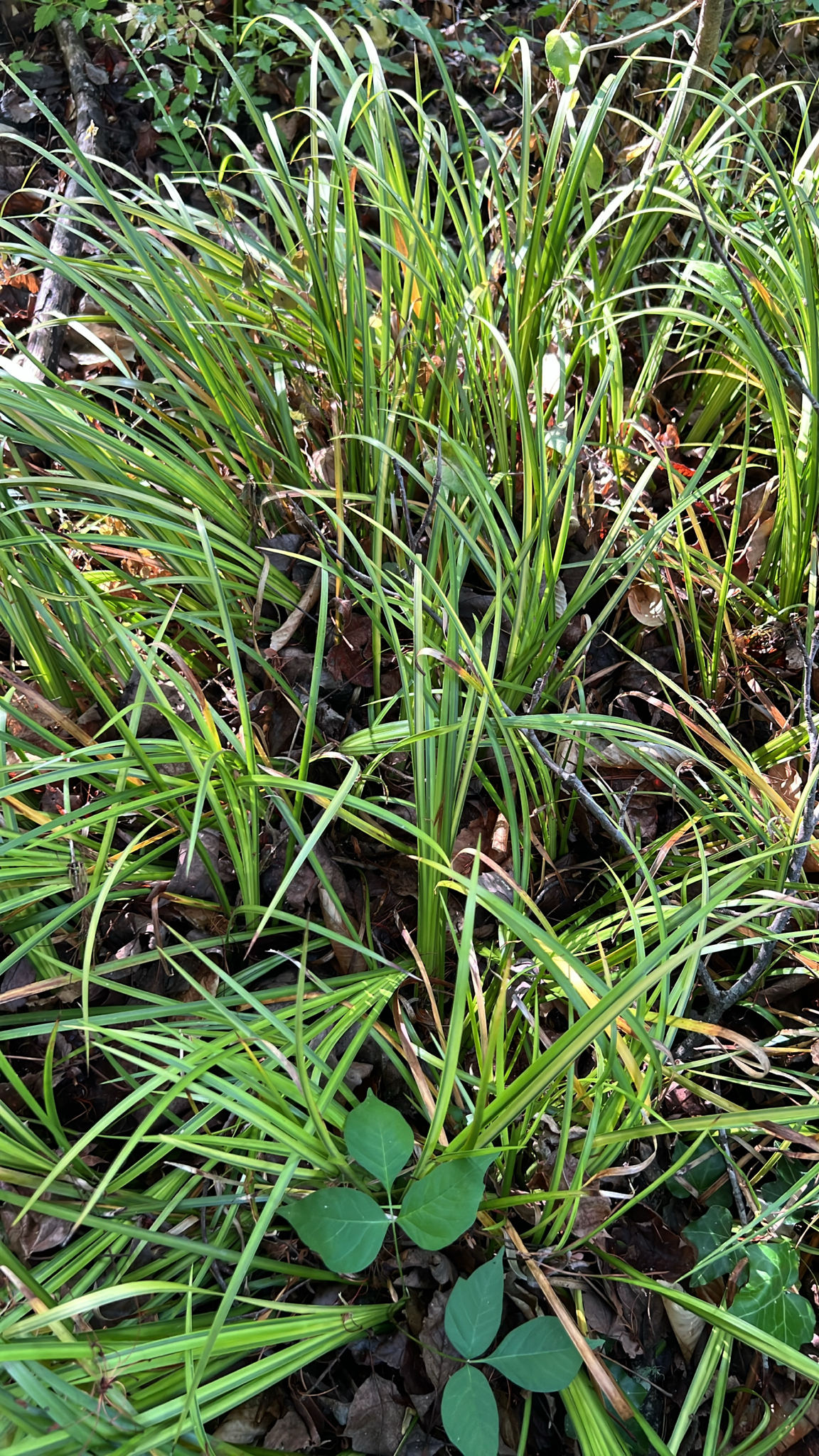
Acorus gramineus, known as grassy-leaved sweet flag, is a low, tufted perennial that looks like a fine grass but is not one. The variety 'Ogon' is a dwarf, golden-striped form grown for its bright, iris-like foliage.
Source: Missouri Botanical Garden
A Wetland Native
This plant comes from wetland habitats across China, Japan, Korea, India, Thailand, Myanmar, and the Philippines. It was long placed in the arum family alongside calla lily and jack-in-the-pulpit, but has since been moved to its own family, Acoraceae, because Acorus lacks the true spathe typical of arum relatives.
Source: Missouri Botanical Garden
Wet Feet, Some Shade
This is a plant of consistently wet ground: it grows in average to wet soils under full sun to part shade, and tolerates shallow standing water three to four inches deep as well as boggy conditions. Soil should never be allowed to dry out, and in hot summer climates the plant appreciates afternoon shade or filtered light. In water gardens it is typically set in containers with water covering the crowns, or planted directly in wet soil at the water's edge.
Source: Missouri Botanical Garden
Divide the Rhizomes
Propagation is by dividing the rhizomes at the start of the growing season. Divisions should be potted up and only planted out once they are fully established.
Source: RHS
Fragrant, Grass-Like Tufts
'Ogon' forms iris-like tufts of narrow leaf blades, six to twelve inches tall and a quarter inch wide, striped yellow and green but reading mostly as yellow. Small, insignificant greenish-yellow flowers appear on sedge-like spikes from spring into early summer, followed by tiny reddish berries. The foliage releases a sweet fragrance when bruised, which is where the common name sweet flag comes from.
Source: Missouri Botanical Garden
Scorch From Drying Out
There are no serious insect or disease problems to worry about with this plant. The main issue is scorched leaf tips and withering foliage, which are the first signs that the soil has been allowed to dry.
Source: Missouri Botanical Garden
Tidy and Divide
Maintenance is light: tidy the foliage in early spring if needed, and divide the clumps every few years to keep them from becoming congested. Left in a container sunk below the water's surface, the plant will not spread, but in open wet soil it slowly naturalizes by rhizomes without becoming invasive.
Source: RHS
Care recipe
The species record — the baseline every cultivar inherits unless it says otherwise.
Care notes are early — not yet verified
- Light
- ai:claude-opus-4-8
- Water
- ai:claude-opus-4-8 (range 3-7d)
- Humidity
- ai:claude-opus-4-8
- Soil
- ai:claude-fable-5
- Care
- ai:claude-fable-5
Bright, indirect
≈ every 7 days
High
10–24 °C
Constantly moist, water-retentive mix
Clump division of the rhizomes
Light monthly feed in the growing season
Slow
Rarely flowers indoors
Not yet documented
This is where toxicity lives — every cultivar of this species inherits it and none can override it.
Reference images
Every image credited. Licenses link to their deeds.
PrimarySources: ai:claude-opus-4-8 · ai:claude-opus-4-8 (range 3-7d) · ai:claude-fable-5
Kept true by its growers
Every fact here carries its source. Grow Slender Sweet Flag yourself? What you’ve observed — how it drinks, how it holds its color, a name that’s off — and a clear photo of your plant are exactly what keep this page honest. Contributions are reviewed before anything changes.
Sign in to add what you know →