Species · genus Acorus · Acoraceae
Calamus
Acorus calamus L.
Also known as: Common Sweet Flag · Myrtle Flag · Flagroot · Sweet Calamus · Sweet Flag
Cultivars of A. calamus
The named forms growers keep — each with its own page, each honest about how much we know.
No named cultivars catalogued under A. calamus yet. When growers document a stable, named form, it earns its own page here.
Guide
The species-level account. Cultivar pages build on this and say where they differ.
Sweet Flag, a Pond Perennial
Acorus calamus, known as sweet flag, is a spreading, deciduous marginal aquatic perennial with strap-shaped, aromatic bright green leaves. It reaches roughly 60 to 90cm in height, and in midsummer produces small, unremarkable brown flowers held just below the tips of leaf-like stems.
Source: RHS
Sun, Water, and Soil
Sweet flag wants full sun, ideally a south- or west-facing spot, and tolerates both exposed and sheltered positions. It belongs at a pond margin, sitting in very moist to wet, poorly-drained soil, and grows best in water no deeper than 22cm. It is untroubled by soil pH, taking to acid, neutral, or alkaline conditions, and is rated hardy throughout the UK.
Source: RHS
Dividing the Rhizome
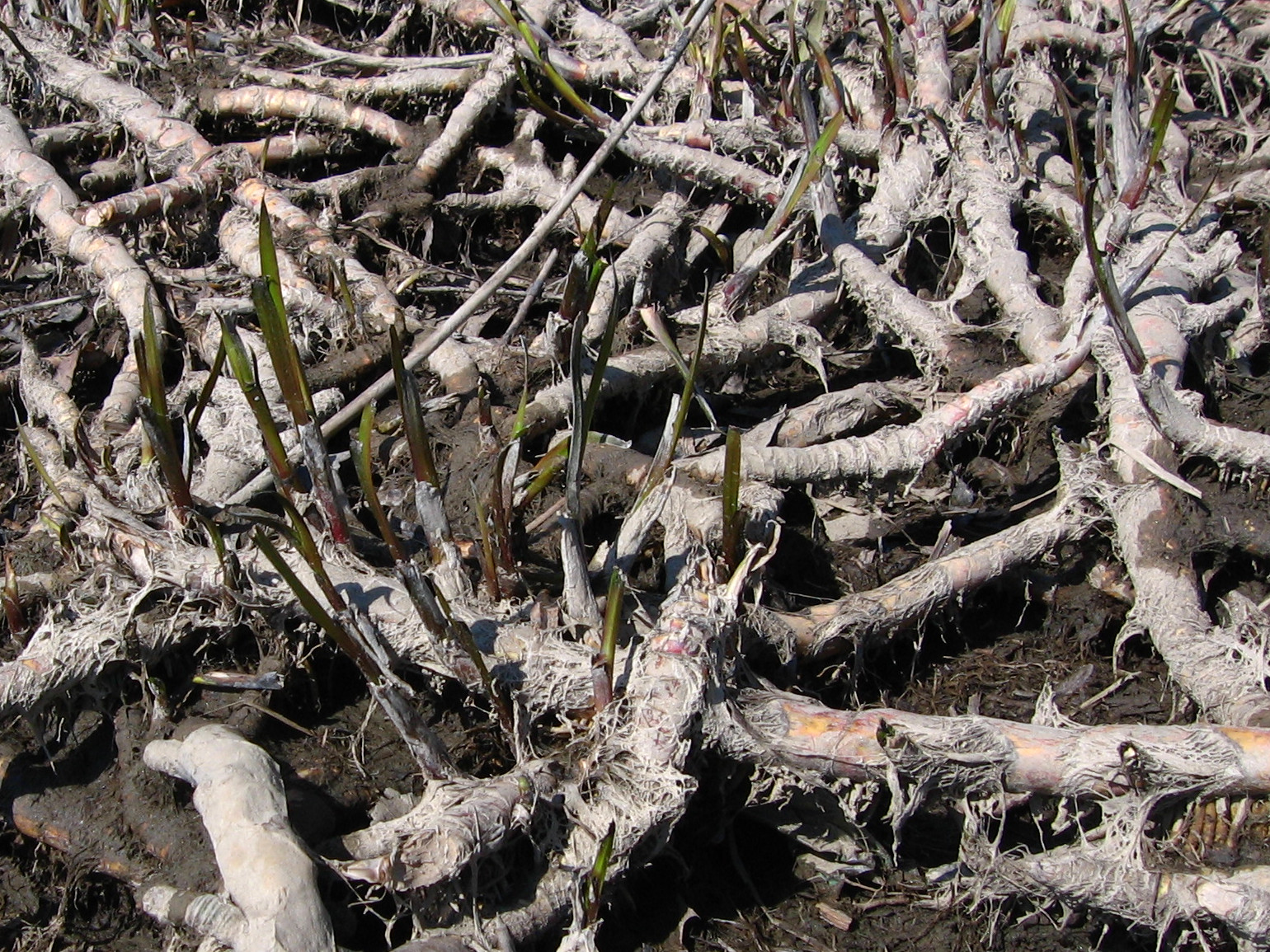
Propagation is by division of the rhizome, done at the start of the growing season. Newly divided pieces should be potted up and only planted out once they are fully established.
Source: RHS
Form and Foliage
This is a clump-forming plant with linear, sword-shaped foliage typical of the Acorus genus. Its ultimate height and spread both sit in the range of 0.5 to 1 metre, reached over two to five years. The leaves carry a distinct aromatic quality, and the summer flower spikes are brown rather than showy.
Source: RHS
Largely Untroubled
Sweet flag is generally free of both pests and diseases, which makes its care rhythm mostly a matter of position and moisture rather than vigilance against attackers.
Source: RHS
Cutting Back and Dividing
Cut the foliage back after flowering has finished. Divide the clump every few years as well, since congestion builds up over time at the pond margin.
Source: RHS
Care recipe
The species record — the baseline every cultivar inherits unless it says otherwise.
Care notes are early — not yet verified
- Light
- ai:claude-opus-4-8
- Water
- ai:claude-opus-4-8 (range 2-5d)
- Humidity
- ai:claude-opus-4-8
- Soil
- ai:claude-fable-5
- Care
- ai:claude-fable-5
Bright, indirect
≈ every 5 days
High
10–24 °C
Heavy, water-retentive mix; tolerates boggy conditions
Rhizome division
Light monthly feed during active growth
Moderate
Rarely flowers in cultivation
Not yet documented
This is where toxicity lives — every cultivar of this species inherits it and none can override it.
Reference images
Every image credited. Licenses link to their deeds.
PrimarySources: ai:claude-opus-4-8 · ai:claude-opus-4-8 (range 2-5d) · ai:claude-fable-5
Kept true by its growers
Every fact here carries its source. Grow Calamus yourself? What you’ve observed — how it drinks, how it holds its color, a name that’s off — and a clear photo of your plant are exactly what keep this page honest. Contributions are reviewed before anything changes.
Sign in to add what you know →