Species · genus Acalypha · Euphorbiaceae
Jacob's Coat
Acalypha wilkesiana Müll.Arg.
Also known as: Match Me If You Can · Beefsteakplant · Copperleaf · Fire-dragon · Capa De Obispo
Cultivars of A. wilkesiana
The named forms growers keep — each with its own page, each honest about how much we know.
No named cultivars catalogued under A. wilkesiana yet. When growers document a stable, named form, it earns its own page here.
Guide
The species-level account. Cultivar pages build on this and say where they differ.
Jacob's Coat, Introduced
Acalypha wilkesiana, known as Jacob's coat, beefsteak plant, or copperleaf, is a tropical evergreen shrub of the Euphorbiaceae family. In cooler climates it is grown under glass or as a houseplant, though in its native range it becomes a substantial shrub.
Source: RHS
A Pacific Island Native
This species and its varieties come from the Pacific Islands and Polynesia. Left to its own devices in that native environment, the plant can reach around two metres in height, considerably more than it typically achieves as a container specimen.
Source: RHS
Cuttings, Warmth Helps
Propagate by softwood cuttings in summer or early spring, or by semi-hardwood cuttings in late summer. For the named cultivars, bottom heat is recommended to get cuttings going.
Source: RHS
Foliage That Does the Talking
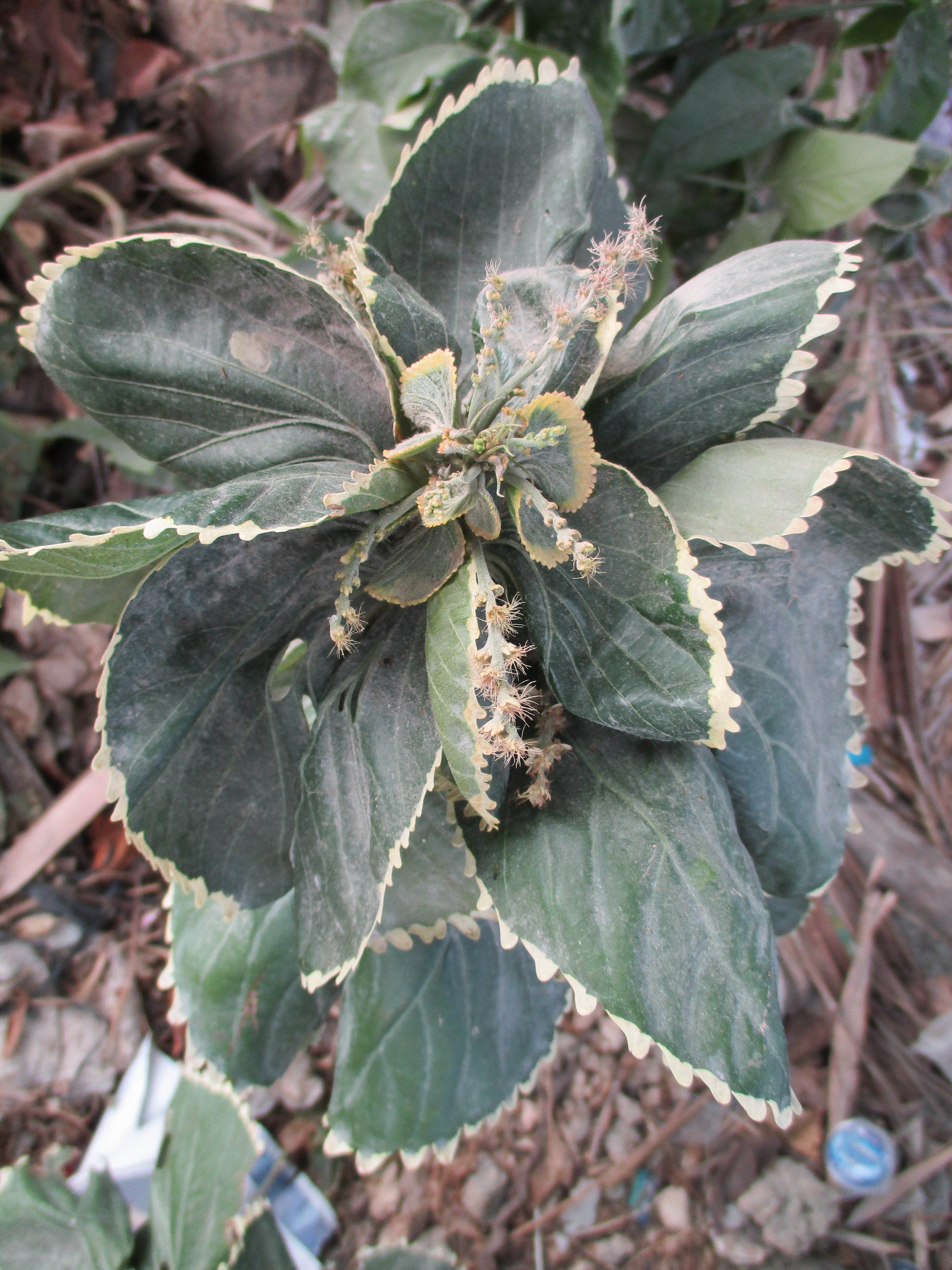
The appeal here is entirely in the leaves, mottled and variegated in green, white, yellow and pink, sometimes bronzy-coppery with pink or cream margins. Named forms vary the theme: 'Hoffmannii' carries narrow, somewhat contorted coppery-green leaves edged in pink or cream, while 'Obovata' has broad, near-circular leaves up to 15cm across that open mid-green and mature to bronze with a fine pale pink rim. Flowers, when they appear, are modest, long green or bronze catkins, or in 'Obovata', small red clusters from spring to autumn that add little showiness of their own.
Source: RHS
Glasshouse Regulars
Watch for glasshouse whitefly, glasshouse red spider mite, mealybugs, and scale insects, the usual suspects under glass or indoors. The plant is otherwise generally disease-free.
Source: RHS
Pruning and Handling
This plant falls into pruning group 11. Note too that the 'Obovata' variety is listed as a skin and eye irritant and harmful if eaten, so gloves and protective equipment are worth wearing when handling and pruning it.
Source: RHS
Care recipe
The species record — the baseline every cultivar inherits unless it says otherwise.
Care notes are early — not yet verified
- Light
- ai:claude-opus-4-8
- Water
- ai:claude-opus-4-8 (range 5-10d)
- Humidity
- ai:claude-opus-4-8
- Soil
- ai:claude-fable-5
- Care
- ai:claude-fable-5
Bright, indirect
≈ every 10 days
Medium
16–29 °C
Fertile, well-draining potting mix
Stem cuttings rooted in warm, humid conditions
Balanced feed monthly to keep foliage color vivid
Fast
Grown for copper-mottled leaves; blooms insignificant
Toxic to cats & dogs & humans
Euphorbiaceae commonly carry irritant milky latex that can affect skin, eyes, and the digestive tract. This is where toxicity lives: every cultivar of this species inherits it and none can override it.
Reference images
Every image credited. Licenses link to their deeds.
PrimarySources: ai:claude-opus-4-8 · ai:claude-opus-4-8 (range 5-10d) · ai:claude-fable-5 · ai:claude-opus-4-8 (family inference)
Kept true by its growers
Every fact here carries its source. Grow Jacob's Coat yourself? What you’ve observed — how it drinks, how it holds its color, a name that’s off — and a clear photo of your plant are exactly what keep this page honest. Contributions are reviewed before anything changes.
Sign in to add what you know →